Action Research for Developing Master Plan for Sustainable Development in Mon Jam Area, Mae Ram Sub-District, Mae Rim District, Chiang Mai
Article Sidebar
Main Article Content
Abstract
This action research aimed to analyze potential, limitations, and needs for development, and to develop a framework and direction of master plan for sustainable development in the Mon Jam area. The Mon Jam area included Pang Hai-Mae Khi village, Nong Hoi Kao village, and Nong Hoi Mai. The target groups included community leaders, community members, community organizations, local agencies, government agencies, educational institutions, private organizations, independent organizations, and state enterprises. There were three steps of research: 1) preparing the community, 2) investigating potential, limitations and needs for development through surveys, interviews, and focus groups, 3) organizing the community meetings, expert meetings, and agency meetings to determine the framework and direction of master plan. The results indicated that Mon Jam had potential in natural resources, culture, agriculture, tourism, infrastructure, and the new-generation society. However, there were limitations related to land right, water shortages, the inadequate expansion of infrastructure, and social problems. They also needed development in land stability, infrastructure, cultural transmission, and people and society. In addition, the framework and direction of the master plan were consistent with the concepts of a sufficiency economy and sustainable development. Its vision focused on economic security and an improved quality of life for the Mon Jam community. The strategic directions consisted of establishing space for negotiations to reduce land conflict, learning and adaptation, developing a new economy, designing a new city, and developing people, society, research, and infrastructure. The recommendations included developing a participatory action plan to achieve concrete development results and conducting participatory action research to strengthen the community’s management potential.
Article Details
References
ชุติมา ถวัลย์ปรีดา, ภัทรกันย์ ระเบียบดี, รัฐพงษ์ แซ่ย่าง, วริศรา นบนอบ, สุเมธา ทัศนเปรมสิน, อัญเชิญพร ธิติยศศักดิ์ และจันทรัศม์ ภูติอริยวัฒน์. (2564). ชุมชนแห่งการเรียนรู้กับการพัฒนาชุมชน. วารสารการจัดการและพัฒนาท้องถิ่น มหาวิทยาลัยราชภัฎพิบูลสงคราม, 1(2), 97-111.
ธันภัทร โคตรสิงห์. (2559). ความเหลื่อมล้ำในที่ดินทำกิน: ปัญหาและทางออก. วารสารพัฒนาสังคม, 18, 63-88.
นฤมล ภูมิระวิ. (2554). กระบวนการมีส่วนร่วมในการจัดทำแผนแม่บทชุมชน ตำบลวังตะกอ อำเภอหลังสวน จังหวัดชุมพร. วารสารปาริชาต มหาวิทยาลัยทักษิณ, 23(2), 83-100.
ประภัสร์ อ่อนฤทธิ์, รัชนี นิธากร และขวัญดาว แจ่มแจ้ง. (2558). การพัฒนากลยุทธ์การจัดทำแผนชุมชนของหมู่บ้านในจังหวัดกำแพงเพชร. วารสารวิชาการและวิจัยสังคมศาสตร์, 10, 93-108.
ภูริพัฒน์ แก้วศรี. (2564). การพัฒนากระบวนการจัดทำแผนพัฒนาขององค์กรปกครองส่วนท้องถิ่นจังหวัดเชียงราย โดยการประยุกต์ใช้ศาสตร์พระราชา. วารสารวิชาการและวิจัยสังคมศาสตร์, 16(3), 85-100.
วสันต์ ปวนปันวงศ์. (2560). การพัฒนาพื้นที่ชนบทให้กลายเป็นเมือง กรณีศึกษาแหล่งท่องเที่ยวดอยม่อนแจ่ม อำเภอแม่ริม จังหวัดเชียงใหม่. วารสารรัฐศาสตร์และรัฐประศาสนศาสตร์, 8(2), 55-80.
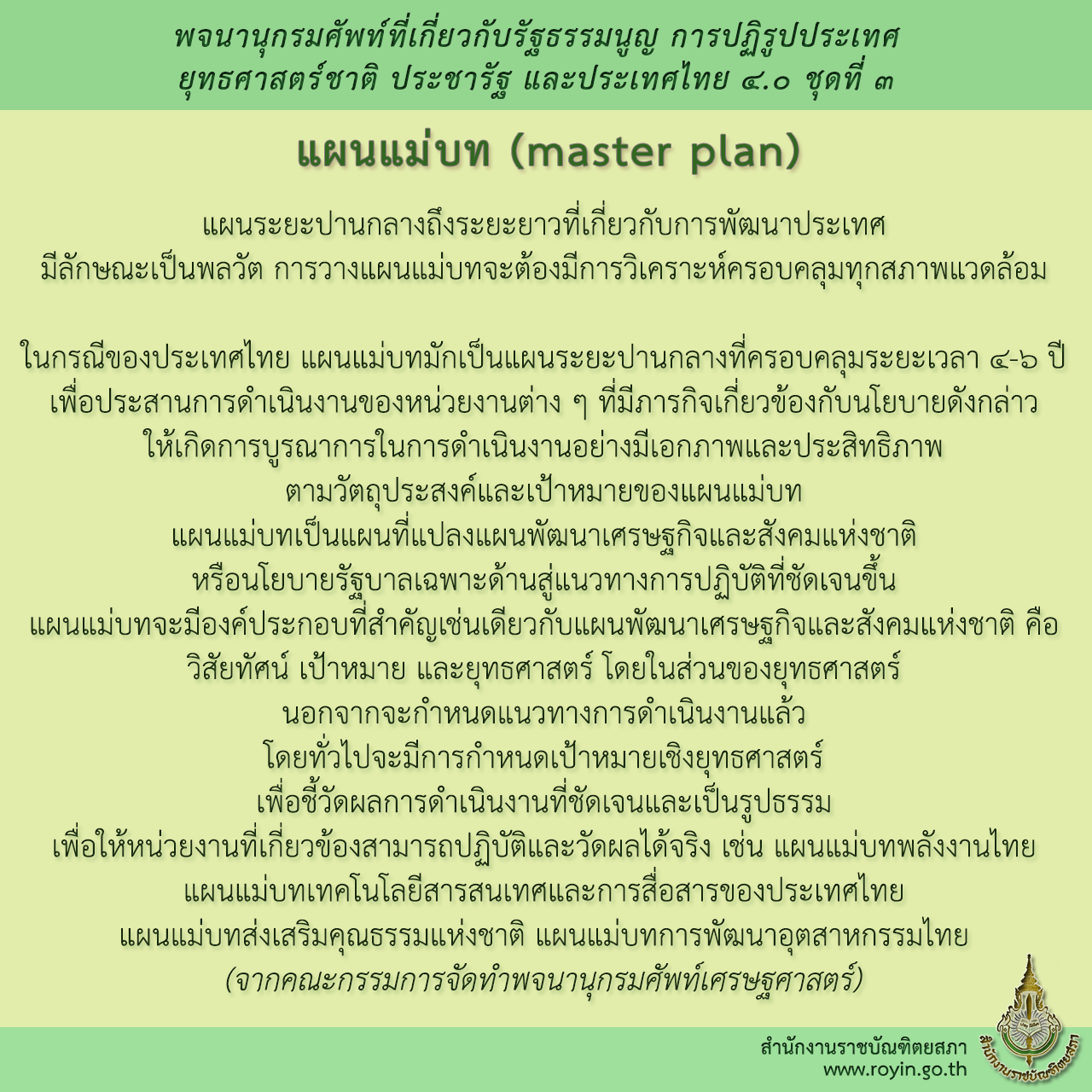
สำนักงานราชบัณฑิตยสภา. (มปป.). พจนานุกรมศัพท์ที่เกี่ยวกับรัฐธรรมนูญ การปฏิรูปประเทศ ยุทธศาสตร์ชาติ ประชารัฐ และประเทศไทย 4.0 ชุุดที่ 3. สืบค้น 20 สิงหาคม 2566, จาก https://www.orst.go.th/FILEROOM/CABROYINWEB/DRAWER004/GENERAL/DATA0000/00000969.PNG
สุริยจรัส เตชะตันมีนสกุล, เกศสุดา สิทธิสันติกุล, สุวิชาน พัฒนาไพรวัลย์ และโอฬาร อ่องฬะ. (2566). รายงานวิจัยฉบับสมบูรณ์ การสร้างกระบวนการมีส่วนร่วมเพื่อการพัฒนาเชิงพื้นที่ชุมชนดอยม่อนแจ่ม ตำบลแม่แรม อำเภอแม่ริม จังหวัดเชียงใหม่. กองทุนส่งเสริม ววน. และหน่วย บพท.
อรไท ครุธเวโช, วสันต์ จันทร์ประสิทธิ์, วรพจน์ ตรีสุข และวริสา ราชกิจชอบ. (2561). การพัฒนาแผนแม่บทการจัดการ การท่องเที่ยวโดยชุมชนอย่างยั่งยืน จังหวัดภูเก็ต. วารสารวิชาการสถาบันเทคโนโลยีแห่งสุวรรณภูมิ, 4(2), 206-230.
Benetti, S., Ogliastri, E., & Caputo, A. (2021). Distributive/integrative negotiation strategies in cross-cultural contexts: A comparative study of the USA and Italy. Journal of Management and Organization, 27(4), 786-808.
Falqueto, J. M. Z., Hoffmann, V. E., Gomes, R. C., & Onoyama Mori, S. S. (2020). Strategic planning in higher education institutions: what are the stakeholders’ roles in the process?. Higher Education, 79, 1039-1056.
Steiner, G. A. (2010). Strategic planning. Simon and Schuster Inc.
United Nations. (n.d.). The sustainable development goals report. UNSD. Retrieved July 15, 2020, from https://unstats.un.org/sdgs/report/2016/the%20sustainable%20development%20goals%20report%202016.pdf
Verardo, D. (1999). Managing the strategic planning process. ASTD.