
Development and Validation of the Conditional Reasoning Ability Test
Article Sidebar
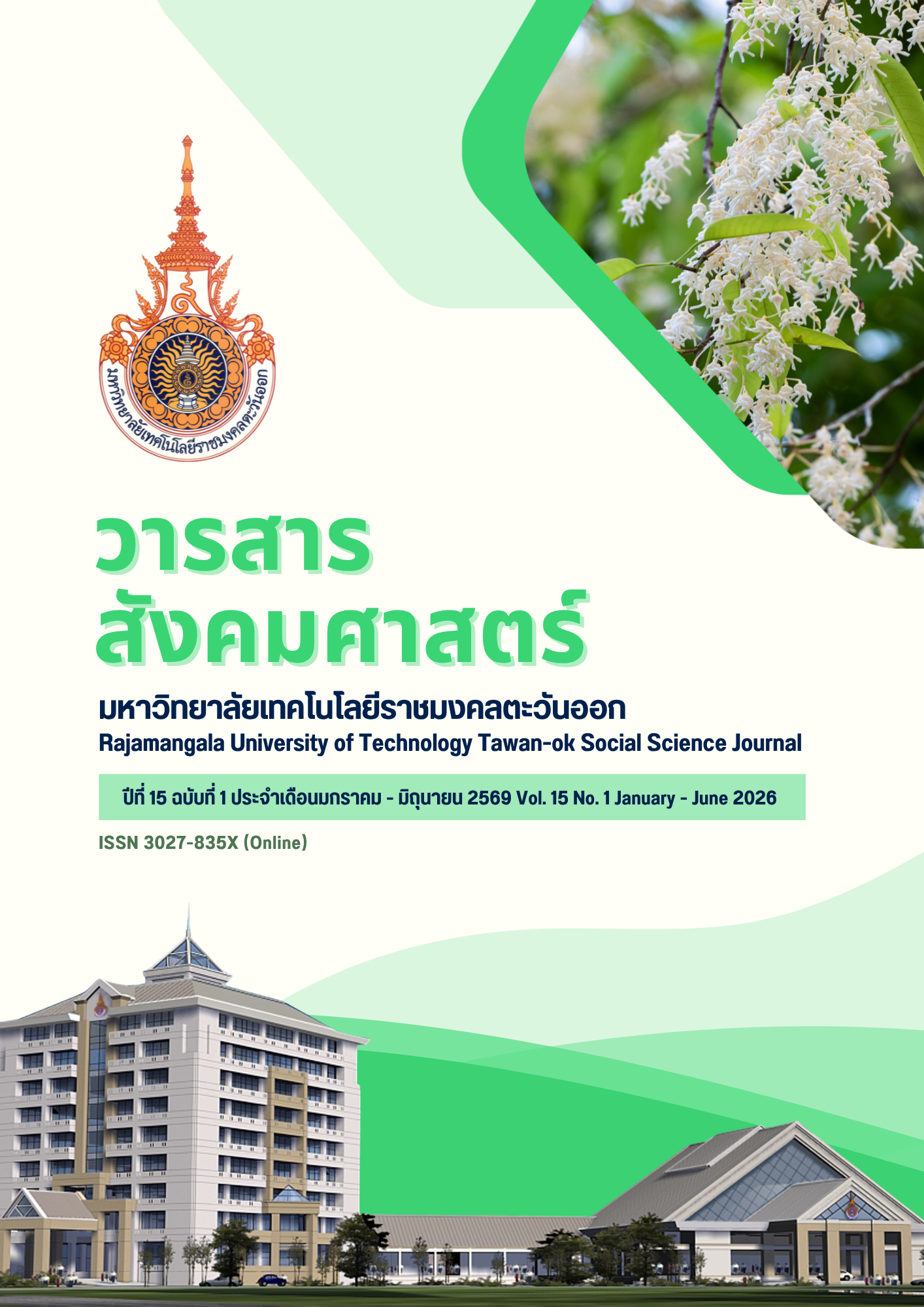
Main Article Content
Abstract
This research aimed to create a test and examine the quality of the conditional reasoning ability test (CRAT). The test consisted of realistic content and abstract content. Each content consisted of four types of reasoning forms : 1) Modus ponen (MP), 2) Modus tolen, (MT), 3) Affirming of Consequent(AC), and 4) Denying of Antecedent(DA).The test items were examined for content validity by five experts.The item consistency index was calculated using the I-CVI, and the overall consistency index was calculated using the S-CVI equal to 0.9. The test items were entered into the learning management system (Moodle LMS) for students to take the test via the Internet on their mobile phones. The sample used in this study was first-year undergraduate students selected by stratified random sampling. A total of 172 students from 10 disciplines took the test. The results of the analysis of the quality of each item of the test showed that most of the tests passed the quality criteria with the difficulty index and the discrimination index. The internal consistency coefficient of the test was 43.79 percent.
Article Details

This work is licensed under a Creative Commons Attribution-NonCommercial-NoDerivatives 4.0 International License.
References
Baker, C. D., & Huls, D. (2020). Conditional reasoning: The influence of content on logical deductions. Journal of Experimental Psychology: Learning, Memory, and Cognition, 46(2), 198–213.
Blanchette, I., & El-Deredy, W. (2014). An ERP investigation of conditional reasoning with emotional and neutral contents. Brain and cognition, 91, 45-53.
Cheng, P. W., & Holyoak, K. J. (2021). Pragmatic reasoning schemas. Cognitive Science, 45(7), e12935.
Chabris, C. F. (2019). Are we overestimating our reasoning abilities? Trends in Cognitive Sciences, 23(10), 803– 804.
Datsogianni, A., Sodian, B., Markovits, H., & Ufer, S. (2020). Reasoning with conditionals about every day and mathematical concepts in primary school. Frontiers in psychology, 11, 531640.
Evans, J. St. B. T. (1991). Theories of human reasoning: The fragmented state of the art. Theory & Psychology, 1(1), 83–105.
Goldstein, E. B. (2014). Cognitive psychology: Connecting mind, research and everyday experience. Cengage Learning.
Johnson-Laird, P. N. (1983). Mental models: Towards a cognitive science of language, inference, and consciousness. Harvard University Press.
Karnjanawasee,S. (2013). Classical test theory (3rd ed.). Bangkok: Chulalongkorn University Press. (in Thai)
Khammani,T.(2023). The science of teaching: Knowledge for effective learning process management (26th ed.). Bangkok: Chulalongkorn University Press. (in Thai)
Lynn, M. R. (1986). Determination and quantification of content validity. Nursing Research, 35(6), 382–386.
Wason, P. C. (1968). Reasoning about a rule. Quarterly Journal of Experimental Psychology, 20(3), 273–281
