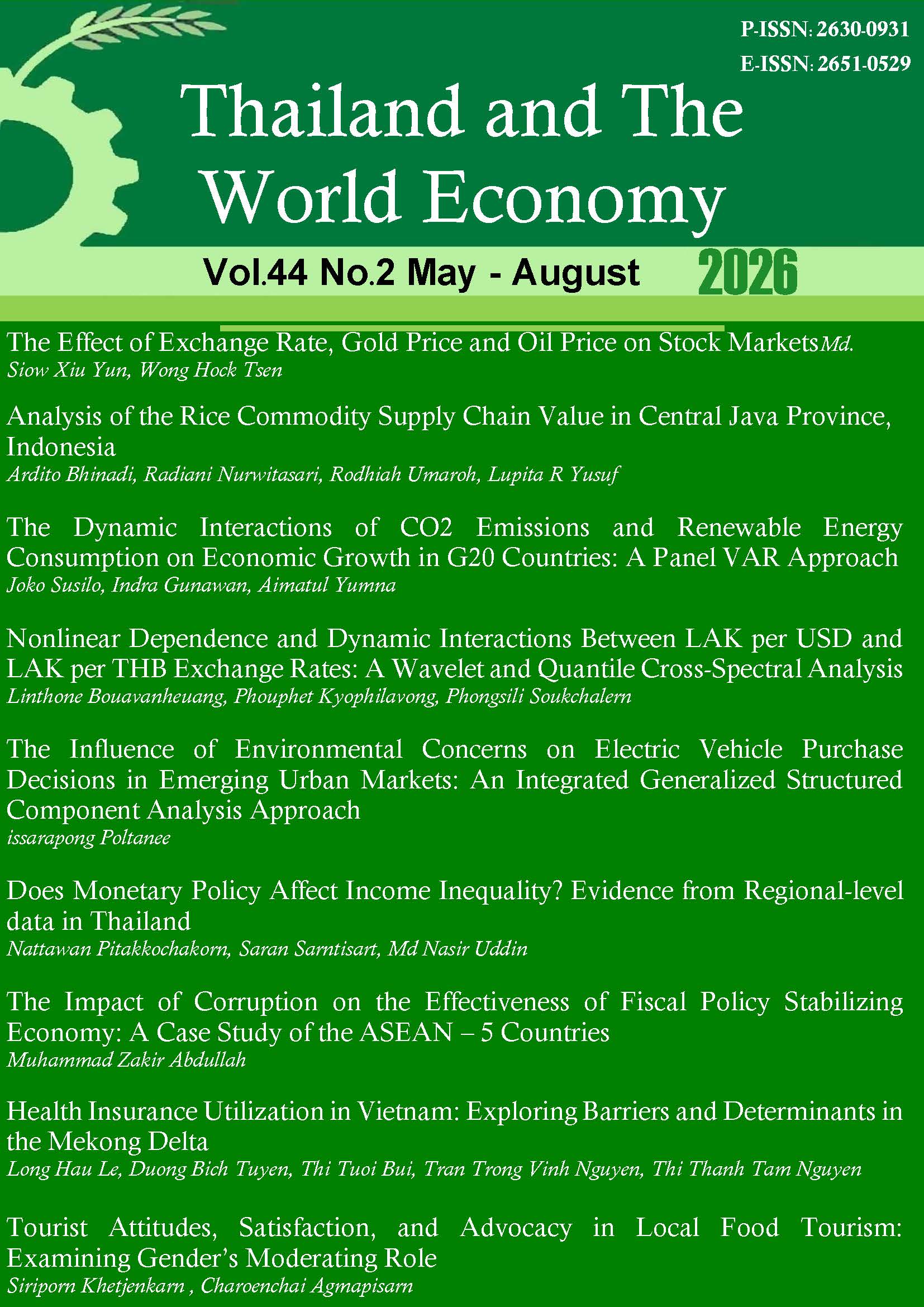
Tourist Attitudes, Satisfaction, and Advocacy in Local Food Tourism: Examining Gender’s Moderating Role
DOI:
https://doi.org/10.66445/twe.v44i2.282831Keywords:
Local Food Tourism, Tourist Advocacy Behavior, Theory of Planned Behavior, Tourist Satisfaction, GenderAbstract
Given the increasing significance of food experiences in contemporary tourist destinations, this research examines the relationships among subjective norms, perceived behavioral control, health beliefs, attitude formation, tourist satisfaction, and advocacy behavior in the context of local food tourism. Using data collected from 300 Thai tourists in Phuket, structural equation modeling reveals a significant relationship among perceived behavioral control, health beliefs, and the formation of attitudes toward local food. Tourist satisfaction predicts advocacy behavior in local food destinations, while gender influences the relationship between tourist satisfaction and advocacy behavior, with such a relationship being marginally stronger among male tourists. Meanwhile, subjective norms do not significantly affect tourists’ attitude formation, indicating that social influence mechanisms may vary across contexts. These findings emphasize the need to improve tourists’ perceived control over their local food selections and effectively convey the health benefits of these selections to consumers. This study contributes strategic insights for destination stakeholders and marketing practitioners striving to enhance tourists’ local food experiences and stimulate their endorsement within gastronomic tourism settings. This study also provides practical recommendations for designing comprehensive food information systems that can enhance the present understanding of the role of tourist behavior in local food tourism.
References
Agyeiwaah, E., Otoo, F. E., Suntikul, W., & Huang, W.-J. (2019). Understanding culinary tourist motivation, experience, satisfaction, and loyalty using a structural approach. Journal of Travel & Tourism Marketing, 36(3), 295-313.
Ahmed, S. K. (2024). How to choose a sampling technique and determine sample size for research: A simplified guide for researchers. Oral Oncology Reports, 12, 100662.
Ajzen, I. (1991). The theory of planned behavior. Organizational behavior and human decision processes, 50(2), 179-211.
Ajzen, I. (2014). Attitude structure and behavior. In A. R. Pratkanis, S. J. Breckler, & A. G. Greenwald (Eds.), Attitude structure and function (pp. 241-274). New York: Psychology Press.
Ajzen, I. (2015). Consumer attitudes and behavior: The theory of planned behavior applied to food consumption decisions. Italian Review of Agricultural Economics, 70(2), 121-138.
Ajzen, I., Joyce, N., Sheikh, S., & Cote, N. G. (2011). Knowledge and the prediction of behavior: The role of information accuracy in the theory of planned behavior. Basic and applied social psychology, 33(2), 101-117.
Akoğul, E., & Selçuk, G. N. (2024). Effect of international food tourists’ food experiences on place attachment and behavioral intentions: The moderating role of food variety seeking tendency. Journal of Vacation Marketing, 31(3), 753–770.
Alderighi, M., Bianchi, C., & Lorenzini, E. (2016). The impact of local food specialities on the decision to (re) visit a tourist destination: Market-expanding or business-stealing?. Tourism Management, 57, 323-333.
Alegre, J., & Garau, J. (2010). Tourist satisfaction and dissatisfaction. Annals of Tourism Research, 37(1), 52-73.
Alhemimah, A. (2024). Understanding tourists’ attitude toward online travel health information during and post-COVID-19: A health belief model application. Tourism and Hospitality Research, 24(2), 257-271.
Ali, M., Puah, C.-H., Ayob, N., & Raza, S. A. (2020). Factors influencing tourist’s satisfaction, loyalty and word of mouth in selection of local foods in Pakistan. British Food Journal, 122(6), 2021-2043.
Anderson, J. C., & Gerbing, D. W. (1988). Structural equation modeling in practice: A review and recommended two-step approach. Psychological Bulletin, 103(3), 411-423.
Anjaka, R. G. (2022). The effect of attitude, subjective norm, perceived behaviour control, and moral norm on intention to reduce food waste impacting food waste behaviour (Doctoral dissertation, Universitas Andalas, Padang, Indonesia). Retrieved from Universitas Andalas Repository http://scholar.unand.ac.id/103690/
Baby, J., & Joseph, A. G. (2023). Tourists’ perceptions and motivations for local food. Journal of Business and Management Studies, 5(5), 160-165.
Badu‐Baiden, F., & Kim, S. (2022). Is local food consumption memorable? Exploration of a multidimensional measurement scale to explain tourists' memorable local food consumption experiences. International Journal of Tourism Research, 24(6), 739-758.
Balıkçıoğlu Dedeoğlu, S., Eren, D., Sahin Percin, N., & Aydin, Ş. (2022). Do tourists’ responsible behaviors shape their local food consumption intentions? An examination via the theory of planned behavior. International Journal of Contemporary Hospitality Management, 34(12), 4539-4561.
Ban, H.-J., & Kim, H.-S. (2020). Applying the modified health belief model (HBM) to Korean medical tourism. International Journal of Environmental Research and Public Health, 17(10), 3646.
Banerjee, R., & Quinn, B. (2022). Exploring consumer constructions of local food: Meanings and influences. European Journal of Marketing, 56(5), 1269-1300.
Batra, R., & Ahtola, O. T. (1991). Measuring the hedonic and utilitarian sources of consumer attitudes. Marketing letters, 2, 159-170.
Baysal, D. B., & Bilici, N. S. (2024). Gastronomy for sustainable tourism destination marketing. In R. A. Castanho & M. Franco (Eds.), Cultural, gastronomy, and adventure tourism development (pp. 207-224). New York: IGI Global Publishing.
Biswas, A., & Roy, M. (2015a). Green products: An exploratory study on the consumer behaviour in emerging economies of the East. Journal of Cleaner Production, 87, 463-468.
Biswas, A., & Roy, M. (2015b). Leveraging factors for sustained green consumption behavior based on consumption value perceptions: Testing the structural model. Journal of Cleaner Production, 95, 332-340.
Boo, H. C., Mattila, A. S., & Tan, C. Y. (2013). Effectiveness of recovery actions on deviant customer behavior—The moderating role of gender. International Journal of Hospitality Management, 35, 180-192.
Boye, J. I., & Arcand, Y. (2013). Current trends in green technologies in food production and processing. Food Engineering Reviews, 5, 1-17.
Byrne, B. M. (2004). Testing for multigroup invariance using AMOS graphics: A road less traveled. Structural Equation Modeling: A Multidisciplinary Journal, 11(2), 272-300.
Canova, L., Bobbio, A., & Manganelli, A. M. (2020). Buying Organic Food Products: The Role of Trust in the Theory of Planned Behavior. Frontiers in Psychology, 11, 575820.
Champion, V. L., & Skinner, C. S. (2008). The health belief model. In K. Glanz, B. K. Rimer, & K. Viswanath (Eds.), Health Behavior and Health Education: Theory, Research, and Practice (4th ed., pp. 45-65). Jossey-Bass.
Chen, Q., & Huang, R. (2018). Local food in China: a viable destination attraction. British Food Journal, 120(1), 146-157. https://doi.org/10.1108/BFJ-03-2017-0135
Cheung, G. W., & Rensvold, R. B. (2002). Evaluating Goodness-of-Fit Indexes for Testing Measurement Invariance. Structural Equation Modeling: A Multidisciplinary Journal, 9(2), 233–255.
Chirita, M., & Chirita, G. (2023). Factors Underlying the Choice of a Tourist Destination. Economics and Applied Informatics, 3, 194-202.
Choe, J. Y. J., & Kim, S. S. (2018). Effects of tourists’ local food consumption value on attitude, food destination image, and behavioral intention. International Journal of Hospitality Management, 71, 1-10.
Daniati, N., Widjaja, G., Olalla Gracìa, M., Chaudhary, P., Nader Shalaby, M., Chupradit, S., & Fakri Mustafa, Y. (2021). The health belief model’s application in the development of health behaviors. Health Education and Health Promotion, 9(Special Issue), 521-527.
Dedeoğlu, B. B., Van Niekerk, M., Weinland, J., & Celuch, K. (2019). Re-conceptualizing customer-based destination brand equity. Journal of Destination Marketing & Management, 11, 211-230.
Denovan, A., Dagnall, N., & Drinkwater, K. G. (2025). The Relationship Between Illusory Health Beliefs, Recommended Health Behaviours, and Complementary and Alternative Medicine: An Investigation Across Multiple Time Points. Behavioral Sciences, 15(5), 614.
Devi, B., Devi, R., Pradhan, S., & Lepcha, N. (2022). Theory at a glance: Health belief models in predicting health behaviors. Journal of Bio Innovation, 11(2), 410-421.
Didarloo, A., Khalili, S., Aghapour, A. A., Moghaddam-Tabrizi, F., & Mousavi, S. M. (2022). Determining intention, fast food consumption and their related factors among university students by using a behavior change theory. BMC Public Health, 22(1), 1-10.
Dmitrović, T., Knežević Cvelbar, L., Kolar, T., Makovec Brenčič, M., Ograjenšek, I., & Žabkar, V. (2009). Conceptualizing tourist satisfaction at the destination level. International Journal of Culture, Tourism and Hospitality Research, 3(2), 116-126.
Dowd, K., & Burke, K. J. (2013). The influence of ethical values and food choice motivations on intentions to purchase sustainably sourced foods. Appetite, 69, 137-144.
Estrada, M., Moliner, M. Á., Monferrer, D., & Vidal, L. (2024). Sustainability and local food at tourist destinations: A study from the transformative perspective. Journal of Sustainable Tourism, 32(5), 1008-1026.
Fischer, R., & Karl, J. A. (2022). Predicting behavioral intentions to prevent or mitigate COVID-19: A cross-cultural meta-analysis of attitudes, norms, and perceived behavioral control effects. Social Psychological and Personality Science, 13(1), 264-276.
Fornell, C., & Larcker, D. F. (1981). Evaluating structural equation models with unobservable variables and measurement error. Journal of Marketing Research, 18(1), 39-50.
Gauthier, A. J., Guertin, C., & Pelletier, L. G. (2022). Motivated to eat green or your greens? Comparing the role of motivation towards the environment and for eating regulation on ecological eating behaviours–A self-determination theory perspective. Food Quality and Preference, 99, 104570.
Genc, V., & Gulertekin Genc, S. (2023). The effect of perceived authenticity in cultural heritage sites on tourist satisfaction: the moderating role of aesthetic experience. Journal of Hospitality and Tourism Insights, 6(2), 530-548.
Giao, H. N. K., Vuong, B. N., Phuong, N. N. D., & Dat, N. T. (2021). A model of factors affecting domestic tourist satisfaction on eco-tourism service quality in the Mekong Delta, Vietnam. Geo Journal of Tourism and Geosites, 36, 663-671.
Gong, Y., Said, F., Haq, W., Gong, J., & Aksar, I. (2025). The impact of health information seeking and social influence on functional food purchase intention. Scientific Reports, 15(1), 4212.
Govind, R., Garg, N., & Mittal, V. (2020). Weather, affect, and preference for hedonic products: The moderating role of gender. Journal of Marketing Research, 57(4), 717-738.
Greenberg, D. M., & Baron-Cohen, S. (2020). Empathizing-systemizing theory: Past, present, and future. In V. Zeigler-Hill & T. K. Shackelford (Eds.), Encyclopedia of Personality and Individual Differences (pp. 1348-1352). Cham: Springer.
Gupta, V., Galati, A., & Sharma, S. (2023). Explore, eat and revisit: does local food consumption value influence the destination’s food image? British Food Journal, 125(12), 4639-4661.
Hagger, M. S., Cheung, M. W.-L., Ajzen, I., & Hamilton, K. (2022). Perceived behavioral control moderating effects in the theory of planned behavior: A meta-analysis. Health Psychology, 41(2), 155-167.
Hair, J. F., Black, W. C., Babin, B. J., & Anderson, R. E. (2010). Multivariate data analysis (7th ed.). New York: Pearson.
Hardin-Fanning, F., & Ricks, J. M. (2017). Attitudes, social norms and perceived behavioral control factors influencing participation in a cooking skills program in rural Central Appalachia. Global Health Promotion, 24(4), 43-52.
Harmayani, E., Anal, A. K., Wichienchot, S., Bhat, R., Gardjito, M., Santoso, U., . . . Payyappallimana, U. (2019). Healthy food traditions of Asia: Exploratory case studies from Indonesia, Thailand, Malaysia, and Nepal. Journal of Ethnic Foods, 6(1), 1-18.
Hasan, H. N., & Suciarto, S. (2020). The influence of attitude, subjective norm and perceived behavioral control towards organic food purchase intention. Journal of Management and Business Environment, 1(2), 132-153.
Hirschman, E. C., & Holbrook, M. B. (1982). Hedonic consumption: Emerging concepts, methods and propositions. Journal of Marketing, 46(3), 92-101.
Hoe, S. L. (2008). Issues and procedures in adopting structural equation modelling technique. Journal of Applied Quantitative Methods, 3(1), 76-83.
Holbrook, M. B. (1986). Aims, concepts, and methods for the representation of individual differences in esthetic responses to design features. Journal of Consumer Research, 13(3), 337-347.
Hossain, M. A., Kalam, A., Hossain, M. S., Sarmin, M. N., & Nuruzzaman, M. (2022). An integrated model of destination advocacy and its direct and mediating effects on destination revisit intention. Business, Management and Economics Engineering, 20(2), 286-311.
Huang, X., Dai, S., & Xu, H. (2020). Predicting tourists' health risk preventative behaviour and travelling satisfaction in Tibet: Combining the theory of planned behaviour and health belief model. Tourism Management Perspectives, 33, 100589.
Hussain, K., Abbasi, A. Z., Rasoolimanesh, S. M., Schultz, C. D., Ting, D. H., & Ali, F. (2023). Local food consumption values and attitude formation: the moderating effect of food neophilia and neophobia. Journal of Hospitality and Tourism Insights, 6(2), 464-491.
Joe, S., & Choi, C. (2019). The effect of fellow customer on complaining behaviors: The moderating role of gender. International Journal of Contemporary Hospitality Management, 31(8), 3116-3133.
Jongsawatsataporn, N., Kido, S., & Tanaka, R. (2023). Evaluation of chemical components of herbs and spices from Thailand and effect on lipid oxidation of fish during storage. Journal of Food Measurement and Characterization, 17(1), 346-361.
Kaiser, H.F. (1974). An index of factorial simplicity. Psychometrika 39(1), 31-36.
Kenny, T. A., Woodside, J. V., Perry, I. J., & Harrington, J. M. (2023). Consumer attitudes and behaviors toward more sustainable diets: A scoping review. Nutrition Reviews, 81(12), 1665-1679.
Khan, Y., Hameed, I., & Akram, U. (2023). What drives attitude, purchase intention and consumer buying behavior toward organic food? A self-determination theory and theory of planned behavior perspective. British Food Journal, 125(7), 2572-2587.
Khayyam, M., Chuanmin, S., Qasim, H., Ihtisham, M., Anjum, R., Jiaxin, L., . . . Khan, N. (2021). Food consumption behavior of Pakistani students living in China: The role of food safety and health consciousness in the wake of coronavirus disease 2019 pandemic. Frontiers in Psychology, 12, 673771.
Kim, D.-Y., Lehto, X. Y., & Morrison, A. M. (2007). Gender differences in online travel information search: Implications for marketing communications on the internet. Tourism Management, 28(2), 423-433.
Kim, N., Lee, S., Lee, C.-K., & Suess, C. (2022). Predicting preventive travel behaviors under the COVID-19 pandemic through an integration of Health Belief Model and Value-Belief-Norm. Tourism Management Perspectives, 43, 100981.
Kim, S. (Sam), Choe, J. Y. (Jacey), & Kim, P. B. (2022). Effects of local food attributes on tourist dining satisfaction and future: The moderating role of food culture difference. Journal of China Tourism Research, 18(1), 121-143.
Kim, S. (Sam), Choe, J. Y. (Jacey), King, B., Oh, M. (Moon), & Otoo, F. E. (2022). Tourist perceptions of local food: A mapping of cultural values. International Journal of Tourism Research, 24(1), 1-17.
Kim, Y. G., Eves, A., & Scarles, C. (2009). Building a model of local food consumption on trips and holidays: A grounded theory approach. International Journal of Hospitality Management, 28(3), 423-431.
Kirmani, M. D., Shahzad, N., Ahmad, A., Uddin, S. F., Ayyub, S., & Adil, M. (2022). Socio-environmental considerations and organic food consumption: An empirical investigation of the attitude of Indian consumers. Food Quality and Preference, 100, 104604.
Kivela, J., & Crotts, J. C. (2006). Tourism and gastronomy: Gastronomy's influence on how tourists experience a destination. Journal of Hospitality & Tourism Research, 30(3), 354-377.
Kock, N. (2025). Measurement residual theory, analytic composites and the assessment of formative latent variables. Journal of Systems and Information Technology, 27(2), 310-340.
Kroke, A. M., & Ruthig, J. C. (2022). Conspiracy beliefs and the impact on health behaviors. Applied Psychology: Health and Well‐Being, 14(1), 311-328.
Kumar, S., Talwar, S., Murphy, M., Kaur, P., & Dhir, A. (2021). A behavioural reasoning perspective on the consumption of local food. A study on REKO, a social media-based local food distribution system. Food Quality and Preference, 93, 104264.
Kurt, D., & Frimer, J. (2015). Agency and communion as a framework to understand consumer behavior. In M. I. Norton, D. D. Rucker, & C. Lamberton (Eds.), The Cambridge Handbook of Consumer Psychology (pp. 446-475). Cambridge: Cambridge University Press.
La Barbera, F., & Ajzen, I. (2020). Control interactions in the theory of planned behavior: Rethinking the role of subjective norm. Europe's Journal of Psychology, 16(3), 401-417.
Lee, I., & Arcodia, C. (2011). The role of regional food festivals for destination branding. International Journal of Tourism Research, 13(4), 355-367.
Lee-Anant, C., Choibamroong, T., Punyasiri, S., & Srikhwan, B. (2024). Potential Thai tourist segmentation to reduce dependency on foreign tourists highlighted by the covid-19 crisis. Thailand and The World Economy, 42(3), 1–17.
Liao, Y. (2021). The sources and influencing factors of hedonistic consumption. Psychology, 12(4), 660-674.
Lim, J.-S., Heinrichs, J. H., & Lim, K.-S. (2017). Gender and hedonic usage motive differences in social media site usage behavior. Journal of Global Marketing, 30(3), 161-173.
Lin, B., Wang, S., Fu, X., & Yi, X. (2023). Beyond local food consumption: the impact of local food consumption experience on cultural competence, eudaimonia and behavioral intention. International Journal of Contemporary Hospitality Management, 35(1), 137-158.
Lin, J., Cui, Q., Xu, H., & Guia, J. (2022). Health and local food consumption in cross-cultural tourism mobility: An assemblage approach. Tourism Geographies, 24(6-7), 1103-1122.
MacKenzie, S. B., & Podsakoff, P. M. (2012). Common method bias in marketing: Causes, mechanisms, and procedural remedies. Journal of Retailing, 88(4), 542-555.
Martens, M. P. (2005). The use of structural equation modeling in counseling psychology research. The Counseling Psychologist, 33(3), 269-298.
Martey, E. M. (2025). Purchasing behavior of green food: Using health belief model norm activation theory. Management of Environmental Quality: An International Journal, 36(2), 562-591.
McDermott, M. S., Oliver, M., Simnadis, T., Beck, E. J., Coltman, T., Iverson, D., Caputi, P., & Sharma, R. (2015). The theory of planned behaviour and dietary patterns: A systematic review and meta-analysis. Preventive Medicine, 81, 150-156.
Mirakzadeh, A. A., Karamian, F., Khosravi, E., & Parvin, F. (2021). Analysis of preventive behaviors of rural tourism hosts in the face of COVID-19 pandemic: Application of health belief model. Frontiers in Public Health, 9, 793173.
Mora, D., Solano-Sanchez, M. A., López-Guzmán, T., & Moral-Cuadra, S. (2021). Gastronomic experiences as a key element in the development of a tourist destination. International Journal of Gastronomy and Food Science, 25, 100405.
Muangasame, K., & Park, E. (2019). Food tourism, policy and sustainability: Behind the popularity of Thai food. In Park, E., Kim, S., Yeoman, I. (Eds.), Food tourism in Asia (pp. 123-142). Singapore: Springer.
Nejati, M., & Parakhodi Moghaddam, P. (2012). Gender differences in hedonic values, utilitarian values and behavioural intentions of young consumers: insights from Iran. Young Consumers, 13(4), 337-344.
Nematzadeh, M., Panahi, H., & Mohammadzadeh, P. (2024). Culinary tourism as a destination attraction: an empirical examination of tourists’ food satisfaction. Journal of Tourismology, 10(2), 93-107.
Oliveira, A. S. d., Campos, R. d. C. L., Souki, G. Q., & Vilas Boas, L. H. d. B. (2026). The moderating effect of health orientation and subjective norms on the relationship between personal values and organic food purchase intention. Journal of International Food & Agribusiness Marketing, 38(1), 51-74.
Palau-Saumell, R., Matute, J., Derqui, B., & Meyer, J.-H. (2021). The impact of the perceived risk of COVID-19 on consumers’ attitude and behavior toward locally produced food. British Food Journal, 123(13), 281-301.
Park, E., & Widyanta, A. (2022). Food tourism experience and changing destination foodscape: An exploratory study of an emerging food destination. Tourism Management Perspectives, 42, 100964.
Pelletier, J. E., Laska, M. N., Neumark-Sztainer, D., & Story, M. (2013). Positive attitudes toward organic, local, and sustainable foods are associated with higher dietary quality among young adults. Journal of the Academy of Nutrition and Dietetics, 113(1), 127-132.
Peral-Peral, B., Arenas Gaitán, J., & Reina-Arroyo, J. (2022). Buying local food is not a question of attitude: an analysis of benefits and limitations. Spanish Journal of Marketing-ESIC, 26(1), 80-97.
Piramanayagam, S., Sud, S., & Seal, P. P. (2021). Relationship between tourists’ local food experiencescape, satisfaction and behavioural intention. In S. K. Dixit (Ed.), Tourism in India: Marketing perspectives (pp. 140-154). London: Routledge.
Putra, F. K. K., Putra, M. K., & Novianti, S. (2023). Taste of Asean: Traditional food images from Southeast Asian countries. Journal of Ethnic Foods, 10, 1-15.
Richards, G. (2021). Evolving research perspectives on food and gastronomic experiences in tourism. International Journal of Contemporary Hospitality Management, 33(3), 1037-1058.
Roh, T., Seok, J., & Kim, Y. (2022). Unveiling ways to reach organic purchase: Green perceived value, perceived knowledge, attitude, subjective norm, and trust. Journal of Retailing and Consumer Services, 67, 102988.
Rönkkö, M., & Cho, E. (2022). An updated guideline for assessing discriminant validity. Organizational Research Methods, 25(1), 6-14.
Rosenberg, M. J., & Hovland, C. I. (1960). Cognitive, affective, and behavioral components of attitudes. In M. J. Rosenberg, C. I. Hovland, W. J. McGuire, R. P. Abelson, & J. W. Brehm (Eds.), Attitude organization and change: An analysis of consistency among attitude components (pp. 1-14). New Haven: Yale University Press.
Rousta, A., & Jamshidi, D. (2020). Food tourism value: Investigating the factors that influence tourists to revisit. Journal of Vacation Marketing, 26(1), 73-95.
Safian, S. S. S., Osman, A. A., Wahab, S. N., Othman, N., & Azhar, N. (2021). The Effect of culinary tourism on tourists’ loyalty and satisfaction: A comparison analysis between the first and revisit to Malaysia. International Journal of Academic Research in Business and Social Sciences, 11(8), 154-167.
Saini, S., & Arasanmi, C. N. (2021). Attaining digital advocacy behaviour through destination image and satisfaction. International Journal of Tourism Cities, 7(1), 119-134.
Samaddar, K., & Mondal, S. (2024). Priming tourists with traditional gastronomic delicacies: embracing a responsible approach towards sustainable consumption practice. Consumer Behavior in Tourism and Hospitality, 19(3), 383-403.
Sanchez-Cañizares, S., & Castillo-Canalejo, A. M. (2015). A comparative study of tourist attitudes towards culinary tourism in Spain and Slovenia. British Food Journal, 117(9), 2387-2411.
Sasanfar, B., Toorang, F., Rostami, S., Yeganeh, M. Z., Ghazi, M. L., Seyyedsalehi, M. S., & Zendehdel, K. (2022). The effect of nutrition education for cancer prevention based on health belief model on nutrition knowledge, attitude, and practice of Iranian women. BMC Women’s Health, 22, 2-9.
Scalvedi, M. L., & Saba, A. (2018). Exploring local and organic food consumption in a holistic sustainability view. British Food Journal, 120(4), 749-762.
Schumacker, R. E., & Lomax, R. G. (2015). A beginner’s guide to structural equation modeling (4th ed.). New York: Routledge.
Seng, T. G. (2025). Proposed framework for investigating motivating factors influencing dietary supplement purchase intentions: the mediating role of attitude. International Journal of Research and Innovation in Social Science, 9(1), 2400-2423.
Seyitoğlu, F., & Ivanov, S. (2020). A conceptual study of the strategic role of gastronomy in tourism destinations. International Journal of Gastronomy and Food Science, 21, 100230.
Shah, S., & Thanki Joshi, H. (2024). Factors shaping the adoption of sustainable vegan diets. International Journal of Consumer Studies, 48(2), e13034.
Shin, Y. H., & Hancer, M. (2016). The role of attitude, subjective norm, perceived behavioral control, and moral norm in the intention to purchase local food products. Journal of Foodservice Business Research, 19(4), 338-351.
Skinner, B. (2024). Using the health belief model to explore factors that impact college students’ decision to seek a pap-test (Master’s thesis, University of Central Arkansas, Conway, United States). Retrieved from https://www.proquest.com/
docview/3042718975
Sloan, F. A. (2024). Subjective beliefs, health, and health behaviors. Journal of Risk and Uncertainty, 69, 105-144.
Sogari, G., Pucci, T., Caputo, V., & Van Loo, E. J. (2023). The theory of planned behaviour and healthy diet: Examining the mediating effect of traditional food. Food Quality and Preference, 104, 104709.
Soltani, M., Soltani Nejad, N., Taheri Azad, F., Taheri, B., & Gannon, M. J. (2021). Food consumption experiences: A framework for understanding food tourists’ behavioral intentions. International Journal of Contemporary Hospitality Management, 33(1), 75-100.
Soon, J. M., Vanany, I., Wahab, I. R. A., Sani, N. A., Hamdan, R. H., & Jamaludin, M. H. (2022). Protection motivation theory and consumers’ food safety behaviour in response to COVID-19. Food Control, 138, 109029.
Soonsan, N., Thongmun, S., & Phakdee-auksorn, P. (2024). Understanding the gastronomy tourists’ characteristics and perceptions: A cluster analysis of visitors to a creative city of gastronomy. Consumer Behavior in Tourism and Hospitality, 19(2), 253–267.
Stalmirska, A. M. (2024). Local food in tourism destination development: The supply-side perspectives. Tourism Planning & Development, 21(2), 160-177.
Sthapit, E., Björk, P., & Piramanayagam, S. (2023). Domestic tourists and local food consumption: Motivations, positive emotions and savouring processes. Annals of Leisure Research, 26(2), 316-337.
Sudman, S., Greeley, A., & Pinto, L. (1965). The effectiveness of self-administered questionnaires. Journal of Marketing Research, 2(3), 293-297.
Suess, C., Maddock, J., Dogru, T., Mody, M., & Lee, S. (2022). Using the health belief model to examine travelers' willingness to vaccinate and support for vaccination requirements prior to travel. Tourism Management, 88, 104405.
Suki, N. M. (2014). Moderating role of gender in the relationship between hotel service quality dimensions and tourist satisfaction. Journal of Quality Assurance in Hospitality & Tourism, 15(1), 44-62.
Suttisansanee, U., Thiyajai, P., Inthachat, W., Pruesapan, K., Wongwathanarat, K., Charoenkiatkul, S., . . . Temviriyanukul, P. (2023). Exploration of the nutritional and carotenoids profiles of vegetables in Thai cuisine as potential nutritious ingredients. Heliyon, 9(5), e15951.
Tahiri, A., Kovaçi, I., & Trajkovska Petkoska, A. (2022). Sustainable tourism as a potential for promotion of regional heritage, local food, traditions, and diversity—case of Kosovo. Sustainability, 14(19), 12326.
Testa, F., Sarti, S., & Frey, M. (2019). Are green consumers really green? Exploring the factors behind the actual consumption of organic food products. Business Strategy and the Environment, 28(2), 327-338.
The Government Public Relations Department. (2024). Govt. continues to boost Thailand’s soft power. Retrieved from https://thailand.prd.go.th/en/content/
category/detail/id/2078/iid/334259
The Government Public Relations Department. (2025). Phuket tops Thailand's Tourism Revenue in 2024 generating USD14B. Retrieved from https://thailand.prd.go.th/
en/content/category/detail/id/2078/iid/372294
Tosun, C., Dedeoglu, B. B., & Usakli, A. (2024). The role of gender in shaping the destination service quality and its consequences. International Journal of Tourism Research, 26(4), e2701.
Tourism Authority of Thailand. (2024). Thailand Welcomes over 35 Million Visitors in 2024: A Milestone Paving the Way for 2025. Retrieved from https://www.tatnews.org/2024/12/thailand-welcomes-over-35-million-visitors-in-2024-a-milestone-paving-the-way-for-2025/
UNESCO. (2015). Phuket. Retrieved from https://www.unesco.org/en/creative-cities/phuket
Untong, A., & Khao Sa-ard, M. (2011). An Analysis of Thailand’s Long-run Tourism Demand. Thammasat Economic Journal, 29(2), 1-34.
Vanany, I., Soon, J. M., Maryani, A., & Wibawa, B. M. (2020). Determinants of halal-food consumption in Indonesia. Journal of Islamic Marketing, 11(2), 507-521.
Vuksanović, N., Demirović Bajrami, D., Petrović, M. D., Radovanović, M. M., Malinović-Milićević, S., Radosavac, A., Obradović, V., & Ergović Ravančić, M. (2024). The role of culinary tourism in local marketplace business—new outlook in the selected developing area. Agriculture, 14(1), 1-20.
Wang, E. S.-T. (2010). Internet usage purposes and gender differences in the effects of perceived utilitarian and hedonic value. Cyberpsychology, Behavior, and Social Networking, 13(2), 179-183.
Wang, H., Xiong, L., & Gage, R. (2021). Cultivating destination brand ambassadors in rural China: Examining the role of residents’ welcoming nature. International Journal of Tourism Research, 23(6), 1027-1041.
Wang, J., & Jia, X. (2023). Click it, and increase hedonic consumption ratio: How does online shopping improve the long‐term subjective well‐being of consumers? Journal of Consumer Behaviour, 22(2), 235-252.
Wang, M., Huang, L., Pan, C., & Bai, L. (2021). Adopt proper food-handling intention: An application of the health belief model. Food Control, 127, 108169.
Wang, Y., Wen, X., Zhu, Y., Xiong, Y., & Liu, X. (2022). Chinese residents’ healthy eating intentions and behaviors: Based on an extended health belief model. International Journal of Environmental Research and Public Health, 19(15), 9037.
Wani, M. D., Dada, Z. A., & Shah, S. A. (2024). Can consumption of local food contribute to sustainable tourism? Evidence from the perception of domestic tourists. International Journal of Sustainable Development & World Ecology, 31(2), 163-178.
Xu, Y., & Zeng, G. (2022). Not eating is a loss: How familiarity influences local food consumption. Tourism Management, 90, 104479.
Yang, K., & Lee, H. J. (2010). Gender differences in using mobile data services: Utilitarian and hedonic value approaches. Journal of Research in Interactive Marketing, 4(2), 142-156.
Zhang, T., Grunert, K. G., & Zhou, Y. (2020). A values–beliefs–attitude model of local food consumption: An empirical study in China and Denmark. Food Quality and Preference, 83, 103916.
Zhao, J., & An, Y. (2021). Behavioural intention of forest therapy tourism in China: Based on health belief model and the theory of planned behaviour. Current Issues in Tourism, 24(24), 3425-3432.
Zhu, Y., Zhu, L., & Weng, L. (2024). How do tourists’ value perceptions of food experiences influence their perceived destination image and revisit intention? A moderated mediation model. Foods, 13(3), 412.
Downloads
Published
How to Cite
Issue
Section
Categories
License
Copyright (c) 2026 Thailand and The World Economy

This work is licensed under a Creative Commons Attribution-NonCommercial-NoDerivatives 4.0 International License.