
ความหลากหลายของมรดกทางวัฒนธรรมชุมชนในพื้นที่เทศบาลเมืองตะกั่วป่า จังหวัดพังงา สู่แนวทางการจัดการท่องเที่ยว
Article Sidebar
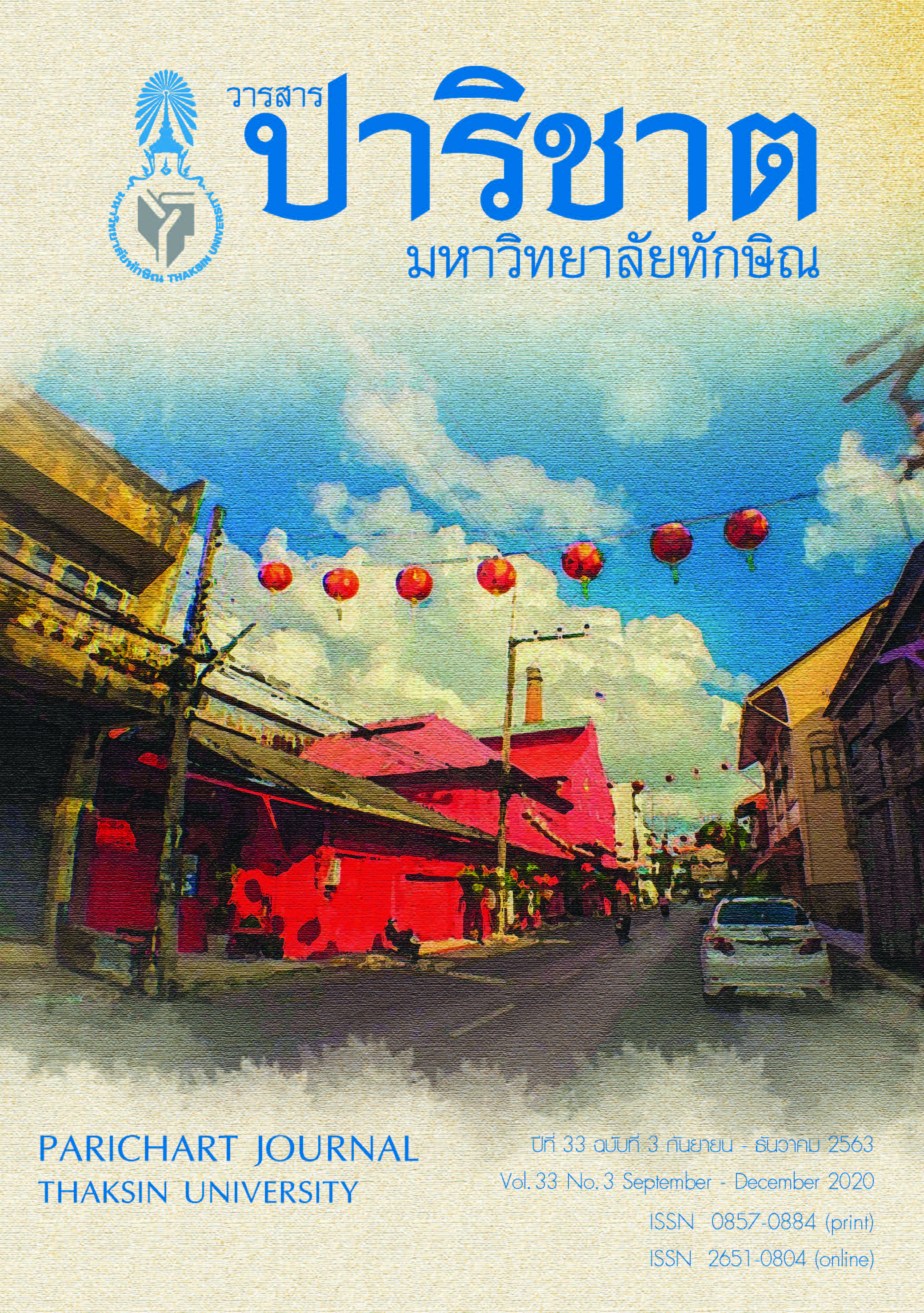
Main Article Content
บทคัดย่อ
บทความนี้นำเสนอการศึกษามรดกทางวัฒนธรรมและเสนอแนวทางการจัดการการท่องเที่ยวในพื้นที่เขตเทศบาลเมืองตะกั่วป่า จังหวัดพังงา คัดเลือกข้อมูลสองชุมชนคือชุมชนตลาดใหญ่และชุมชนเสนานุชรังสรรค์ใช้วิธีวิจัยเชิงคุณภาพในการเก็บรวบรวมข้อมูลจากการสัมภาษณ์เชิงลึกจำนวน 12 คน และการประชุมกลุ่ม จำนวน 6 คน นอกจากนี้ยังอาศัยการสังเกตแบบไม่มีส่วนร่วม วิเคราะห์ข้อมูลจำแนกหมวดหมู่ ตีความและสรุปผลด้วยการพรรณนาวิเคราะห์ ผลการวิจัยพบว่า 1) ความหลากหลายของมรดกทางวัฒนธรรมแบ่งเป็นแบบจับต้องได้และจับต้องไม่ได้ มีความเกี่ยวเนื่องกับกลุ่มชาติพันธุ์และความรุ่งเรืองของอดีตของการทำเหมืองแร่ ส่งผลก่อให้เกิดเป็นการดำรงอยู่ของวิถีชีวิตทั้งในเรื่องของ สถาปัตยกรรม วัด การแต่งกาย ประเพณี เทศกาล เป็นต้น ลักษณะเด่นของสถานที่ทางประวัติศาสตร์ผ่านการสืบสาน ทักษะ ระบบคิด ถูกถ่ายทอดจากรุ่นสู่รุ่นผ่านจิตวิญญาณของชุมชน 2) การปฏิสัมพันธ์ของคนในชุมชนและการเห็นถึงคุณค่าทางประวัติศาสตร์ นำไปสู่แนวคิดในการจัดการกับแหล่งมรดกทางวัฒนธรรมผ่านการออกแบบแนวทางการท่องเที่ยว การนำอดีตมาเป็นองค์ประกอบผ่านรูปแบบกิจกรรม โปรแกรมการท่องเที่ยวเพื่อส่งเสริมเศรษฐกิจสร้างสรรค์ให้กับชุมชน โดยการนำแนวทางการพัฒนาเทคโนโลยีมาร่วมเพื่อนำไปปรับใช้สู่การจัดเก็บมรดกทางวัฒนธรรมอย่างยั่งยืนในพื้นที่
Article Details
เอกสารอ้างอิง
Nagy, K. (2012). Heritage tourism, thematic routes and possibilities for innovation. Club of Economics in Miskolc’ TMP, 8(1), 46-53.
Swarbrooke, J. (1998). Sustainable tourism management. New York: CABI.
UNESCO. (1972). Convention concerning the protection of worldcultural and natural heritage. Paris: UNESCO. [Online]. Retrieved May 22, 2019, from https://whc.unesco.org/archive/convention-en.pdf.
UNESCO. (2003). Convention for safeguarding of intangible cultural heritage. Paris: United Nations Educational, Scientific and Cultural Organization (UNESCO).
ICOMOS Thailand. (2011). Thailand charter on cultural heritage sites management. Bangkok .ICOMOS Thailand. (In Thai)
Feilden, B. M., & Jokilehto, J. (1998). Management guidelines for world cultural heritage sites. Rome: ICCROM.
Saengna, C. (2011). Protection of underwater cultural heritage in the specific economic zones and shoulders The continents of Thailand. Master of Laws Degree, Ramkhamhaeng University, Bangkok. (In Thai)
Ito, N. (2003). Intangible cultural heritage involved in tangible cultural heritage. Retrieved from http://www.international.icomos.org/victoriafalls2003/papers/.
Lertcharnrit, T. (2016). Cultural resource management. Sirindhorn Anthropology. Center, 2nd edition. Bangkok: Sirindhorn Anthropology Center. (In Thai)
Ji, L. (2020). Community participation in cultural heritage management: A systematic literature review comparing Chinese and international practices. Cities. 96(2020).
Mowforth, M., & Munt, I. (2016). Tourism and sustainability. New York: Routledge.
Suansri, P. (2011). CBT has a social space dimension of the community in determining tourism direction, creating learning among homeowners and visitors. Bangkok: The Thailand Research Fund. (In Thai)
Giampiccoli, A. (2015). Community-based tourism: origins and present trends. African Journal for Physical, Health Education, Recreation and Dance, 21(2). 675-687.
Boonwanno, S., Boonprakarn, K. & Dhammasaccakarn, W. (2018). Nostalgia and commoditization in tourism dimension of Thai society. Social Sciences Research and Academic Journal. 39(13), 1-14. (In Thai)
Boonwanno, S. (2016). Old town Takuapa: From area to commoditization in tourism. (Master of Arts Human and Social Development). Prince of Songkla University, Songkhla. (In Thai)
Kirdsiri, K., Buranaut, I., & Seneevong Na Ayudhaya, K. (2016). Status assessment of sites in Thailand on the world heritage tentative list: Prospects of being placed on the world heritage list. NAJUA: Architecture, Design and Built Environment, 30, 61-75. (In Thai)
Designated Areas for Sustainable Tourism. (2020). Definition of Creative tourism. Retrieved from http://www.dasta.or.th/creativetourism/th/ (In Thai)
Nurick, J. (2000). Heritage and tourism. Locum Destination Review, 2, 35-38.
Fladmark, J. M. (1994). Cultural tourism, papers presented at the Robert Gordon University Heritage Convention, Conference proceedings book, Donhead Publishing, London.
Charoenkitpaisal, P. (2010). The study of mon community cultural tourism resources to develop ecotourism in pathumthani Province. (Master of Science Degree in Ecotourism Planning and Management). Srinakharinwirot University, Bangkok. (In Thai)
Nuryanti, W. (1996). Heritage and Postmodern. Tourism, annals of tourism research, 23(2), 249-260.
