A Participatory Mechanism through the Shura Process for Driving the Halaqah Circle toward the Creation of a Virtuous Society in Thailand's Three Southern Border Provinces
Article Sidebar
Main Article Content
Abstract
DOI : 10.14456/pnuhuso.2026.5
This qualitative research aimed to study a participatory mechanism using the Shura process to drive the Halaqah circle toward creating a virtuous society in Thailand’s three southern border provinces. The main informants consisted of 80 epresentatives from partners organizations nvolved in developing policy recommendations for promoting a virtuous society among Muslim youth in Pattani, Yala, and Narathiwat Provinces. These participants included Fatoni University (6 persons), Assalam Institute Coordination Center (6 persons), Provincial Islamic Committee Office (6 persons), Provincial Private Education Office (6 persons), District Private Education Office (24 persons), Assalam Quality School Network Association (2 persons), and private Islamic schools in the three southern border provinces (30 persons). The research instruments included interviews, knowledge-sharing sessions using the Knowledge Management (KM) process, and focus group discussions. Data were analyzed using descriptive analysis and content analysis.
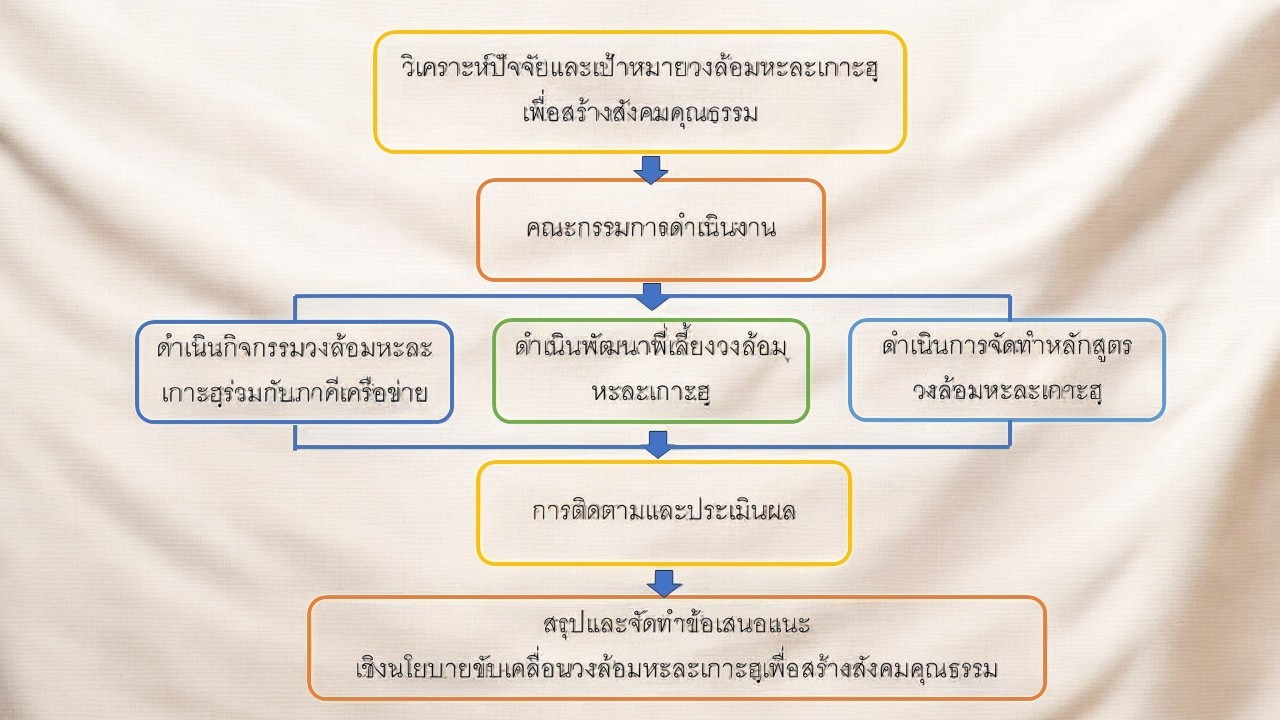
The findings revealed that the participatory collaboration among network partners in promoting a virtuous society operated through three key mechanisms: 1) Government agencies managed and supported Halaqah circle activities, adapting them to local contexts and positioning them with the needs of educational institutions. 2) Educational institutions implemented Halakah activities in accordance with the objectives of the Halaqah Circle curriculum and were responsible for selecting suitable Halaqah mentors. 3) Civil society and community sectors promoted moral values among local people by using mosques as centers for moral development within the community through the Halaqah process.
Article Details

This work is licensed under a Creative Commons Attribution-NonCommercial-NoDerivatives 4.0 International License.
References
ซูรียานี ยูโซะ. (2562).การบูรณาการหลักการศาสนาอิสลามในการจัดการเรียนการสอนด้วยกระบวนการหะละเกาะฮฺ กรณีศึกษา : โรงเรียนสามารถดีวิทยา ตำบลตะบิ้ง อำเภอสายบุรี จังหวัดปัตตานี[วิทยานิพนธ์ปริญญามหาบัณฑิต]. มหาวิทยาลัยสงขลานครินทร์.
พุธันวา มหาทรัพย์สมบัติ. (2566). กระบวนการทำงานแบบมีส่วนร่วมกับชุมชนในการสร้างเครือข่ายการทำงานด้านยาเสพติดในชุมชนแห่งหนึ่งของกรุงเทพมหานคร [วิทยานิพนธ์ปริญญามหาบัณฑิต]. มหาวิทยาลัยธรรมศาสตร์.
ไพศาล เต็ญหิรัญ และอับดุลเลาะ หนุ่มสุข. (2563). ความหมายและความสำคัญของชูรอในอิสลาม.วารสารวิชาการมหาวิทยาลัยการจัดการและเทคโนโลยีอีสเทิร์น, 17(1), 529-542.
มูนีเราะห์ สาและอาแร (2562). การบริหารโรงเรียนตามหลักการบริหารจัดการที่ดีในอิสลามของผู้บริหารโรงเรียนเอกชนสอนศาสนาอิสลามในจังหวัดนราธิวาส [วิทยานิพนธ์ปริญญามหาบัณฑิต]. มหาวิทยาลัยสงขลานครินทร์.
มูหัมมัด อับดุลกอเดร์ อบูฟาริส.(1978). อัลคอฏอ ฟิ อัลอิสลาม. มักตะบะฮฺ อัลอัคศอ.
อับดุลเลาะ เจ๊ะหลง และเกษตรชัย และหีม. (2562). สาเหตุของพฤติกรรมที่ไม่สอดคล้องตามวิถีอิสลามของเยาวชนมุสลิมกลุ่มเสี่ยงในพื้นที่สามจังหวัดชายแดนภาคใต้. วารสารวิทยบริการ มหาวิทยาลัยสงขลานครินทร์, 30(1), 156-166.
อับดุลเลาะ เจ๊ะหลง และเกษตรชัย และหีม. (2564). กระบวนทัศน์การเรียนรู้อิสลามเพื่อการพัฒนาพฤติกรรมเยาวชนมุสลิมในพื้นที่สามจังหวัดชายแดนภาคใต้. วารสารอิสลามศึกษามหาวิทยาลัยสงขลานครินทร์,15(2), 1-15.
อับดุลรอยะ บินเซ็ง. (2562). วิถีการดำเนินชีวิตของสัปบุรุษมัสยิดหะยีดาวูดผ่านกระบวนการฮะละเกาะฮ์อัลกุรอาน. วารสารมหาวิทยาลัยนราธิวาสราชนครินทร์ สาขามนุษยศาสตร์และสังคมศาสตร์, 6(2), 166-175.
อับดุลสุโก ดินอะ (มปป.). ถอดบทเรียนการขับเคลื่อนชุมชนบ้านน้ำเค็มด้วยกระบวนการชูรอ. มปท.
อาแว แมะอูมา, อาหะมะกอซี กาซอ, อิสมาอีล ราโอบ และฟาริด อับดุลลอฮ์หะซัน. (2566). บัยตีญันนะตีย์ “นวัตกรรมกระบวนการหะละเกาะฮฺอัลกุรอานเพื่อสร้างสรรค์ครอบครัวสันติสุข. วารสารอัลฮิกมะฮฺ มหาวิทยาลัยฟาฏอนี, 13(25), 291-298.
อิบรอฮิม หะยีสะมะแอ และมูหัมมัดตอลาล แกมะ (2564). ผลของการจัดการเรียนรู้เพื่อพัฒนาพฤติกรรมการเรียนรู้โดยใช้กิจกรรมการจัดหะละเกาะฮฺสำหรับนักเรียนโรงเรียนไทยรัฐวิทยา 24 อำเภอเมืองจังหวัดยะลา. วารสารอัลฮิกมะฮฺ มหาวิทยาลัยฟาฏอนี, 11(22), 261-274
Abu Urwah. (1987). Risalah Usrah Jilid 3. Pustaka Salam Kualalumpur Malaysia.
Hassan al-Banna.(1985). Usrah dan Dakwah. Dewan Pustaka Fajar Selsngor Malaysia.
