กายวิภาคของความวิตกกังวล: วิวัฒนาการ กลไก และความดึงดูดใจข้ามวัฒนธรรมของประเภทนวนิยายระทึกขวัญ
Article Sidebar
Main Article Content
บทคัดย่อ
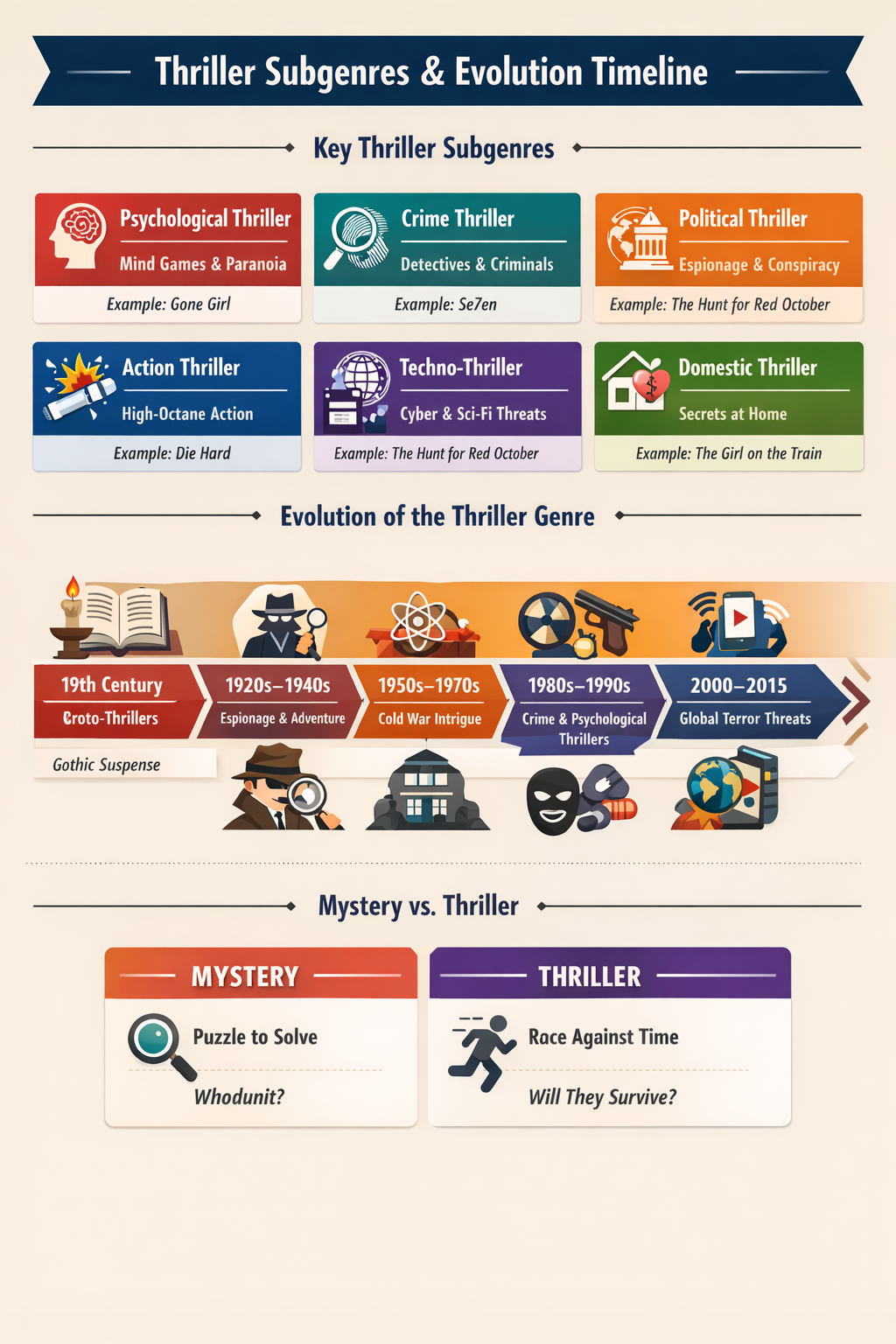
บทความนี้นำเสนอการวิเคราะห์เชิงลึกเกี่ยวกับวรรณกรรมแนวระทึกขวัญ โดยสืบค้นรากศัพท์และพัฒนาการของแนวเรื่องนี้ตั้งแต่วรรณคดีมหากาพย์ในยุคโบราณ จนถึงการเป็นแนวที่ครองความนิยมอย่างกว้างขวางในวรรณกรรมและภาพยนตร์ร่วมสมัย บทความได้ให้คำนิยามที่ชัดเจนและครอบคลุมของแนวระทึกขวัญ โดยจำแนกความแตกต่างจากแนวเรื่องที่มีความใกล้เคียงกันอย่าง “ลึกลับ” (mystery) และ “Suspense” อย่างเป็นระบบ ผ่านการเน้นที่ปฏิกิริยาทางอารมณ์ที่รุนแรง ความเข้มข้นของจังหวะการดำเนินเรื่อง และเดิมพันของชีวิตหรือความตาย การวิเคราะห์ได้จัดหมวดหมู่ย่อยของแนวระทึกขวัญไว้อย่างละเอียด บันทึกผลงานและบทบาทของผู้บุกเบิกสำคัญตั้งแต่สตีเวนสัน (Stevenson) จนถึงฮิทช์ค็อก (Hitchcock) พร้อมทั้งพิจารณาปัจจัยทางวัฒนธรรมที่มีอิทธิพลต่อโครงสร้างการเล่าเรื่อง โดยอาศัยกรอบแนวคิดทฤษฎีประเภทวรรณกรรม (Genre theory) นอกจากนี้ยังให้ความสำคัญเป็นพิเศษกับพื้นฐานทางจิตวิทยาและสังคมวิทยาที่อยู่เบื้องหลังความนิยมอันยาวนานของแนวระทึกขวัญอาชญากรรม โดยเสนอว่าเสน่ห์ของแนวนี้เกิดจากการสะท้อนความเป็นจริงที่ผู้ชมสามารถเชื่อมโยงได้ การเปิดโอกาสให้ประสบประสบการณ์แทนผู้อื่น (Vicarious experience) และการเผชิญหน้ากับความกลัวสากลของมนุษย์ โดยอาศัยแนวคิดจากทฤษฎีประเภทวรรณกรรม การวิจารณ์เชิงการตอบสนองของผู้อ่าน (Reader-response criticism) และการวิเคราะห์เชิงการตลาด บทความสรุปว่า กลไกหลักของแนวระทึกขวัญ—ได้แก่ ความลุ้นระทึก การกระทำและการต่อสู้เพื่อเอาชีวิตรอด—มีพลังพิเศษที่สามารถข้ามพรมแดนทางวัฒนธรรมได้อย่างแท้จริง ส่งผลให้แนวระทึกขวัญคงความเป็นรูปแบบการเล่าเรื่องที่ทรงอิทธิพล ยืดหยุ่น และครองความนิยมอย่างต่อเนื่องในตลาดแนวคิดระดับโลก
Article Details

อนุญาตภายใต้เงื่อนไข Creative Commons Attribution-NonCommercial-NoDerivatives 4.0 International License.
เอกสารอ้างอิง
Bhandari, R. (2020). Emergence of thrillers as a major genre in the Indian OTT space: A critical analysis [Unpublished master’s dissertation]. S. K. Somaiya Degree College of Arts, Science and Commerce.
Browder, L. (2006). Dystopian romance: True crime and the female reader. The Journal of Popular Culture, 39(6), 928-953.
Buchan, J. (2014). The thirty-nine steps (Vol. 1). Open Road Media.
Cawelti, J. G. (1976). Adventure, mystery, and romance: Formula stories as art and popular culture. University of Chicago Press.
De Fels, J. (1975). Popular literature in Thailand. Journal of the Siam Society, 63(2), 219-38.
Foojai, S. (2023). Detective Boys With Love:“Recoded” Generic Conventions in Thai Detective/Crime-BL Fiction [Master's thesis]. National Yang Ming Chiao Tung University).
Forsyth, F. (2012). The day of the jackal. Penguin.
Frantz, S. S., & Selinger, E. M. (Eds.). (2014). New approaches to popular romance fiction: Critical essays. McFarland.
Gerrig, R. (2018). Experiencing narrative worlds. Routledge.
Greene, T. (2018). The Odyssey: A New Translation by Peter Green. University of California Press.
Iwabuchi, K. (2002). Recentering globalization: Popular culture and Japanese transnationalism. Duke University Press.
Kaewkaen, A. (2023). Haunted Pasts and Contested Presents: Essays on Thai Gothic Fiction, Nationalism and Identity [Doctoral dissertation]. Washington University in St. Louis.
King, S. (2010). Danse macabre. Simon & Schuster.
Louis, S. R. (2017). Strange Case of Dr. Jekyll and Mr. Hyde.
Miller, M., White, B., & Scrivner, C. (2024). Surfing uncertainty with screams: predictive processing, error dynamics, and horror films. Philosophical Transactions of the Royal Society B, 379(1895), 20220425.
Mittell, J. (2004). Genre and television: From cop shows to cartoons in American culture. Routledge.
Morrell, J. P. (2008). Bullies, bastards and bitches: How to write the bad guys of fiction. Penguin.
Noor, N., Arslan, M. F., Noor, H., Latif, T., & Maqbool, F. (2025). Constructing Suspense and Psychological Tension: A Corpus-Based Stylistic Analysis of Contemporary Crime Thriller Fiction. Wah Academia Journal of Social Sciences, 4(2), 424-450.
Patkachar, U. (2024). The increasing popularity of Thai ghost films lends itself to the export potential of the Thai film industry. Journal of Communication and Management NIDA, 10(1), 53–66.
Perchtold-Stefan, C., Rominger, C., Ceh, S., Sattler, K., Veit, S.-V., & Fink, A. (2025). Out of the dark – Psychological perspectives on people's fascination with true crime. British Journal of Psychology. Advance online publication. https://doi.org/10.1111/bjop.700 38
Radway, J. A. (1991). Reading the romance: Women, patriarchy, and popular literature. University of North Carolina Press.
Sheaffer, R. (2005). The Da Vinci Code cult: a critical look at Dan Brown's The Da Vinci Code. Skeptic (Altadena, CA), 11(4), 22-27.
Smuts, A. (2021). The paradox of suspense. In E. N. Zalta (Ed.), The Stanford encyclopedia of philosophy (Winter 2021 ed.). https://plato.stanford.edu/archives/win2021/entries/pa radox-suspense/
Truffaut, F. (1983). Hitchcock. Simon & Schuster.
Wongwilatnurak, N., & Wongwilatnurak, S. L. (2024). The impact of spooky entertainment in Thailand on Gen-Z audiences. [ผลกระทบของสื่อบันเทิงสยองขวัญในประเทศไทยต่อผู้ชมเจน แซด]. Journal of communication and innovation NIDA, 11(1), 23-43.
Yun, H. (2025). The Changing Status of the Detectives in the Novels of Agatha Christie and Keigo Higashino: From Rational Authority to Human Exploration. Humanities and Social Science Research, 8(1), p27-p27.
Zemboy, J. (2010). The detective novels of Agatha Christie: A reader's guide. McFarland.
