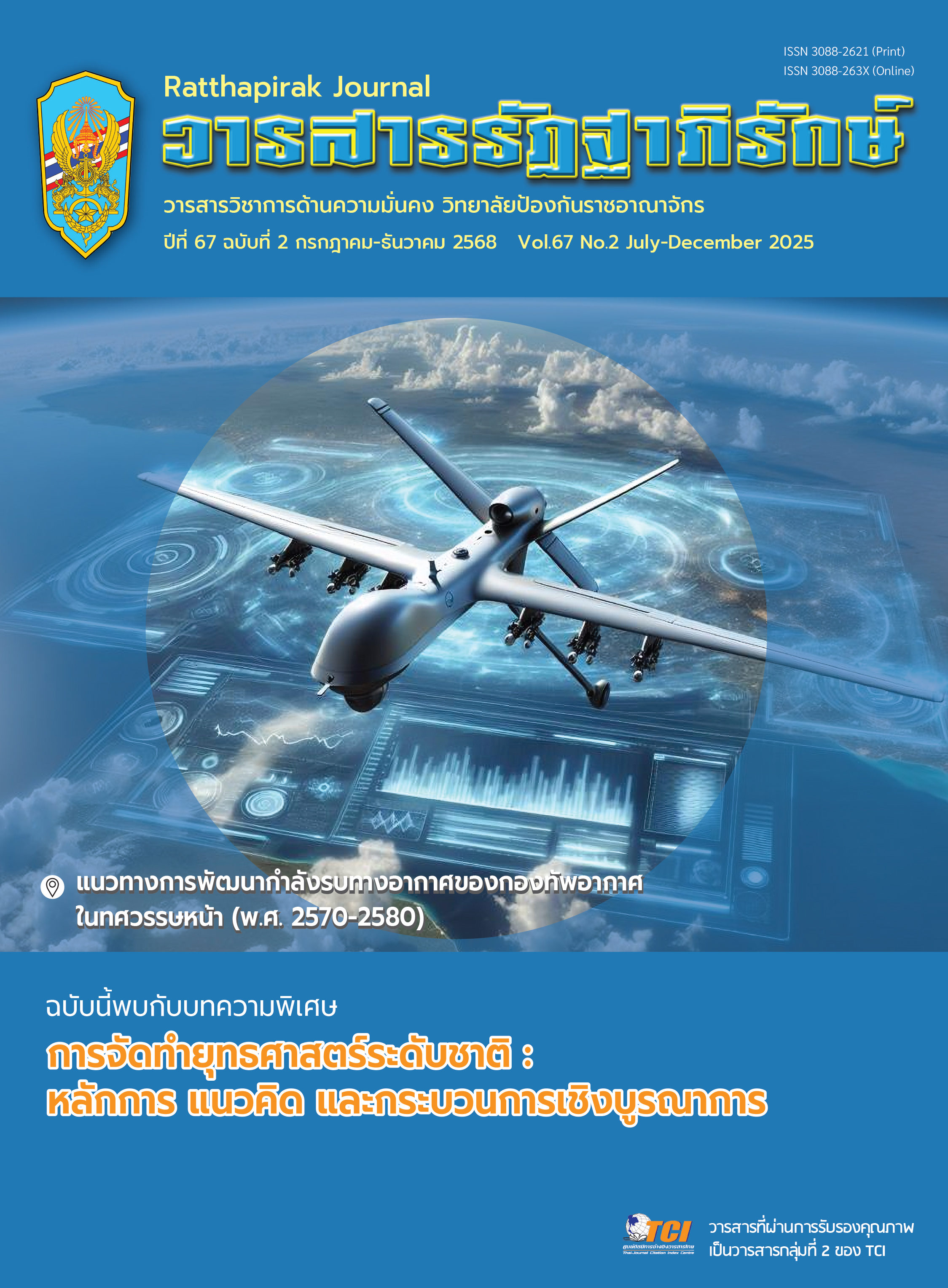
แนวทางการพัฒนากำลังรบทางอากาศของกองทัพอากาศ ในทศวรรษหน้า (พ.ศ.2570 - 2580)
คำสำคัญ:
กองทัพอากาศ, อันตรายทางทหาร, ภัยคุกคามทางทหาร, กำลังทางอากาศสมัยใหม่, การวางแผนทางทหารแบบอิงตามขีดความสามารถที่คำนึงถึงภัยคุกคามบทคัดย่อ
การวิจัยนี้เป็นการทำวิจัยเชิงคุณภาพ (Qualitative research) ในรูปแบบของการวิจัยเอกสาร (Documentary research) ร่วมกับการสัมภาษณ์เชิงลึก (In-depth interview) โดยในด้านหนึ่งมุ่งศึกษาสภาพความเป็นจริงของกำลังทางอากาศสมัยใหม่ที่ส่งผลกระทบต่อความมั่นคงทางทหารของไทย และศึกษากำลังอำนาจทางทหารของไทยที่ใช้รับมือกำลังทางอากาศสมัยใหม่นั้น อันจะนำไปสู่การระบุขีดความสามารถและระบบอาวุธของกำลังรบทางอากาศที่จำเป็นต้องเสริมสร้างของกองทัพอากาศ ในอีกด้านหนึ่งได้มุ่งศึกษานโยบายและแนวคิดเกี่ยวกับการป้องกันประเทศเพื่อใช้เสริมสร้างขีดความสามารถของกำลังรบทางอากาศของไทยและต่างประเทศ เพื่อใช้ในการระบุหลักการสำคัญที่สามารถกระทำได้เพื่อเสริมสร้างขีดความสามารถของกำลังรบทางอากาศของกองทัพอากาศ อันจะนำไปสู่การสังเคราะห์และนำเสนอเป็นแนวทางการพัฒนากำลังรบทางอากาศของกองทัพอากาศในทศวรรษหน้า (พ.ศ.๒๕๗๐ - ๒๕๘๐) ขอบเขตของการวิจัยนี้จะเป็นการศึกษากำลังรบของกำลังทางอากาศสมัยใหม่ (อาวุธยุทโธปกรณ์) ในมิติทางอากาศ (Air domain) ที่มาจากฐานปฏิบัติการบนพื้นดิน ในทะเล และในอากาศ การศึกษาการใช้กำลังทางอากาศสมัยใหม่ในเหตุการณ์ความขัดแย้งกันด้วยอาวุธ และคาดว่าจะยังมีการใช้งานต่อไปไม่น้อยกว่าปี พ.ศ.๒๕๘๐ ร่วมกับการสัมภาษณ์นายทหารของกองทัพอากาศทั้งที่เคยดำรงตำแหน่งในอดีตและกำลังดำรงตำแหน่งอยู่ในปัจจุบัน ที่มีส่วนเกี่ยวข้องกับการเตรียมและการใช้กำลังของกองทัพอากาศ ผลที่ได้รับจากวิจัยนี้ ได้ชี้ให้เห็นถึงสิ่งสำคัญต่อการพัฒนากำลังรบทางอากาศ 3 ประการ ประการแรก คือการพัฒนาองค์ความรู้ในเรื่องของอันตรายทางทหารและภัยคุกคามทางทหาร กำลังทางอากาศสมัยใหม่ และหลักการวางแผนทางทหารแบบอิงตามขีดความสามารถที่คำนึงถึงภัยคุกคาม ประการที่สอง คือการพัฒนากำลังรบ โดยได้มีการนำเสนอระบบอาวุธที่เหมาะสมพร้อมแนวทางการใช้งานในกรอบของหลักนิยมการใช้กำลังทางอากาศของกองทัพอากาศ อีกทั้งได้ชี้ให้เห็นถึงประโยชน์ที่จะได้รับจากการใช้งานระบบอาวุธสมัยใหม่นี้ร่วมกับเครื่องบินรบต่าง ๆ ของกองทัพอากาศ และประการสุดท้าย คือการพัฒนาศักย์สงคราม ในที่นี้จะเน้นให้กองทัพอากาศดำเนินการจัดหาระบบอาวุธควบคู่ไปกับการวิจัยและพัฒนา ซึ่งปัจจุบันนี้ ช่องว่างทางเทคโนโลยีที่น้อยลงในการพัฒนาระบบอาวุธของกำลังทางอากาศสมัยใหม่ อาทิ โดรนต่าง ๆ เป็นโอกาสที่อุตสาหกรรมป้องกันประเทศจะพัฒนาไปสู่การพึ่งพาตนเองได้ จากผลการวิจัย มีข้อเสนอแนะเชิงนโยบาย ได้แก่ การลดระดับศักยภาพของภัยคุกคามทางทหารด้วยวิธีการต่าง ๆ ที่ไม่ใช่การทำสงคราม และการจัดหาควบคู่กับการวิจัยและพัฒนา (P/R&D) เป็นสิ่งที่จะก่อให้เกิดการพึ่งพาตนเองได้ในระยะยาวสำหรับ ทอ. เชิงปฏิบัติการ ได้แก่ การเพิ่มพูนองค์ความรู้ที่ทันสมัยอย่างถูกต้องและเป็นไปในทิศทางเดียวกัน รวมถึงการให้ความสำคัญกับองค์ความรู้กระแสรอง นอกจากนี้การทำวิจัยในครั้งต่อไป ควรศึกษาเพิ่มเติมในมิติอื่น ๆ อาทิ มิติไซเบอร์ และมิติอวกาศ ที่สนับสนุนการใช้กำลังทางอากาศ
เอกสารอ้างอิง
กลาโหม, กระทรวง. “แผนปฏิบัติการด้านการพัฒนา วิทยาศาสตร์ เทคโนโลยี อุตสาหกรรมป้องกันประเทศ (พ.ศ. 2563 - 2580)”. 2563.
กองทัพอากาศ, กรม. “แผนปฏิบัติราชการ ระยะ 5 ปี (พ.ศ.2566 - 2570) กองทัพอากาศ”. 2566.
กองทัพอากาศ, กรม. “สมุดปกขาวกองทัพอากาศ พ.ศ.2563”. 2563.
มานัต วงษ์วาทย์, พลอากาศตรี. “แนวทางการบูรณาการพลังอำนาจของชาติด้านการทหารเข้ากับพลังอำนาจของชาติด้านอื่น ๆ”, รัฏฐาภิรักษ์. 58 (3), กันยายน - ธันวาคม 2559. หน้า 38 - 58.
Jan,T-S and Jan, C-G. “Development of weapon systems in developing countries: a case study of long range strategies in Taiwan”, Journal of the operational research society, 51 (9). Jan, 2000. p.1041 - 1050.
Rosa, Carlos Eduardo Valle, Colonel. “Elements of air and space power theory for developing air forces”, Journal of the Americas. 2 (2). August 3, 2020. p.197 - 210
Christianson, A. John, Major. “The search for suitable strategy: threat-based and capabilities-based strategies in a complex world”. School of Advanced Military Studies Monographs, United States Army Command and General Staff College, United States Air Force, 2016. https://apps.dtic.mil/sti/pdfs/AD1021927.pdf
Servetsky, A.I., Colonel. “Sovremennye ugrozy voennoj bezopasnosti gosudarstva [Modern threats to the military security of the state]”. Lecture notes at Military Academy of the General Staff of the Armed Forces of Russia. 2021.
Laurent, Borzillo, et al. “Threat-Based Defence Planning: Implications for Canada”. Report on CJOC Defence Planning Project. Network for Strategic Analysis (NSA). 29 March, 2021. https://ras-nsa.ca/report-on-cjoc-defence-planning-project/.
ดาวน์โหลด
เผยแพร่แล้ว
ฉบับ
ประเภทบทความ
สัญญาอนุญาต
ลิขสิทธิ์ (c) 2025 วารสารรัฏฐาภิรักษ์

อนุญาตภายใต้เงื่อนไข Creative Commons Attribution-NonCommercial-NoDerivatives 4.0 International License.
บทความ ข้อเขียน หรือความคิดเห็นในนิตยสารนี้เป็นของผู้เขียน ไม่ผูกพันกับวิทยาลัย ป้องกันราชอาณาจักรและทางราชการแต่อย่างใด

