
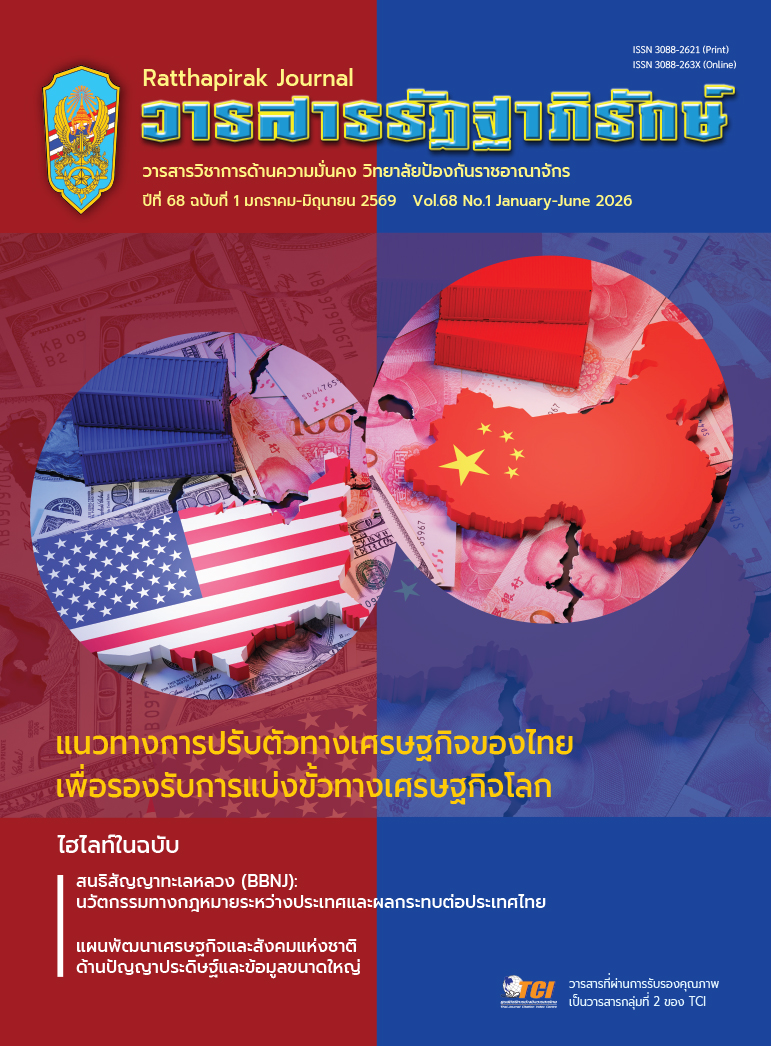
แนวทางการปรับตัวทางเศรษฐกิจของไทย เพื่อรองรับการแบ่งขั้วทางเศรษฐกิจโลก
คำสำคัญ:
การแบ่งขั้วทางเศรษฐกิจ, ห่วงโซ่อุปทาน, ความสามารถในการแข่งขันบทคัดย่อ
นับตั้งแต่ปี 2560 ความขัดแย้งทางภูมิรัฐศาสตร์ โดยเฉพาะระหว่างสหรัฐฯ และจีน เร่งให้ “การแบ่งขั้วทางเศรษฐกิจ” (Economic decoupling) รุนแรงขึ้น ประเทศไทยพึ่งพาการค้าและการลงทุนจากต่างประเทศสูงจึงมีความเสี่ยงต่อการเปลี่ยนแปลงนี้อย่างมีนัยสำคัญ งานวิจัยนี้มีวัตถุประสงค์เพื่อ (1) ศึกษาฉากทัศน์เศรษฐกิจโลกและผลกระทบจากการแบ่งขั้วทางเศรษฐกิจ (2) วิเคราะห์ผลกระทบต่อเศรษฐกิจไทย โดยเฉพาะโครงสร้างการค้า การลงทุนโดยตรงจากต่างประเทศ และห่วงโซ่อุปทาน และ (3) เสนอแนวทางการปรับตัวของไทย ทั้งในระดับนโยบายและภาคธุรกิจ
ผลวิจัยพบว่า การแบ่งขั้วทางเศรษฐกิจที่รุนแรงขึ้นเช่นนี้จะทำให้เศรษฐกิจโลกและเศรษฐกิจไทยชะลอตัวลง ผ่านการส่งออกและการลงทุนที่ลดลง ภาคธุรกิจไทยโดยเฉพาะสาขาอุตสาหกรรมที่เชื่อมโยงกับห่วงโซ่อุปทานโลก จะเผชิญต้นทุนสูงขึ้นและการปรับตัวด้านกฎระเบียบการค้าต่างประเทศ แม้บางธุรกิจไทยจะมีความสามารถในการปรับตัว เช่น กระจายตลาดส่งออก และเพิ่มมูลค่าสินค้า แต่ยังเผชิญข้อจำกัดด้านการเข้าถึงเทคโนโลยีขั้นสูงและบุคลากรทักษะสูง
ประเทศไทยต้องเร่งรับมือการเปลี่ยนแปลงนี้ผ่าน 2 นโยบายหลัก ได้แก่ (1) นโยบายสนับสนุนการปรับตัวของภาคธุรกิจและเพิ่มศักยภาพประเทศ โดยภาครัฐควรมีบทบาทเพิ่มเติมในการเจรจาต่อรองทางการค้าและกระจายตลาดส่งออก การเพิ่มความสามารถในการแข่งขันของธุรกิจและแรงงาน การส่งเสริมให้เกิดการลงทุนอุตสาหกรรมเป้าหมายที่มีศักยภาพสูง การสนับสนุนให้ธุรกิจกระจายความเสี่ยงในห่วงโซ่อุปทานโลก และการสร้างกลไกสื่อสารกับภาคธุรกิจที่มีประสิทธิภาพ และ (2) นโยบายความมั่นคงประเทศ โดยการวางตัวเป็นกลางอย่างมียุทธศาสตร์และการเลือกข้างเชิงเศรษฐกิจที่ชัดเจนในอุตสาหกรรมศักยภาพ เพื่อเตรียมรับมือความขัดแย้งโลกที่อาจรุนแรงขึ้นจนต้องเลือกข้าง
เอกสารอ้างอิง
ภาษาไทย
ปุณยวัจน์ ศรีสิงห์, รชฏ เลียงจันทร์, ปัณณ์ พัฒนศิริ, และ วิชาญ กุลาตี. “เศรษฐกิจไทยในยามโลกแบ่งขั้ว (Decoupling)” ศูนย์วิจัยเศรษฐกิจและธุรกิจ ธนาคารไทยพาณิชย์. (ออนไลน์). เข้าถึงได้จาก : https://www.scbeic.com/th/detail/file/product/8644/gffjpz8b10/EIC_In-Focus_US-CH-TW_20221115.pdf, 2565.
รัฐศาสตร์ หนูดำ, พิสชา คำบุยา และ วริษฐา ประจงการ. “Geopolitical tension: ผลต่อ FDI landscape โลก และ FDI ของไทย” ธนาคารแห่งประเทศไทย. Economic Pulse: Issue 6. (ออนไลน์). เข้าถึงได้จาก : https://www.bot.or.th/content/dam/bot/documents/th/research-and-publications/research/economic-pulse/economic-pulse-no6-geopolitics-and-fdi.pdf, 2567.
ศูนย์วิจัยเศรษฐกิจและธุรกิจ ธนาคารไทยพาณิชย์. “คว้าโอกาสอุตสาหกรรมไทย ในวันที่โลกแบ่งขั้ว (Decoupling) รุนแรงขึ้น”. (ออนไลน์). เข้าถึงได้จาก : https://www.scbeic.com/th/detail/file/product/9507/gx2nc4tmj4/In-focus-Decoupling-20240613.pdf, 2567.
สำนักงานสภาพัฒนาการเศรษฐกิจและสังคมแห่งชาติ. “พลิกความเสี่ยงภูมิรัฐศาสตร์ สร้างโอกาสประเทศไทย” การประชุมประจำปี 2567. (ออนไลน์). เข้าถึงได้จาก : https://www.nesdc.go.th/ewt_news.php?nid=15661&filename=index, 2567.
ภาษาอังกฤษ
Bekkers, Eddy & Schroeter, Sofia. "An Economic Analysis of the US-China Trade Conflict," WTO Staff Working Papers ERSD-2020-04, World Trade Organization (WTO), Economic Research and Statistics Division, 2020.
McKinsey and Company. “A Proactive Approach to Navigating Geopolitics is Essential to Thrive”. (online). Available : https://www.mckinsey.com/capabilities/geopolitics/our-insights/a-proactive-approach-to-navigating-geopolitics-is-essential-to-thrive, 2024.
Mark Elsner, Grace Atkinson and Saadia Zahidi. “Global Risks Report 2025”. World Economic Forum. (online). Available : https://www.weforum.org/publications/global-risks-report-2025/, 2025.
World Economic Forum. “These Are the World’s Biggest Trading Blocs”. (online). Available : https://www.weforum.org/stories/2023/04/growth-summit-2023-world-biggest-trading-blocs/, 2023.
World Trade Organization. “Global Trade Outlooks 2024”. (online). Available : https://www.wto-ilibrary.org/content/books/9789287076335, 2024.
ดาวน์โหลด
เผยแพร่แล้ว
ฉบับ
ประเภทบทความ
สัญญาอนุญาต
ลิขสิทธิ์ (c) 2026 วารสารรัฏฐาภิรักษ์

อนุญาตภายใต้เงื่อนไข Creative Commons Attribution-NonCommercial-NoDerivatives 4.0 International License.
บทความ ข้อเขียน หรือความคิดเห็นในนิตยสารนี้เป็นของผู้เขียน ไม่ผูกพันกับวิทยาลัย ป้องกันราชอาณาจักรและทางราชการแต่อย่างใด

