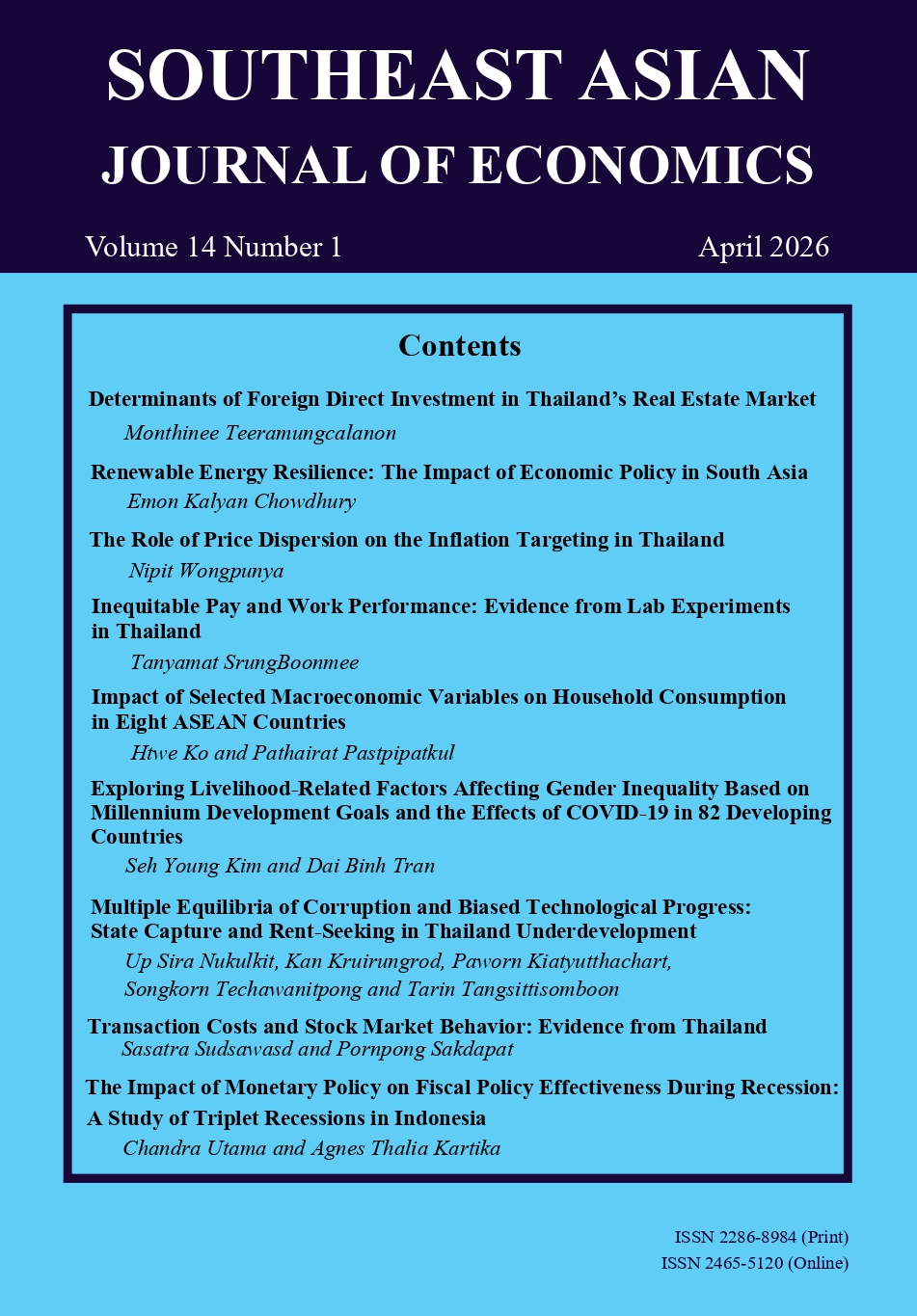
Exploring Livelihood-Related Factors Affecting Gender Inequality Based on Millennium Development Goals and the Effects of COVID-19 in 82 Developing Countries
Keywords:
gender inequality, developing countries, livelihoods, educationAbstract
Gender inequality is closely related to livelihoods. Hence, this study adopted four livelihood-related models (empowerment-, education-, health-, and infrastructure-related models) built on 11 factors to test the relationship between these factors and gender inequality in 82 developing countries. The data is extracted from the World Bank database. The fixed-effects estimation was adopted to address country-specific effects in the analyses. The findings showed that all factors affected gender inequality in the macro and regional analyses. The education-related model had the most significant impact in the macro analyses, emphasizing the critical role of education in promoting gender equality. The importance of infrastructure and ensuring equal access to healthcare services was highlighted in the regional analyses.
Downloads
Published
How to Cite
Issue
Section
Categories
License
Copyright (c) 2026 SOUTHEAST ASIAN JOURNAL OF ECONOMICS

This work is licensed under a Creative Commons Attribution-NonCommercial-NoDerivatives 4.0 International License.
The submission of a manuscript implies that the paper is an original work and has not been published elsewhere. The author(s) authorize the journal to reproduce or distribute the paper in printed or other electronic forms.