
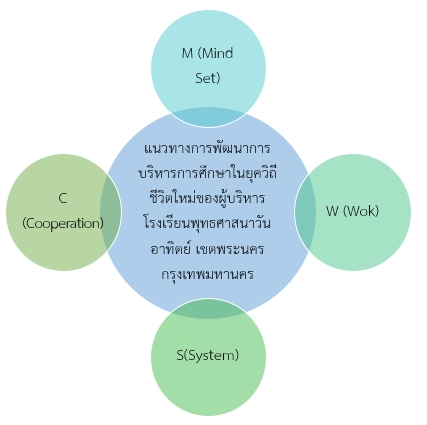
แนวทางการพัฒนาการบริหารการศึกษาในยุควิถีชีวิตใหม่ของผู้บริหารโรงเรียนพุทธศาสนาวันอาทิตย์ เขตพระนคร กรุงเทพมหานคร
Article Sidebar
Main Article Content
บทคัดย่อ
บทความวิจัยนี้มีวัตถุประสงค์ 1) เพื่อศึกษาสภาพการบริหารการศึกษาในยุควิถีชีวิตใหม่ 2) เพื่อศึกษาวิธีการพัฒนาการบริหารการศึกษาในยุควิถีชีวิตใหม่ 3) เพื่อเสนอแนวทาง
การพัฒนาการบริหารการศึกษาในยุควิถีชีวิตใหม่ของผู้บริหารโรงเรียนพุทธศาสนาวันอาทิตย์
เขตพระนคร กรุงเทพมหานคร เป็นการวิจัยแบบผสานวิธี การวิจัยเชิงปริมาณใช้แบบสอบถามกลุ่มตัวอย่างนักเรียนและครูโรงเรียนพุทธศาสนาวันอาทิตย์ เขตพระนคร กรุงเทพมหานคร 300 รูป/คนโดยใช้สถิติพื้นฐาน คือ ค่าความถี่ ค่าร้อยละ ค่าเฉลี่ย ค่าส่วนเบี่ยงเบนมาตรฐาน การวิจัยเชิงคุณภาพใช้การสัมภาษณ์เชิงลึกผู้บริหาร ครู 5 รูป/คน วิเคราะห์ข้อมูลด้วยการวิเคราะห์เนื้อหา
ผลการวิจัยพบว่า
- สภาพการบริหารการศึกษาในยุควิถีชีวิตใหม่ของผู้บริหารโรงเรียนพุทธศาสนา
วันอาทิตย์ เขตพระนคร กรุงเทพมหานคร ในภาพรวมอยู่ในระดับมาก เมื่อพิจารณารายด้าน พบว่า อยู่ในระดับมากทั้ง 4 ด้าน คือ ด้านระบบระเบียบและกฎเกณฑ์ในการบริหารการศึกษา ด้านการปรับวิธีคิด ด้านความร่วมมือความสัมพันธ์ในองค์กรกับภายนอก และด้านกระบวนการทำงาน - วิธีการพัฒนาการบริหารการศึกษาในยุควิถีชีวิตใหม่ของผู้บริหารโรงเรียนพุทธศาสนาวันอาทิตย์ เขตพระนคร กรุงเทพมหานครคือ เปิดใจปรับวิธีคิดของตนเองโดยไม่ยึดติดกับความคิดเดิม พยายามหาความรู้ในด้านต่างๆ ปฏิบัติตามแผนงานของวงจร PDCA ปรับกระบวนการทำงาน และการจัดการศึกษาแบบ Home School ปรับระบบระเบียบและกฎเกณฑ์ในการบริหารการศึกษา ด้วยขั้นตอน 4 สร้างกลไกการเรียนรู้ร่วมกับชุมชน พัฒนาความสัมพันธ์แบบเกื้อกูลกันกับชุมชน ส่งเสริมความเข้มแข็งของชุมชน พัฒนานักเรียนอย่างยั่งยืน
3. แนวทางการพัฒนาการบริหารการศึกษาในยุควิถีชีวิตใหม่ของผู้บริหารโรงเรียนพุทธศาสนาวันอาทิตย์ เขตพระนคร กรุงเทพมหานคร คือ คิดมุมมองแบบเครือข่าย คิดสิ่งดีพูดสิ่งดีและลงมือทำดี พึ่งพาสรรหาแหล่งความรู้ทั้งในโรงเรียนและนอกโรงเรียน ปฏิบัติตามแผนงานของวงจร PDCA จัดการศึกษาแบบ Home School ยกเลิกวัฒนธรรมองค์กรที่มีความล้าหลัง จัดสร้างวัฒนธรรมองค์กรแบบใหม่ที่เชื่อมต่อประสบการณ์ด้วยขั้นตอน 4 ขั้นตอน ส่งเสริมให้นักเรียนและครูเข้าใจบทบาทหน้าที่ของตน ส่งเสริมทักษะ สร้างแบบอย่างของความร่วมมือ และการมีส่วนร่วมสร้างกลไกการเรียนรู้ร่วมกับชุมชน บูรณาการการทำงานควบคู่ไปพร้อมๆ กับบทบาทของโรงเรียนต่อการพัฒนานักเรียนอย่างยั่งยืน
Article Details

อนุญาตภายใต้เงื่อนไข Creative Commons Attribution-NonCommercial-NoDerivatives 4.0 International License.
เนื้อหาและข้อมูลในบทความที่ลงตีพิมพ์ในวารสาร มจร บาฬีศึกษาพุทธโฆสปริทรรศน์ถือเป็นข้อคิดเห็นและความรับผิดชอบของผู้เขียนบทความโดยตรงซึ่งกองบรรณาธิการวารสาร ไม่จำเป็นต้องเห็นด้วย หรือร่วมรับผิดชอบใด ๆ บทความ ข้อมูล เนื้อหา รูปภาพ ฯลฯ ที่ได้รับการตีพิมพ์ในวารสาร มจร บาฬีศึกษาพุทธโฆสปริทรรศน์ถือเป็นลิขสิทธิ์ของวารสาร มจร บาฬีศึกษาพุทธโฆสปริทรรศน์หากบุคคลหรือหน่วยงานใดต้องการนำทั้งหมดหรือส่วนหนึ่งส่วนใดไปเผยแพร่ต่อหรือเพื่อกระทำการใด ๆ จะต้องได้รับอนุญาตเป็นลายลักอักษรจากวารสาร มจร บาฬีศึกษาพุทธโฆสปริทรรศน์ก่อนเท่านั้น
เอกสารอ้างอิง
Kingsbury, อ้างใน ธวัช ตัสโต, “ความคิดเห็นของครูและคณะกรรมการสถานศึกษาขั้นพื้นฐาน เกี่ยวกับพฤติกรรมเชิงจริยธรรมของผู้บริหารสถานศึกษา สังกัดสำนักงานการประถมศึกษาจังหวัดชุมพร”, วิทยานิพนธ์การศึกษามหาบัณฑิต, (บัณฑิตวิทยาลัย: มหาวิทยาลัยทักษิณ, 2546), หน้า 12.
กรมศาสนา กระทรวงวัฒนธรรม, แนวทางการดำเนินงานโครงการศูนย์ศึกษาพระพุทธศาสนาวันอาทิตย์ ปีงบประมาณ 2554, หน้า 48.
จีรวิทย์ นิยมธรรม, “สภาพและความคาดหวังพฤติกรรมด้านคุณธรรมของผู้บริหารโรงเรียน ตามทัศนะของข้าราชการครู สังกัดสำนักงานการประถมศึกษาจังหวัดสระแก้ว”, วิทยานิพนธ์การศึกษามหาบัณฑิต, (บัณฑิตวิทยาลัย: มหาวิทยาลัยบูรพา, 2545).
พระสุจินตนินท หนูชู, “รูปแบบการบริหารจัดการศึกษาศูนย์ศึกษาพระพุทธศาสนาวันอาทิตย์ที่มีประสิทธิผล”, วิทยานิพนธ์ศึกษาศาสตร์ดุษฎีบัณฑิต สาขาวิชาการจัดการศึกษา, (วิทยาลัยครุศาสตร์: มหาวิทยาลัยธุรกิจบัณฑิตย์, 2556), บทคัดย่อ.
สมปอง เส็งดอนไพร, “การศึกษาความคิดเห็นเกี่ยวกับสภาพการบริหารงานวิชาการของโรงเรียนในสังกัดเทศบาลเมืองพระประแดง จังหวัดสมุทรปราการ”, วิทยานิพนธ์ครุศาสตรมหาบัณฑิต, (บัณฑิตวิทยาลัย:จุฬาลงกรณ์มหาวิทยาลัย, 2555).
สุทธิศักดิ์ นันทวิทย์ และสจีวรรณ ทรรพวสุ, “รูปแบบการบริหารสถานศึกษาขั้นพื้นฐานในศตวรรษ ที่ 21 ของสำนักงานเขตพื้นที่การศึกษามัธยมศึกษา เขต 2”, วารสารบริหารการศึกษา มหาวิทยาลัยศิลปากร, ปีที่ 6 ฉบับที่ 1 (กรกฎาคม-ธันวาคม 2558): 215.
อเนก ขำทอง (ป.ธ.9), ปัญญา สละทองตรง (ป.ธ.9), และนักวิชาการศาสนา 8 ว, ธรรมศึกษาชั้นตรี ฉบับปรับปรุงใหม่ที่ประกาศใช้ในปัจจุบัน, (กรุงเทพมหานคร : โรงพิมพ์ชุมนุมสหกรณ์การเกษตรแห่งประเทศไทย, 2550), หน้า 1-3.
Arthur Thomas Smith, The Relationship of guidance centers and student use : A study of the location of guidance offices within the school plant, Andrews University, 1982, abstract, [online],
