
การพัฒนาจิตบริการตามแนวพุทธจิตวิทยาเพื่อคุณภาพชีวิตของจิตอาสา
Article Sidebar
Main Article Content
บทคัดย่อ
การวิจัยนี้มีวัตถุประสงค์เพื่อ 1) สภาพปัจจุบันด้านคุณลักษณะจิตบริการและคุณภาพชีวิตของจิตอาสา 2) องค์ประกอบการพัฒนาจิตบริการตามแนวพุทธจิตวิทยาเพื่อคุณภาพชีวิตของจิตอาสา และ 3) นำเสนอแนวทางการพัฒนาจิตบริการตามแนวพุทธจิตวิทยาเพื่อคุณภาพชีวิตของจิตอาสา ใช้วิธีการวิจัยเชิงคุณภาพ ผู้ให้ข้อมูลสำคัญ คัดเลือกแบบเจาะจง ได้แก่ ผู้เชี่ยวชาญด้านพระพุทธศาสนา วิปัสสนา จิตวิทยา และจิตอาสา จำนวน 25 รูป/คน เครื่องมือในการวิจัย ได้แก่ การสัมภาษณ์เชิงลึก วิเคราะห์ข้อมูลเชิงเนื้อหา ตรวจสอบข้อมูลโดยเทคนิควิเคราะห์สามเส้า
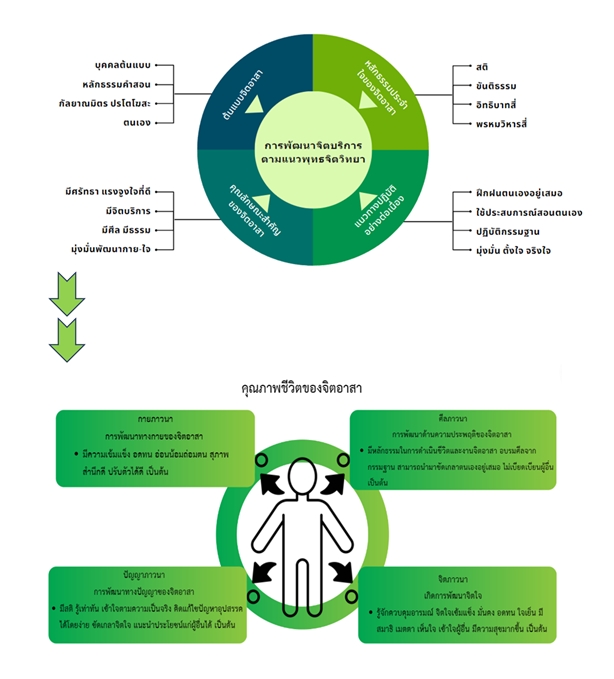
ผลการวิจัยพบว่า 1) สภาพปัจจุบันด้านคุณลักษณะจิตบริการของจิตอาสาวัดป่าเจริญราช มีศรัทธาพระพุทธศาสนา มีหลักธรรมในการใช้ชีวิต มีจิตบริการจากใจ เอาใจใส่ มีเมตตา มีทัศนคติที่ดี กระตือรือร้นช่วยเหลือ มีความสุข พร้อมเป็นผู้ให้ 2) องค์ประกอบการพัฒนาจิตบริการตามแนวพุทธจิตวิทยาเพื่อคุณภาพชีวิตของจิตอาสา ได้แก่ บุคคลต้นแบบของจิตอาสา คุณลักษณะสำคัญของจิตอาสา หลักธรรมประจำใจ และแนวทางปฏิบัติอย่างต่อเนื่อง และ 3) แนวทางการพัฒนาจิตบริการตามแนวพุทธจิตวิทยาเพื่อคุณภาพชีวิตของจิตอาสา ได้แก่ ต้นแบบการทำดีที่ยึดถือ คุณลักษณะสำคัญภายในและภายนอกของจิตอาสา หลักธรรมที่มีความสอดคล้องกับการพัฒนาจิตบริการเพื่อคุณภาพชีวิตของจิตอาสา ได้แก่ พละ5 และสังคหวัตถุ4 และแนวทางปฏิบัติในการทำงานจิตอาสาเพื่อให้เป็นไปอย่างต่อเนื่องอย่างยั่งยืน อันส่งผลดีต่อคุณภาพชีวิตของจิตอาสา 4 ด้าน 1) ด้านกาย มีความแข็งแกร่ง อดทน 2) ด้านศีล มีศีลมีธรรมดำเนินชีวิต 3) ด้านจิต มีสติรู้คิด รู้จักควบคุมอารมณ์ และ 4) ด้านปัญญา มีสติรู้เท่าทัน เข้าใจสิ่งรอบข้าง มองโลกตามความเป็นจริงมากขึ้น
Article Details

อนุญาตภายใต้เงื่อนไข Creative Commons Attribution-NonCommercial-NoDerivatives 4.0 International License.
เนื้อหาและข้อมูลในบทความที่ลงตีพิมพ์ในวารสาร มจร บาฬีศึกษาพุทธโฆสปริทรรศน์ถือเป็นข้อคิดเห็นและความรับผิดชอบของผู้เขียนบทความโดยตรงซึ่งกองบรรณาธิการวารสาร ไม่จำเป็นต้องเห็นด้วย หรือร่วมรับผิดชอบใด ๆ บทความ ข้อมูล เนื้อหา รูปภาพ ฯลฯ ที่ได้รับการตีพิมพ์ในวารสาร มจร บาฬีศึกษาพุทธโฆสปริทรรศน์ถือเป็นลิขสิทธิ์ของวารสาร มจร บาฬีศึกษาพุทธโฆสปริทรรศน์หากบุคคลหรือหน่วยงานใดต้องการนำทั้งหมดหรือส่วนหนึ่งส่วนใดไปเผยแพร่ต่อหรือเพื่อกระทำการใด ๆ จะต้องได้รับอนุญาตเป็นลายลักอักษรจากวารสาร มจร บาฬีศึกษาพุทธโฆสปริทรรศน์ก่อนเท่านั้น
เอกสารอ้างอิง
ราชบัณฑิตยสถาน, พจนานุกรมฉบับราชบัณฑิตยสถาน พ.ศ. ๒๕๔๒, (กรุงเทพมหานคร: นานมีบุ๊คส์พับลิเคชั่นส์, ๒๕๔๖).
ตวงเพชร สมศรี, “การส่งเสริมแรงจูงใจในการทำงานจิตอาสาแนวพุทธของอาสาสมัครตำรวจชุมชน”, รายงานการวิจัย, (พระนครศรีอยุธยา: มหาวิทยาลัยมหาจุฬาลงกรณราชวิทยาลัย, ๒๕๖๐).
ธฤษิดา แก้วภราดัย, ”ศึกษาความสัมพันธ์ระหว่างพละ ๕ กับอิทธิบาท ๔”, วิทยานิพนธ์ปริญญาพุทธศาสตรมหาบัณฑิต สาขาวิชาพระพุทธศาสนา, (บัณฑิตวิทยาลัย: มหาวิทยาลัยมหาจุฬาลงกรณราชวิทยาลัย, ๒๕๖๑).
พิไลวรรณ บุญล้น และคณะ, “แรงจูงใจการทำงานจิตอาสาตามหลักพุทธจิตวิทยาของบุคคล หลากหลายอาชีพในสังคมไทย”, วารสาร มจร มนุษยศาสตร์ ปริทรรศน์, ปีที่ ๗ ฉบับที่ ๑ (มกราคม-มิถุนายน ๒๕๖๔).
พิไลวรรณ บุญล้น, “แรงจูงใจการทำงานจิตอาสาตามหลักพุทธจิตวิทยาของบุคคลหลากหลายอาชีพในสังคมไทย”, วิทยานิพนธ์ปริญญาพุทธศาสตรมหาบัณฑิต สาขาวิชาพุทธจิตวิทยา, (บัณฑิตวิทยาลัย: มหาวิทยาลัยมหาจุฬาลงกรณราชวิทยาลัย, ๒๕๖๔), หน้า ๔๕.
พระธรรมปิฎก (ป.อ. ปยุตฺโต), ธรรมนูญชีวิต, (กรุงเทพมหานคร: โรงพิมพ์สำนักงานพระพุทธศาสนา แห่งชาติ, ๒๕๕๐), หน้า ๑๓-๑๔.
พระปลัดธัญวัฒน์ อโสโก (รักษ์เพ็ชร), “การประยุกต์ใช้หลักภาวนา ๔ ในการพัฒนาคุณภาพชีวิตของชุมชนบ้านบ่อเกตุ อำเภอสะเดา จังหวัดสงขลา”, มหาวิทยาลัยมหาจุฬาลงกรณราชวิทยาลัย, วารสารมหาจุฬานาครทรรศน์, ปีที่ ๗ ฉบับที่ ๒ (กุมภาพันธ์ ๒๕๖๓): ๓๕-๔๖.
พระจิรวัฒน์ อฺตตมเมธี, “ศึกษาวิเคราะห์การศึกษาเพื่อพัฒนาตนตามทัศนะ ของพระพรหมคุณาภรณ์ (ป.อ. ปยุตฺโต)”, วิทยานิพนธ์ปริญญาพุทธศาสตรมหาบัณฑิต สาขาวิชาพระพุทธศาสนา, (บัณฑิตวิทยาลัย: มหาจุฬาลงกรณราชวิทยาลัย, ๒๕๕๓).
