
การสร้างรูปแบบการเรียนการสอนธรรมบทในระบบออนไลน์
Article Sidebar
Main Article Content
บทคัดย่อ
บทความวิจัยนี้มีวัตถุประสงค์เพื่อ (1) ศึกษาหลักการ แนวคิด และวิธีการจัดการเรียนรู้ในระบบออนไลน์ (2) พัฒนารูปแบบการเรียนการสอนภาษาบาลีธรรมบทเชิงวิเคราะห์ให้สอดคล้องกับแนวทางปฏิรูปการศึกษา และ (3) เสนอแนวทางการสร้างนวัตกรรมการเรียนรู้ภาษาบาลีธรรมบทในระบบออนไลน์ โดยใช้การวิจัยเชิงคุณภาพร่วมกับการวิจัยพัฒนา (R&D) ประกอบด้วยการศึกษาจากเอกสาร ทฤษฎีการเรียนรู้ และสัมภาษณ์เชิงลึกจากผู้ทรงคุณวุฒิในด้านบาลีและเทคโนโลยีการศึกษา พร้อมทั้งการออกแบบ ทดลอง และประเมินผลต้นแบบรูปแบบการเรียนรู้
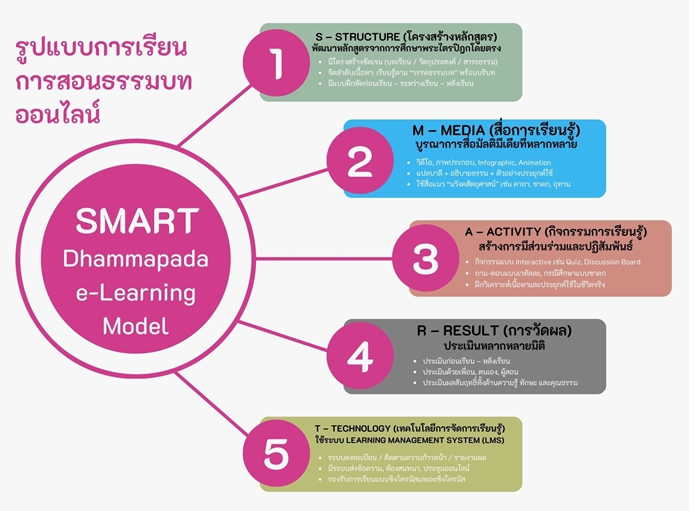
ผลการวิจัยพบว่า การจัดการเรียนรู้ในระบบออนไลน์ที่มีประสิทธิภาพควรยึดผู้เรียนเป็นศูนย์กลาง ใช้แนวคิดทฤษฎีการเรียนรู้ของ Gagné เป็นกรอบการออกแบบ โดยบทเรียนธรรมบทควรถูกพัฒนาให้เป็น “บทเรียนเชิงวิเคราะห์” ที่ไม่เพียงแค่แปลศัพท์เท่านั้น แต่รวมถึงการวิเคราะห์องค์ธรรม แนวคิดหลัก และนัยเชิงเปรียบเทียบ พร้อมใช้สื่อมัลติมีเดีย เช่น วิดีโอ อินโฟกราฟิก แบบฝึกหัดโต้ตอบและระบบการประเมินแบบออนไลน์ นวัตกรรมที่ได้จากการวิจัยครั้งนี้ คือโมเดล DAeLM (Dhammapada Analytical e-Learning Model) ซึ่งประกอบด้วย 8 องค์ประกอบหลัก ได้แก่ ทฤษฎีพื้นฐาน, ระบบ LMS, บทเรียนธรรมบทเชิงวิเคราะห์, สื่อมัลติมีเดีย, กิจกรรมการเรียนรู้, ระบบการประเมินผล, การทดสอบต้นแบบ และการพัฒนา–ขยายผล ซึ่งโมเดลนี้ได้ถูกทดลองใช้กับกลุ่มนิสิต นักเรียนบาลี และได้รับผลตอบรับในระดับดีมาก ทั้งในด้านผลสัมฤทธิ์ทางการเรียนและความพึงพอใจของผู้เรียน ผลการวิจัยชี้ให้เห็นว่า รูปแบบการเรียนการสอนธรรมบทในระบบออนไลน์มีศักยภาพในการพัฒนาการเรียนรู้ภาษาบาลีให้มีความเข้าใจลึกซึ้ง เข้าถึงง่าย และสอดคล้องกับบริบทของผู้เรียนในยุคดิจิทัล จึงควรส่งเสริมให้มีการนำไปใช้และพัฒนาต่อยอดในสำนักเรียนบาลี มหาวิทยาลัยสงฆ์ และการศึกษาพระพุทธศาสนาในรูปแบบออนไลน์อื่น ๆ ต่อไป
Article Details

อนุญาตภายใต้เงื่อนไข Creative Commons Attribution-NonCommercial-NoDerivatives 4.0 International License.
เนื้อหาและข้อมูลในบทความที่ลงตีพิมพ์ในวารสาร มจร บาฬีศึกษาพุทธโฆสปริทรรศน์ถือเป็นข้อคิดเห็นและความรับผิดชอบของผู้เขียนบทความโดยตรงซึ่งกองบรรณาธิการวารสาร ไม่จำเป็นต้องเห็นด้วย หรือร่วมรับผิดชอบใด ๆ บทความ ข้อมูล เนื้อหา รูปภาพ ฯลฯ ที่ได้รับการตีพิมพ์ในวารสาร มจร บาฬีศึกษาพุทธโฆสปริทรรศน์ถือเป็นลิขสิทธิ์ของวารสาร มจร บาฬีศึกษาพุทธโฆสปริทรรศน์หากบุคคลหรือหน่วยงานใดต้องการนำทั้งหมดหรือส่วนหนึ่งส่วนใดไปเผยแพร่ต่อหรือเพื่อกระทำการใด ๆ จะต้องได้รับอนุญาตเป็นลายลักอักษรจากวารสาร มจร บาฬีศึกษาพุทธโฆสปริทรรศน์ก่อนเท่านั้น
เอกสารอ้างอิง
พระครูศรีปัญญาวิกรม. “รูปแบบการเรียนการสอนบาลีศึกษาในสังคมไทย.” วารสารวิชาการ มมร. ร้อยเอ็ด. ปีที่ 4 ฉบับที่ 2 (2558).
พระพุทธัปปิยมหาเถระ. ปทรูปสิทธิ. (กรุงเทพฯ: ธรรมสภา, 2543).
พระมหาวัฒนา ปญฺญาทีโป. ศึกษาพัฒนาการคำสอนนวังคสัตถุศาสน์ในพระไตรปิฎก. สารนิพนธ์ดุษฎีบัณฑิต. มจร. 2559.
สำนักศาสนาศึกษาวัดเทพลีลา. คู่มือเปิดตำราเรียนบาลี. (กรุงเทพฯ: มหาจุฬาลงกรณราชวิทยาลัย. 2545).
Anderson, L. W.. & Krathwohl, D. R. (2001). A taxonomy for learning, teaching, and assessing: A revision of Bloom's taxonomy of educational objectives. New York: Longman.
