
การพัฒนารูปแบบการจัดการเรียนรู้ในโลกเสมือน ตามแนวคิดจินตวิศวกรรมแบบร่วมมือ เพื่อส่งเสริมทักษะการสร้างสรรค์นวัตกรรม สำหรับนักศึกษาปริญญาบัณฑิต สถาบันบัณฑิตพัฒนศิลป์
Article Sidebar
Main Article Content
บทคัดย่อ
บทความวิจัยนี้มีวัตถุประสงค์ เพื่อพัฒนาและนำเสนอรูปแบบการจัดการเรียนรู้ในโลกเสมือนตามแนวคิดจินตวิศวกรรมแบบร่วมมือ เพื่อส่งเสริมทักษะการสร้างสรรค์นวัตกรรมของนักศึกษาปริญญาบัณฑิต สถาบันบัณฑิตพัฒนศิลป์ และศึกษาผลจากการใช้รูปแบบดังกล่าว โดยประชากรและกลุ่มตัวอย่างเป็นนักศึกษาชั้นปีที่ 2 วิชาเอกนาฏศิลป์ศึกษาและดนตรีศึกษา วิทยาลัยนาฏศิลปนครศรีธรรมราช สถาบันบัณฑิตพัฒนศิลป์ การศึกษานี้เป็นแบบวิจัยและพัฒนา (Research and Development) มีการวิเคราะห์ข้อมูลโดยใช้ค่าเฉลี่ย (x̄) และส่วนเบี่ยงเบนมาตรฐาน (S.D.)
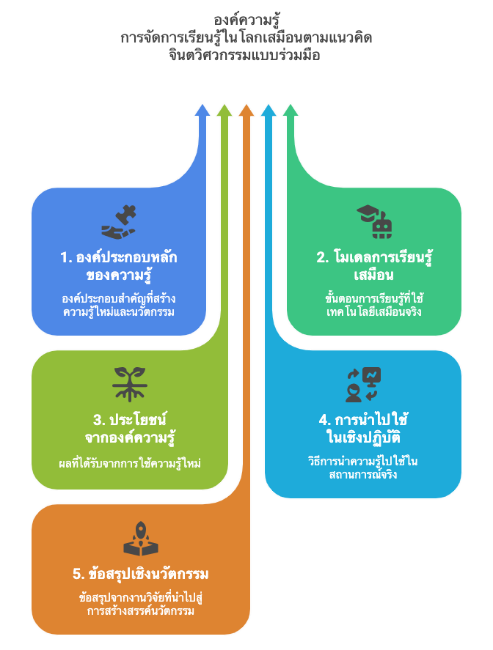
ผลการวิจัย พบว่า รูปแบบที่พัฒนาขึ้นมีองค์ประกอบหลัก 6 ด้าน และกระบวนการเรียนรู้ 7 ขั้นตอน เน้นการปฏิบัติจริง ทำงานร่วมกัน และประเมินผลต่อเนื่อง โดยผู้เชี่ยวชาญประเมินว่ารูปแบบมีความเหมาะสมในระดับมาก (x̄ = 4.38, S.D. = 0.60; IOC = 0.95) ทั้งในด้านเนื้อหา (x̄ = 4.19, S.D. = 0.41) และการนำเสนอในสภาพแวดล้อมเสมือนที่น่าสนใจ มีสื่อการเรียนรู้ที่หลากหลายและทันสมัย พร้อมแนะนำให้มีการสนับสนุนด้านเทคโนโลยีเพิ่มเติม จากการทดลองใช้รูปแบบผ่านแพลตฟอร์ม Metaverse พบว่าผลสัมฤทธิ์ทางการเรียนหลังเรียน (x̄ = 19.77, S.D. = 2.05) สูงกว่าก่อนเรียน (x̄ = 15.00, S.D. = 1.68) อย่างมีนัยสำคัญทางสถิติที่ระดับ .05 และทักษะการสร้างสรรค์นวัตกรรมของนักศึกษาเพิ่มขึ้นอย่างมีนัยสำคัญที่ระดับ .01 (หลังเรียน x̄ = 2.90, ก่อนเรียน x̄ = 2.88) นอกจากนี้ นักศึกษายังมีความพึงพอใจในระดับมากที่สุด (x̄ = 4.52, S.D. = 0.70) ขณะที่ผลงานสร้างสรรค์ได้รับการประเมินว่ามีความเหมาะสมมากที่สุด (x̄ = 4.68, S.D. = 0.51) รูปแบบการจัดการเรียนรู้ที่นำเสนอได้รับการประเมินจากผู้เชี่ยวชาญว่ามีความเหมาะสมมากที่สุด (x̄ = 4.72, S.D. = 0.49) แสดงถึงศักยภาพของรูปแบบนี้ในการส่งเสริมนวัตกรรมเชิงสร้างสรรค์อย่างมีประสิทธิภาพ
Article Details

อนุญาตภายใต้เงื่อนไข Creative Commons Attribution-NonCommercial-NoDerivatives 4.0 International License.
เนื้อหาและข้อมูลในบทความที่ลงตีพิมพ์ในวารสาร มจร บาฬีศึกษาพุทธโฆสปริทรรศน์ถือเป็นข้อคิดเห็นและความรับผิดชอบของผู้เขียนบทความโดยตรงซึ่งกองบรรณาธิการวารสาร ไม่จำเป็นต้องเห็นด้วย หรือร่วมรับผิดชอบใด ๆ บทความ ข้อมูล เนื้อหา รูปภาพ ฯลฯ ที่ได้รับการตีพิมพ์ในวารสาร มจร บาฬีศึกษาพุทธโฆสปริทรรศน์ถือเป็นลิขสิทธิ์ของวารสาร มจร บาฬีศึกษาพุทธโฆสปริทรรศน์หากบุคคลหรือหน่วยงานใดต้องการนำทั้งหมดหรือส่วนหนึ่งส่วนใดไปเผยแพร่ต่อหรือเพื่อกระทำการใด ๆ จะต้องได้รับอนุญาตเป็นลายลักอักษรจากวารสาร มจร บาฬีศึกษาพุทธโฆสปริทรรศน์ก่อนเท่านั้น
เอกสารอ้างอิง
เทพยพงษ์ เศษคึมบง. (2562). รูปแบบการเรียนรู้ในโลกเสมือนด้วยการเรียนรู้เชิงสถานการณ์เพื่อเสริมสร้างการคิดสร้างสรรค์ร่วมกัน สําหรับนิสิตนักศึกษาครุศาสตร์ศึกษาศาสตร์. วิทยานิพนธ์ปริญญาครุศาสตร์ดุษฎีบัณฑิต สาขาวิชาเทคโนโลยีและสื่อสารการศึกษา. กรุงเทพฯ: จุฬาลงกรณ์มหาวิทยาลัย.
สถาบันบัณฑิตพัฒนศิลป์. (2562). หลักสูตรศึกษาศาสตรบัณฑิตสาขาวิชานาฏศิลป์ศึกษา (4 ปี) (หลักสูตรปรับปรุง พ.ศ. 2562). วิทยาลัยนาฏศิลปนครศรีธรรมราช สถาบันบัณฑิตพัฒนศิลป์ กระทรวงวัฒนธรรม.
Cho, IH., Yeo, JH., Hwang, GH. et al. Impact of a virtual environment on the learning effectiveness, motivation, cognitive load, and group self-efficacy of elementary school students in collaborative learning. Education Tech Research Dev 70, 2145–2169 (2022). Available from: https://doi.org/10.1007/s11423-022-10159-z
Gorina, L., Gordova, M., Khristoforova, I., Sundeeva, L. & Strielkowski, W. (2023). Sustainable Education and Digitalization through the Prism of the COVID-1 9 Pandemic. Sustainability 15, 8 (April): 6846.
Santosa, M. H., Ivone, F. M., Jacobs, G. M., & Flores, J. C. (2022). Student-to-Student Cooperation in Virtual Learning without Breakout Rooms. Beyond Words 10,1 (May): 70-82.
Walt Disney Imagineering. (1989). Walt Disney Imagineering, Walt Disney Imagineering a Behind the Dreams Look at Making the Magic Real. China: Welcome Enter- prises; 2010.
Yang, M. C. (2009). Observations on concept generation and sketching in engineering design. Research in Engineering Design, 20, 1 (January): 1-11.
