
แนวทางการเจริญสติปัฏฐาน 4 ในโพธิปักขิยธรรมเพื่อสนับสนุนการปฏิบัติวิปัสสนากรรมฐาน
Article Sidebar
Main Article Content
บทคัดย่อ
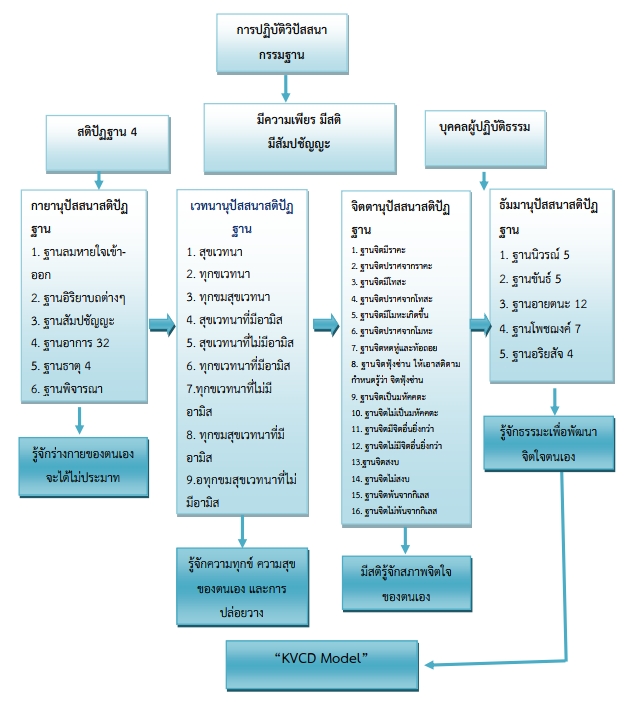
บทความวิจัยนี้มีวัตถุประสงค์ 3 ประการ คือ 1) เพื่อศึกษาสติปัฏฐาน 4 ในโพธิปักขิยธรรม 2) เพื่อศึกษาหลักพุทธธรรมเพื่อสนับสนุนการปฏิบัติวิปัสสนากรรมฐาน และ 3) เพื่อนำเสนอแนวทางการเจริญสติปัฏฐาน 4 ในโพธิปักขิยธรรมเพื่อสนับสนุนการปฏิบัติวิปัสสนากรรมฐาน เป็นการวิจัยเชิงคุณภาพแบบวิจัยเอกสาร โดยการศึกษาข้อมูลจากคัมภีร์พระพุทธศาสนาเถรวาท และเอกสารต่าง ๆ ที่เกี่ยวข้อง สรุปวิเคราะห์ เรียบเรียง บรรยายเชิงพรรณนา ผลการวิจัยพบว่า แนวทางการเจริญสติปัฏฐาน 4 ในโพธิปักขิยธรรม เพื่อสนับสนุนการปฏิบัติวิปัสสนากรรมฐาน แบ่งเป็น 4 ฐาน คือ 1) บุคคลผู้ปฏิบัติธรรมที่มีความเพียร มีสติ และมีปัญญาพิจารณาฐานกาย 6 ฐาน ให้รู้เห็นตามความเป็นจริง ได้แก่ การกำหนดรู้ลมหายใจเข้า-ออก อิริยาบถต่าง ๆ ฐานสัมปชัญญะ ฐานอาการ 32 ฐานธาตุ 4 เป็นต้น เพื่อให้รู้ไตรลักษณ์ของร่างกายและไม่ประมาท 2) ผู้ปฏิบัติธรรมที่มีความเพียร มีสติ และมีปัญญาพิจารณาฐานเวทนา 9 ฐาน เพื่อให้เห็นไตรลักษณ์ ได้แก่สุขเวทนา ทุกขเวทนา อทุกขมสุขเวทนา สุขเวทนาที่มีอามิส ฐานสุขเวทนาที่ไม่มีอามิส ฐานทุกขเวทนาที่มีอามิส ฐานทุกขเวทนาที่ไม่มีอามิส ฐานอทุกขมสุขเวทนาที่มีอามิส และฐานอทุกขมสุขเวทนาที่ไม่มีอามิส เพื่อรู้จักความทุกข์ ความสุข และการปล่อยวางไม่ยึดมั่นถือมั่น 3) ผู้ปฏิบัติธรรมที่มีความเพียร มีสติ และมีปัญญาในการพิจารณาฐานจิต ให้เห็นไตรลักษณ์มี 16 ฐาน เช่น เมื่อจิตตนเองมีราคะก็รู้ เมื่อไม่มีราคะก็รู้ จิตไม่พ้นจากกิเลสก็รู้ เป็นต้น เพื่อให้มีสติรู้จักสภาพจิตใจและไม่หลงไปตามกิเลสตัณหา 4) ผู้ปฏิบัติธรรมที่มีความเพียร มีสติ และมีปัญญาพิจารณาฐานธรรม 5 ฐาน ให้เห็นไตรลักษณ์ ได้แก่ นิวรณ์ 5 ขันธ์ 5 อายตนะ 12 โพชฌงค์ 7 และอริยสัจจ์ 4 เพื่อให้รู้ทุกข์ เหตุแห่งทุกข์ ความดับทุกข์ และข้อปฏิบัติเพื่อให้ถึงความดับทุกข์ ซึ่งสนับสนุนการปฏิบัติวิปัสสนากรรมฐานให้เจริญก้าวหน้ายิ่งขึ้น ส่วนองค์ความรู้ที่ได้จากการวิจัยนี้เป็นรูปแบบ “KVCD Model”
Article Details

อนุญาตภายใต้เงื่อนไข Creative Commons Attribution-NonCommercial-NoDerivatives 4.0 International License.
เนื้อหาและข้อมูลในบทความที่ลงตีพิมพ์ในวารสาร มจร บาฬีศึกษาพุทธโฆสปริทรรศน์ถือเป็นข้อคิดเห็นและความรับผิดชอบของผู้เขียนบทความโดยตรงซึ่งกองบรรณาธิการวารสาร ไม่จำเป็นต้องเห็นด้วย หรือร่วมรับผิดชอบใด ๆ บทความ ข้อมูล เนื้อหา รูปภาพ ฯลฯ ที่ได้รับการตีพิมพ์ในวารสาร มจร บาฬีศึกษาพุทธโฆสปริทรรศน์ถือเป็นลิขสิทธิ์ของวารสาร มจร บาฬีศึกษาพุทธโฆสปริทรรศน์หากบุคคลหรือหน่วยงานใดต้องการนำทั้งหมดหรือส่วนหนึ่งส่วนใดไปเผยแพร่ต่อหรือเพื่อกระทำการใด ๆ จะต้องได้รับอนุญาตเป็นลายลักอักษรจากวารสาร มจร บาฬีศึกษาพุทธโฆสปริทรรศน์ก่อนเท่านั้น
เอกสารอ้างอิง
มหาวิทยาลัยมหาจุฬาลงกรณราชวิทยาลัย. พระไตรปิฎกภาษาไทย ฉบับมหาจุฬาลงกรณราช
วิทยาลัย. กรุงเทพมหานคร: โรงพิมพ์ มหาจุฬาลงกรณราชวิทยาลัย. 2539.
มหาจุฬาลงกรณราชวิทยาลัย. อรรถกถาภาษาไทย ฉบับมหาจุฬาอรรถกถา. กรุงเทพมหานคร:
โรงพิมพ์มหาจุฬาลงกรณราชวิทยาลัย, 2559.
พระครูปลัดสัมพิพัฒนธรรมาจารย์ (นิรันดร์ อภิปุญฺโญ). คู่มือพระวิปัสสนาจารย์. กรุงเทพมหานคร:
ห้างหุ้นส่วนจำกัด ประยูรสาส์นไทย การพิมพ์. 2561.
พระพุทธโฆสเถระ. คัมภีร์วิสุทธิมรรค. แปลโดย สมเด็จพระพุฒาจารย์ (อาจ อาสภมหาเถร).
พิมพ์ครั้งที่ 7. กรุงเทพมหานคร: บริษัท ธนาเพรส จำกัด. 2551.
พระมหาชินวัฒน์ จกฺกวโร (กุยรัมย์ ป.ธ. 8). พระอภิธรรม เจตสิกปรมัตถ์. กรุงเทพมหานคร:
บริษัท เอบุ๊ค ดิสทริบิวชั่น จำกัด. 2556.
พระสัททธัมมโชติกะ ธัมมาจริยะ. ปรมัตถโชติกะ. กรุงเทพมหานคร: โรงพิมพ์มหาจุฬาลงกรณ
ราชวิทยาลัย. 2538.
พระอนุรุทธะ และพระญาณธชะ. อภิธัมมัตถสังคหะและปรมัตถทีปนี. แปลโดย พระคันธสาราภิวงศ์.
กรุงเทพมหานคร: ห้างหุ้นส่วนจำกัด ไทยรายวัน กราฟฟิคเพลท. 2546.
