
วิเคราะห์การจัดการการท่องเที่ยวเชิงพุทธที่เหมาะสมสำหรับ วัดป่าพุทธชินวงศาราม จังหวัดพะเยา
Article Sidebar
Main Article Content
บทคัดย่อ
บทความวิจัยนี้มีวัตถุประสงค์ 2 ประการ คือ 1) เพื่อศึกษาสภาพทั่วไปของการบริหารจัดการการท่องเที่ยวทางพระพุทธศาสนาในสังคมไทย 2) เพื่อวิเคราะห์การจัดการการท่องเที่ยวเชิงพุทธที่เหมาะสมสำหรับวัดป่าพุทธชินวงศาราม ระเบียบวิธีวิจัยเป็นเชิงเอกสาร โดยใช้วิธีการวิเคราะห์เชิงพรรณาสำหรับการเขียนรายงาน
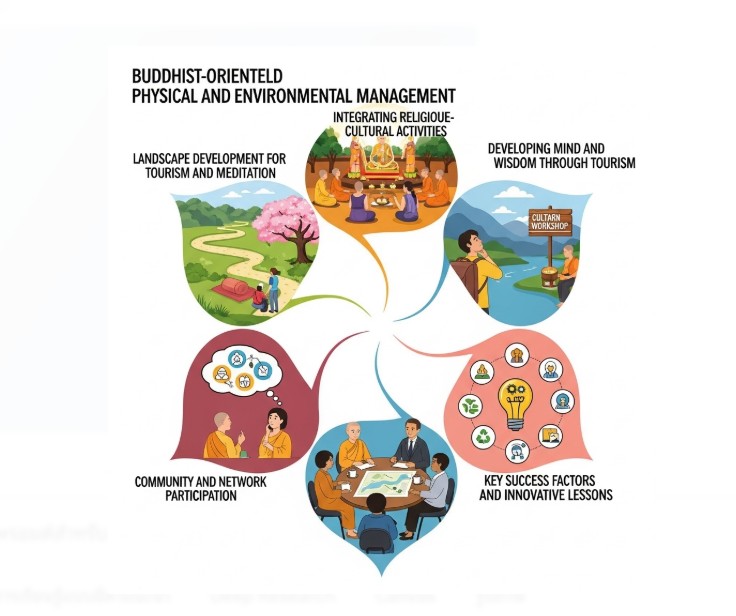
ผลการวิจัยพบว่า การจัดการการท่องเที่ยวเชิงพระพุทธศาสนาในสังคมไทยมีลักษณะสำคัญ 4 ประการ ได้แก่ (1) การให้ความสำคัญกับการจัดด้านกายภาพและสิ่งแวดล้อมให้เหมาะสมกับการเรียนรู้ทางจิตวิญญาณ (2) การจัดกิจกรรมเชิงพุทธและวัฒนธรรมเพื่อส่งเสริมศรัทธาและสืบสานภูมิปัญญาท้องถิ่น (3) การพัฒนาจิตใจและปัญญาของผู้มาเยือนให้เกิดประสบการณ์ทางธรรม และ (4) การสร้างการมีส่วนร่วมของชุมชนและเครือข่ายผู้เกี่ยวข้องในทุกกระบวนการ สำหรับวัดป่าพุทธชินวงศาราม จังหวัดพะเยา ผลการวิเคราะห์เชิงลึกพบว่า รูปแบบการจัดการการท่องเที่ยวเชิงพระพุทธศาสนาที่เหมาะสมมีลักษณะเป็น “รูปแบบการจัดการแบบบูรณาการ” ที่เชื่อมโยงศาสนา วัฒนธรรม และเศรษฐกิจชุมชนเข้าไว้ด้วยกันอย่างสมดุล โดยนำหลัก สัปปายะ มาใช้ในการออกแบบพื้นที่และจัดกิจกรรมให้เอื้อต่อการปฏิบัติธรรม พร้อมทั้งให้ชุมชนเข้ามามีบทบาทในฐานะ “ผู้มีส่วนร่วม” ในการวางแผน การให้บริการ และการถ่ายทอดภูมิปัญญาท้องถิ่น ทั้งนี้ ปัจจัยความสำเร็จที่สนับสนุนรูปแบบดังกล่าว ได้แก่ การมีผู้นำทางศาสนาที่เข้มแข็ง ความร่วมมือของชุมชนท้องถิ่น การประยุกต์หลักธรรมกับการจัดการการท่องเที่ยวสมัยใหม่ และการใช้เทคโนโลยีในการประชาสัมพันธ์ข้อมูล
Article Details

อนุญาตภายใต้เงื่อนไข Creative Commons Attribution-NonCommercial-NoDerivatives 4.0 International License.
เนื้อหาและข้อมูลในบทความที่ลงตีพิมพ์ในวารสาร มจร บาฬีศึกษาพุทธโฆสปริทรรศน์ถือเป็นข้อคิดเห็นและความรับผิดชอบของผู้เขียนบทความโดยตรงซึ่งกองบรรณาธิการวารสาร ไม่จำเป็นต้องเห็นด้วย หรือร่วมรับผิดชอบใด ๆ บทความ ข้อมูล เนื้อหา รูปภาพ ฯลฯ ที่ได้รับการตีพิมพ์ในวารสาร มจร บาฬีศึกษาพุทธโฆสปริทรรศน์ถือเป็นลิขสิทธิ์ของวารสาร มจร บาฬีศึกษาพุทธโฆสปริทรรศน์หากบุคคลหรือหน่วยงานใดต้องการนำทั้งหมดหรือส่วนหนึ่งส่วนใดไปเผยแพร่ต่อหรือเพื่อกระทำการใด ๆ จะต้องได้รับอนุญาตเป็นลายลักอักษรจากวารสาร มจร บาฬีศึกษาพุทธโฆสปริทรรศน์ก่อนเท่านั้น
เอกสารอ้างอิง
กรมศิลปากร. พงศาวดารกรุงศรีอยุธยา. กรุงเทพมหานคร: สำนักพิมพ์ศิลปากร, 2550.
การท่องเที่ยวแห่งประเทศไทย. วัดพัฒนา 43. กรุงเทพมหานคร: โรงพิมพ์การศาสนา, 2543.
เกรียงไกร ศรีสุวรรณ. (2562). แนวทางการพัฒนาศาสนสถานเพื่อส่งเสริมการท่องเที่ยวเชิงพุทธ. กรุงเทพฯ: สำนักพิมพ์มหาวิทยาลัยธรรมศาสตร์.
จันทร์เพ็ญ วรสิงห์. (2563). ทุนทางวัฒนธรรมเพื่อการท่องเที่ยวในชุมชน. กรุงเทพฯ: สำนักพิมพ์จุฬาลงกรณ์มหาวิทยาลัย.
ธำรงรัตน์ มุสิกานนท์. การมีส่วนร่วมของชุมชนในการพัฒนาการท่องเที่ยวเชิงพระพุทธศาสนา. วารสารสถาบันบัณฑิตพัฒนบริหารศาสตร์. (กรกฎาคม–ธันวาคม 2561). หน้า 1-23.
พระพรหมคุณาภรณ์ (ป.อ.ปยุตฺโต). พจนานุกรมพุทธศาสตร์ ฉบับประมวลธรรม. กรุงเทพมหานคร: มหาจุฬาลงกรณราชวิทยาลัย, 2556.
พุทธทาสภิกขุ. การท่องเที่ยวกับพระพุทธศาสนา. กรุงเทพมหานคร: ธรรมสภา, 2543.
ภัทร์สุภา ลีลานภาพรรณ์. “การท่องเที่ยวเชิงพุทธ: ศึกษาเฉพาะกรณีแหล่งวัฒนธรรมในกรุงเทพมหานคร”. สารนิพนธ์ศาสนศาสตรมหาบัณฑิต. บัณฑิตวิทยาลัย: มหาวิทยาลัยมหามกุฏราชวิทยาลัย, 2551.
มหาจุฬาลงกรณราชวิทยาลัย. พระไตรปิฎกภาษาไทย ฉบับมหาจฬาลงกรณราชวิทยาลัย. กรุงเทพมหานคร : โรงพิมพ์มหาจุฬาลงกรณราชวิทยาลัย. 2539.
วัดป่าพุทธชินวงศาราม. เอกสารโครงการพัฒนาวัดเพื่อการท่องเที่ยวเชิงพุทธ. พะเยา: วัดป่าพุทธชินวงศาราม, 2567.
สมชาย พันธุ์สิงห์. (2561). การจัดการการท่องเที่ยวแบบมีส่วนร่วมในชุมชน. เชียงใหม่: สำนักพิมพ์มหาวิทยาลัยเชียงใหม่.
สุพัตรา วัฒนกุล. (2561). การจัดกิจกรรมทางวัฒนธรรมในศาสนสถานเพื่อส่งเสริมการท่องเที่ยวเชิงวัฒนธรรม. เชียงใหม่: สำนักพิมพ์มหาวิทยาลัยเชียงใหม่.
สุภาภรณ์ จันทร์เพ็ญ. (2559). การพัฒนาการท่องเที่ยวเชิงศาสนาในประเทศไทย. กรุงเทพฯ: สำนักพิมพ์มหาวิทยาลัยธรรมศาสตร์.
สุภาภรณ์ บัวใหญ่. การจัดการแบบมีส่วนร่วมเพื่อการพัฒนาการท่องเที่ยวโดยชุมชนอย่างยั่งยืน. กรุงเทพมหานคร : ศูนย์ส่งเสริมวิชาการและเอกสารทางวิชาการ มหาวิทยาลัยรามคำแหง, 2561.
อรุณี ศรีสมบัติ. (2564). การพัฒนาการท่องเที่ยวโดยใช้ชุมชนเป็นฐาน. กรุงเทพฯ: สำนักพิมพ์จุฬาลงกรณ์มหาวิทยาลัย.
Timothy, D. J., & Olsen, D. H., Tourism, Religion and Spiritual Journeys (eBook, London; New York: Routledge). [ออนไลน์] แหล่งที่ม: DOI: https://doi.org/10.4324/978020 3001073 (วันที่ 16 สิงหาคม 2568)
