
กระบวนการกำหนดอริยสัจในธัมมจักกัปปวัตนสูตรเพื่อการปฏิบัติวิปัสสนาภาวนา
Article Sidebar
Main Article Content
บทคัดย่อ
บทความวิจัยฉบับนี้มีวัตถุประสงค์ 3 ประการ คือ 1) เพื่อศึกษาอริยสัจ 4 ในธัมมจักกัปปวัตนสูตร 2) เพื่อศึกษาการปฏิบัติวิปัสสนาภาวนาในคัมภีร์พระพุทธศาสนาเถรวาท 3) เพื่อนำเสนอกระบวนการกำหนดอริยสัจในธัมมจักกัปปวัตนสูตรเพื่อการปฏิบัติ เป็นงานวิจัยเชิงคุณภาพเน้นเอกสาร และการสัมภาษณ์เชิงลึกกับผู้ทรงคุณวุฒิ 11 รูป/คนและผู้ปฏิบัติธรรม 9 คน รวม 2๐ แล้วนำมาวิเคราะห์เรียบเรียง นำเสนอแบบบรรยายเชิงพรรณนา
ผลการวิจัยพบว่า อริยสัจ 4 คือ ความจริงอันประเสริฐที่พระพุทธเจ้าทรงสอนเพื่อให้พ้นทุกข์ ได้แก่ ทุกข์ สมุทัย นิโรธ และมรรค เป็นหลักธรรมที่ช่วยตัดกิเลสและนำไปสู่ความหลุดพ้น โดยมีการรู้ในสองระดับคือ ความคิดและญาณ ระดับความคิดใช้วิเคราะห์เหตุและผลของทุกข์ ส่วนระดับญาณคือการเจริญวิปัสสนาเพื่อกำหนดรู้สภาวธรรมที่เกิด–ดับ การปฏิบัติอริยสัจ 4 ครบถ้วนคือ รู้ทุกข์ ละสมุทัย ทำนิโรธให้แจ้ง และเจริญมรรค นำจิตเข้าสู่อริยมรรคผล พ้นจากทุกข์ในวัฏสงสาร
วิปัสสนาภาวนาเป็นการพัฒนาปัญญาขั้นสูงเพื่อรู้แจ้งรูปนามตามความเป็นจริงว่าไม่เที่ยง เป็นทุกข์ และไม่ใช่ตัวตน โดยมีปัญญาเจตสิกเป็นองค์ธรรม การปฏิบัติมีหลายแนว เช่น สมถะนำหน้า วิปัสสนานำหน้า เป็นต้น อารมณ์ของวิปัสสนามี 6 หมวด เช่น ขันธ์ 5 อายตนะ 12 และอริยสัจ 4 ส่วนธรรมสนับสนุนคือ โพธิปักขิยธรรม 37 โดยเฉพาะสติปัฏฐาน 4 ซึ่งประกอบด้วย กายานุปัสสนา เวทนานุปัสสนา จิตตานุปัสสนา และธัมมานุปัสสนา การปฏิบัติวิปัสสนาตามหลักสติปัฏฐานนี้ช่วยให้บรรลุอรหัตผลในชาตินี้ หรืออย่างน้อยก็เป็นพระอริยบุคคล ทำให้ชีวิตมีความสงบสุขและหลุดพ้นจากทุกข์
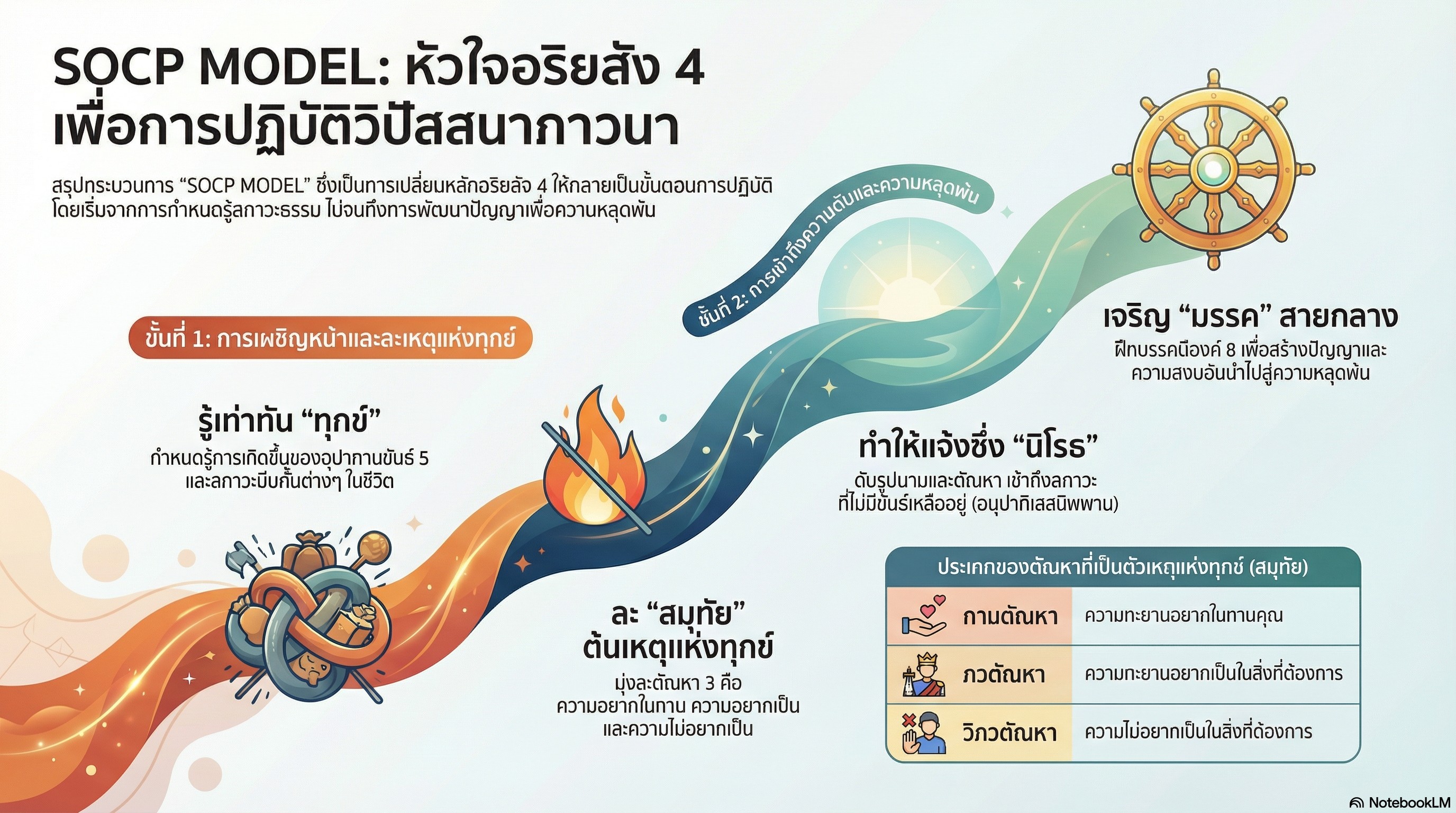
กระบวนการกำหนดรู้อริยสัจในธัมมจักกัปปวัตตนสูตรแบบวิปัสสนาภาวนา เริ่มจากการเห็นขันธ์ 5 เป็นสภาพธรรมที่เกิดแล้วดับ เป็นทุกข์และไม่ใช่ตัวตน เพื่อละความยึดมั่น จากนั้นละสมุทัยคือตัณหา 3 โดยใช้ธรรมฝ่ายสันโดษควบคุมความอยาก แล้วน้อมจิตเข้าสู่นิโรธ เห็นความดับเป็นธรรมชาติของสรรพสิ่ง มีนิพพานเป็นเป้าหมาย สุดท้ายเจริญอริยมรรคมีองค์ 8 อย่างครบถ้วน ทำให้เกิดปัญญาตัดอวิชชาและกิเลสจนพ้นทุกข์ กระบวนการนี้สรุปเป็น SOCP model (Suffering–Origin–Cessation–Path) ซึ่งสามารถนำไปพัฒนาและประยุกต์ใช้ในด้านต่าง ๆ ได้ต่อไป.
Article Details

อนุญาตภายใต้เงื่อนไข Creative Commons Attribution-NonCommercial-NoDerivatives 4.0 International License.
เนื้อหาและข้อมูลในบทความที่ลงตีพิมพ์ในวารสาร มจร บาฬีศึกษาพุทธโฆสปริทรรศน์ถือเป็นข้อคิดเห็นและความรับผิดชอบของผู้เขียนบทความโดยตรงซึ่งกองบรรณาธิการวารสาร ไม่จำเป็นต้องเห็นด้วย หรือร่วมรับผิดชอบใด ๆ บทความ ข้อมูล เนื้อหา รูปภาพ ฯลฯ ที่ได้รับการตีพิมพ์ในวารสาร มจร บาฬีศึกษาพุทธโฆสปริทรรศน์ถือเป็นลิขสิทธิ์ของวารสาร มจร บาฬีศึกษาพุทธโฆสปริทรรศน์หากบุคคลหรือหน่วยงานใดต้องการนำทั้งหมดหรือส่วนหนึ่งส่วนใดไปเผยแพร่ต่อหรือเพื่อกระทำการใด ๆ จะต้องได้รับอนุญาตเป็นลายลักอักษรจากวารสาร มจร บาฬีศึกษาพุทธโฆสปริทรรศน์ก่อนเท่านั้น
เอกสารอ้างอิง
มหาจุฬาลงกรณราชวิทยาลัย. พระไตรปิฎกภาษาไทยฉบับมหาจุฬาลงกรณราชวิทยาลัย. กรุงเทพมหานคร: โรงพิมพ์มหาจุฬาลงกรณราชวิทยาลัย, 2539.
ปกรณวิเสส อรรถกถา และฎีกา มหาจุฬาลงกรณราชวิทยาลัย. อรรถกถาภาษาบาลีฉบับมหาจุฬาอฏฺ กถา. กรุงเทพมหนคร :โรงพิมพ์มหาจุฬาลงกรณราชวิทยาลัย, โรงพิมพ์วิญญาณ, 2532.
. วิสุทฺธิมคฺคปกรณ. กรุงเทพมหานคร :โรงพิมพ์วิญญาณ, 2539.
พระพรหมคุณาภรณ์ (ป.อ. ปยุตฺโต). ไตรลักษณ์. พิมพ์ครั้งที่ 12. กรุงเทพมหานคร: โรงพิมพ์พระพุทธศาสนาของธรรมสภา, 2554.
พระโสภณมหาเถระ (มหาสี สยาดอ). มหาสติปัฏฐานสูตร ทางสู่พระนิพพาน. พระพรหมโมลี(สมศักดิ์ อุปสโม ป.ธ.9. M.A., Ph.D.). ตรวจชำระ. พระคันธสาราภิวงศ์ แปลและเรียบเรียง. กรุงเทพมหานคร: ห้างหุ้นส่วนจำกัด ไทยรายวันการพิมพ์, 2549.
สมเด็จพระญาณสังวร สมเด็จพระสังฆราช สกลมหาสังฆปริณายก (เจริญ สุวฑฺฒโน). 45 พรรษา ของพระพุทธเจ้า. พิมพ์ครั้งที่ 5. นครปฐม: โรงพิมพ์มหามกุฎราชวิทยาลัย, 2551.
สมเด็จพระพุทธชินวงศ์ (สมศักดิ์ อุปสมมหาเถระ). อริยวังสปฏิปทา ปฏิปทาอันเป็นวงศ์แห่ง พระอริยเจ้า. กรุงเทพมหานคร: ประยูรสาส์นไทย การพิมพ์, 2554.
สมเด็จพระมหาสมณเจ้า กรมพระยาวชิรญาณวโรรส. ธรรมวิจารณ์. กรุงเทพมหานคร: โรงพิมพ์เลี่ยงเชียง, 2536.
