
แนวทางการขจัดความขลาดกลัวที่ปรากฏในภยเภรวสูตร เพื่อส่งเสริมการปฏิบัติวิปัสสนาภาวนา
Article Sidebar
Main Article Content
บทคัดย่อ
บทความวิจัยฉบับนี้มีวัตถุประสงค์ 3 ประการ คือ 1) เพื่อศึกษาโครงสร้างเนื้อหาและหลักธรรมสำคัญในภยเภรวสูตร 2) เพื่อศึกษาการปฏิบัติวิปัสสนาภาวนาในภยเภรวสูตร และ 3) เพื่อนำเสนอแนวทางการขจัดความขลาดกลัวที่ปรากฏในภยเภรวสูตรเพื่อส่งเสริมการปฏิบัติวิปัสสนาภาวนา เป็นงานวิจัยเชิงคุณภาพเน้นเอกสาร และการสัมภาษณ์เชิงลึกกับผู้ทรงคุณวุฒิ 15 คน แล้วนำมาวิเคราะห์เรียบเรียง นำเสนอแบบบรรยายเชิงพรรณนา
ผลการวิจัยพบว่า ภยเภรวสูตร เป็นพระสูตรว่าด้วยความขลาดกลัว พระพุทธเจ้าทรงแสดงแก่ชาณุสโสณิพราหมณ์เมื่อทรงประทับที่พระเชตวันมหาวิหาร เขตกรุงสาวัตถี เนื้อหาสำคัญกล่าวถึงเหตุสะดุ้งกลัวการอยู่ในเสนาสนะป่าและสิ่งที่น่ากลัว เหตุเกิดแห่งพระสูตรเป็นปุจฉาวสิกะ คือ การสนทนาธรรมแบบถาม-ตอบ พระพุทธเจ้าทรงอธิบายเหตุสะดุ้งกลัวการอยู่ในเสนาสนะป่าของสมณพราหมณ์พวกอื่น เปรียบเทียบกับเหตุไม่สะดุ้งกลัวการอยู่ในเสนาสนะป่าของพระองค์ และพระอริยะทั้งหลาย ความสะดุ้งกลัวของสมณพราหมณ์อื่นมี 16 ประการคือ 1) มีกายกรรมไม่บริสุทธิ์ 2) มีวจีกรรมไม่บริสุทธิ์ 3) มีมโนกรรมไม่บริสุทธิ์ เป็นต้น ส่วนพระพุทธเจ้าและพระอริยะเจ้าไม่สะดุ้งกลัวการอยู่ในเสนาสนะป่าเพราะเหตุ 16 ประการมีนัยตรงกันข้าม
การปฏิบัติวิปัสสนาภาวนา คือ การฝึกจิตโดยพิจารณาอารมณ์เพื่อให้เห็นแจ้งรูปนามเป็นไปตามกฎไตรลักษณ์คือ อนิจจัง ทุกขัง อนัตตา มี 6 หมวด คือ ขันธ์ 5. อายตนะ 12. ธาตุ 18. อินทรีย์ 22. อริยสัจ 4. และปฏิจจสมุปบาท 12 ย่อลง รูปและนาม มีหลักธรรมที่เกื้อหนุนแก่การปฏิบัติคือ โพธิปักขิยธรรม 37 ประการได้แก่ สติปัฏฐาน 4 สัมมัปปธาน 4 อิทธิบาท 4 อินทรีย์ 5 พละ 5 โพชฌงค์ 7 มรรคมีองค์ 8 โดยการพัฒนาจิตตามหลักไตรสิกขา
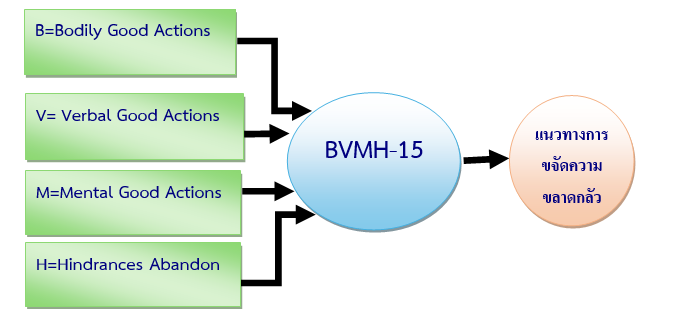
จากการสังเคราะห์แนวทางการขจัดความสะดุ้งกลัวในภยเภรวสูตรข้างต้นทำให้ได้หลักการปฏิบัติคือ สำหรับคฤหัสถ์ต้องรักษาศีล 5 และพระภิกษุสงฆ์ต้องรักษาศีลปาฏิโมกข์ 227 ข้อ จากนั้นให้ปฏิบัติ 1) การรักษาศีลเพื่อเว้นทุจริต 3 (อกุศลกรรมถ) 2) คบบัณฑิต ศึกษาพระสัทธรรมจากบัณฑิตด้วยโยนิโสมนสิการ 3) งดเว้นการแสวงหาอันไม่สมควรที่จัดเป็นอเนสนา 21 อย่าง 4) สำรวมอินทรีย์ทั้ง 6 คือ ตา หู จมูก เป็นต้น 5 ) มีสติสัมปชัญญะระลึกรู้เท่าทันอารมณ์ขณะใช้ชีวิต 6) มีความเห็นถูกต้องตรงตามหลักสัมมาทิฏฐิ 10 7) สันโดษ ยินดี พอใจในตน 8) ความไม่คลุกคลีด้วยหมู่คณะและสังคม 9) สมบูรณ์ด้วยอาจาระและโคจร 10) รู้แยกแยะและเพียรพยายามเพื่อละอกุศลและพัฒนาจิตให้เป็นกุศล 11 ) สำรวมวาจา กล่าวสิ่งที่ควรพูดตามหลักกถาวัตถุ 10 12) เจริญกรรมฐานโดยใช้คำบริกรรมด้วยวาจา 13) เจริญพรหมวิหาร 4 มีเมตตา กรุณา มุทิตา และอุเบขาเสมอ 14) ฝึกจิตให้ตั้งมั่นเป็นสมาธิ ปราศจากนิวรณ์และ 15) เจริญวิปัสสนาภาวนาตามหลักมหาสติปัฏฐาน 4 ได้องค์ความรู้ใหม่เป็นรูปแบบ BVMH-15
Article Details

อนุญาตภายใต้เงื่อนไข Creative Commons Attribution-NonCommercial-NoDerivatives 4.0 International License.
เนื้อหาและข้อมูลในบทความที่ลงตีพิมพ์ในวารสาร มจร บาฬีศึกษาพุทธโฆสปริทรรศน์ถือเป็นข้อคิดเห็นและความรับผิดชอบของผู้เขียนบทความโดยตรงซึ่งกองบรรณาธิการวารสาร ไม่จำเป็นต้องเห็นด้วย หรือร่วมรับผิดชอบใด ๆ บทความ ข้อมูล เนื้อหา รูปภาพ ฯลฯ ที่ได้รับการตีพิมพ์ในวารสาร มจร บาฬีศึกษาพุทธโฆสปริทรรศน์ถือเป็นลิขสิทธิ์ของวารสาร มจร บาฬีศึกษาพุทธโฆสปริทรรศน์หากบุคคลหรือหน่วยงานใดต้องการนำทั้งหมดหรือส่วนหนึ่งส่วนใดไปเผยแพร่ต่อหรือเพื่อกระทำการใด ๆ จะต้องได้รับอนุญาตเป็นลายลักอักษรจากวารสาร มจร บาฬีศึกษาพุทธโฆสปริทรรศน์ก่อนเท่านั้น
เอกสารอ้างอิง
มหาจุฬาลงกรณราชวิทยาลัย. พระไตรปิฎกภาษาไทยฉบับมหาจุฬาลงกรณราชวิทยาลัย. กรุงเทพมหานคร: โรงพิมพ์มหาจุฬาลงกรณราชวิทยาลัย. 2539.
พระกิตติ กิตฺติสาโร (จ่ามเงิน). “การบรรเทาอกุศลมูลด้วยพละ 5”. วิทยานิพนธ์พุทธศาสตรดุษฎีบัณฑิต. บัณฑิตวิทยาลัย: มหาวิทยาลัยมหาจุฬามกุฏราชวิทยาลัย, 2561.
พระเกษม นนฺทสีโล (วงศ์กิติตระกลู ). “ศึกษาวิเคราะห์ภัยของภิกษุในพระพุทธศาสนาเถรวาท”. วิทยานิพนธ์พุทธศาสตรมหาบัณฑิต. บัณฑิตวิทยาลัย: มหาวิทยาลัยมหาจุฬาลงกรณราชวิทยาลัย, 2557.
พระครูวิมลศาสนการ (ประหยัด อินช่วย). “ศึกษาหลักธรรมและการปฏิบัติวิปัสสนาภาวนาในภยเภรวสูตร”. วิทยานิพนธ์พุทธศาสตรมหาบัณฑิต. บัณฑิตวิทยาลัย: มหาวิทยาลัยมหาจุฬาลงกรณราชวิทยาลัย, 2556.
พระไพรัช พุทฺธิสาโร (โพธิ์ประพาฬทอง). “การศึกษาวิเคราะห์ภยเภรวสูตร”. วารสาร มจร พุทธศาสตร์ปริทรรศน์. ปีที่ 3 ฉบับที่ 1 มกราคม – มิถุนายน 2562.
จิรวัฒน์ นิติบรมัตถ์ธาดา. “ศึกษาความกลัวที่ปรากฏในพุทธปรัชญาเถรวาท”. วิทยานิพนธ์ศาสนศาสตรมหาบัณฑิต. บัณฑิตวิทยาลัย:มหาวิทยาลัยมหามกุฎราชวิทยาลัย, 2559.
พระมหาวิเชียร โชติธมฺโม (จันทะมั่น ). “การศึกษาสภาวะของนิวรณ์ในวัมมิกสูตร”. วิทยานิพนธ์พุทธศาสตรมหาบัณฑิต. บัณฑิตวิทยาลัย: มหาวิทยาลัยมหาจุฬาลงกรณราชวิทยาลัย, 2555.
