
การบูรณาการหลักพุทธธรรมเพื่อส่งเสริมการสื่อสารทางการเมืองของนักการเมืองระดับท้องถิ่นในเทศบาลเมืองดอกคำใต้ อำเภอดอกคำใต้ จังหวัดพะเยา
Article Sidebar
Main Article Content
บทคัดย่อ
บทความวิจัยนี้ มีวัตถุประสงค์เพื่อ 1. เพื่อศึกษาระดับการสื่อสารทางการเมืองของนักการเมืองระดับท้องถิ่นในเทศบาลเมืองดอกคำใต้ อำเภอดอกคำใต้ จังหวัดพะเยา 2. เพื่อเปรียบเทียบการสื่อสารทางการเมืองของนักการเมืองระดับท้องถิ่นในเทศบาลเมืองดอกคำใต้ อำเภอดอกคำใต้ จังหวัดพะเยา โดยจำแนกตามปัจจัยส่วนบุคคล และ 3. เพื่อนำเสนอการบูรณาการหลักพุทธธรรมเพื่อส่งเสริมการสื่อสารทางการเมืองของนักการเมืองระดับท้องถิ่นในเทศบาลเมืองดอกคำใต้ อำเภอดอกคำใต้ จังหวัดพะเยา ใช้รูปแบบการวิจัยแบบผสานวิธี ได้แก่ การวิจัยเชิงปริมาณ เครื่องมือที่ใช้ได้แก่ แบบสอบถาม ใช้สถิติเพื่อวิเคราะห์ข้อมูล โดยหาค่าความถี่ ค่าร้อยละ ค่าเฉลี่ย ส่วนเบี่ยงเบนมาตรฐาน ทดสอบสมมติฐานโดยทดสอบค่า t-test ค่า F-test ประชากรจำนวน 10,532 คน คน ได้ประชากรกลุ่มตัวอย่างจำนวน 385 คน จากสูตรของทาโร่ ยามาเน่ และการวิจัยเชิงคุณภาพ เครื่องมือที่ใช้ได้แก่แบบสัมภาษณ์ กลุ่มผู้ให้ข้อมูลสำคัญจำนวนทั้งสิ้น 9 คน วิเคราะห์เนื้อหาโดยการพรรณนาวิเคราะห์
ผลการวิจัยพบว่า 1) ระดับการสื่อสารทางการเมืองของนักการเมืองระดับท้องถิ่น ในเทศบาลเมืองดอกคำใต้ อำเภอดอกคำใต้ จังหวัดพะเยา รวมทุกด้าน โดยภาพรวมอยู่ในระดับมาก ผลรวมค่าเฉลี่ย (X ̅)= 4.09 เมื่อจำแนกเป็นรายข้อพบว่า ด้านช่องทางการสื่อสาร อยู่ในระดับมาก มีค่าเฉลี่ย (X ̅)= 3.65 รองลงมาเท่ากัน ได้แก่ ด้านผู้ส่งสาร และด้านสาร อยู่ในระดับมาก มีค่าเฉลี่ย (X ̅)= 3.64 และด้านผู้รับสาร อยู่ในระดับปานกลาง มีค่าเฉลี่ย (X ̅)= 2.99 เป็นลำดับสุดท้าย ตามลำดับ
2) เปรียบเทียบการสื่อสารทางการเมืองของนักการเมืองระดับท้องถิ่นในเทศบาลเมืองดอกคำใต้ อำเภอดอกคำใต้ จังหวัดพะเยา โดยจำแนกตามปัจจัยส่วนบุคคล พบว่า ประชากรกลุ่มตัวอย่างที่มีเพศ อายุ ระดับการศึกษา อาชีพ และรายได้ต่างกัน โดยภาพรวมไม่แตกต่างกัน จึงปฏิเสธสมมติฐานที่ตั้งไว้
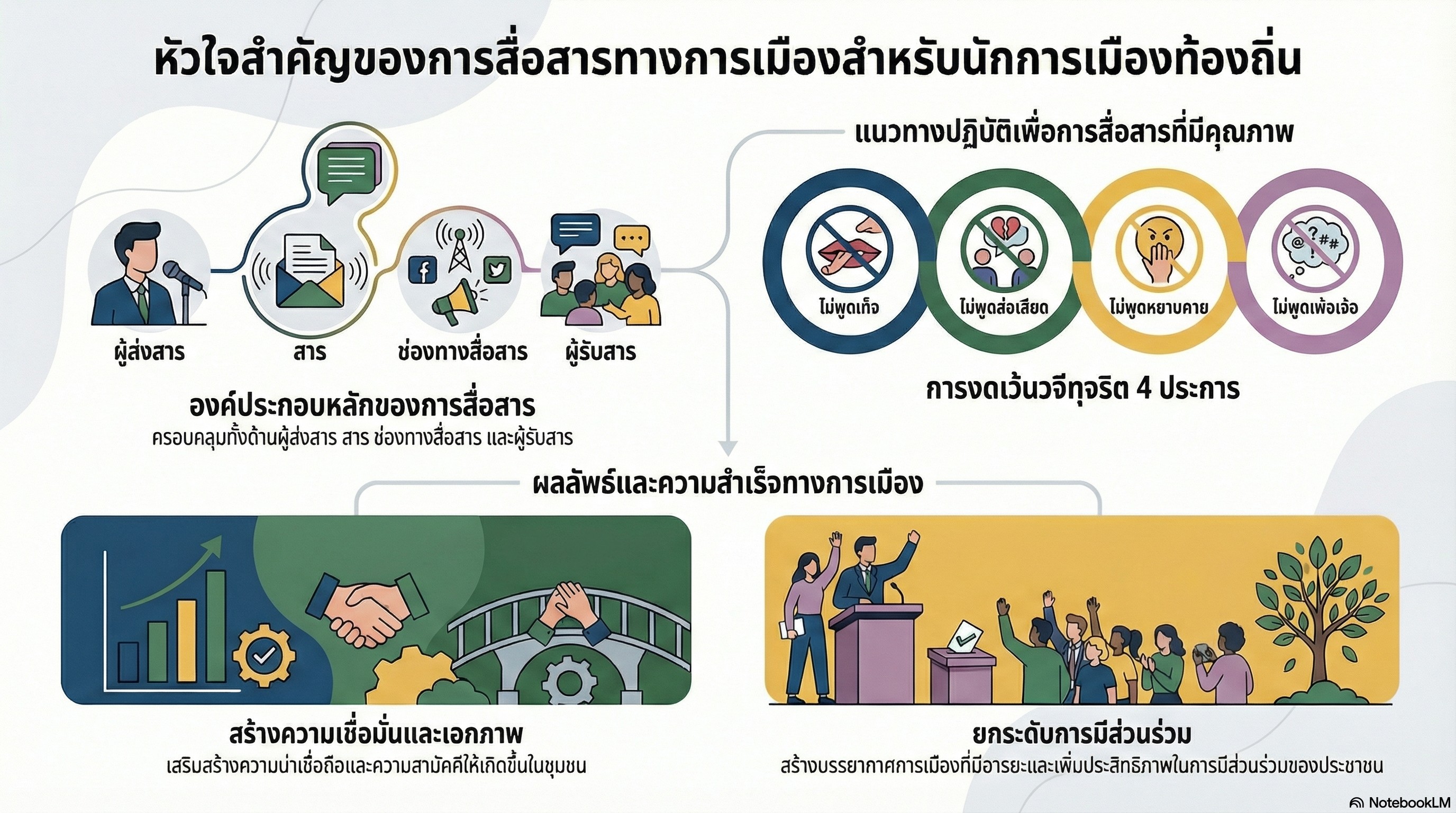
3) การนำเสนอการบูรณาการหลักปาปณิกธรรมเพื่อส่งเสริมภาวะผู้นำทางการเมืองของนักการเมืองท้องถิ่นในเทศบาลเมืองดอกคำใต้ อำเภอดอกคำใต้ จังหวัดพะเยา พบว่า 1) ด้านการงดเว้นจากการพูดเท็จ คือการสร้างสัจจวาจา และ วัฒนธรรมซื่อสัตย์ โดยการระบุแหล่งที่มา/หลักฐาน ที่ชัดเจน และมีกลไกตรวจสอบ/ลงโทษ เพื่อให้ข้อมูลทั้งหมด ตรวจสอบได้ และสร้างความเชื่อมั่นให้กับประชาชนในท้องถิ่น 2) การงดเว้นการพูดส่อเสียด คือการส่งเสริมให้นักการเมืองระดับท้องถิ่นเปลี่ยนจากการสื่อสารที่ทำลายชื่อเสียงบุคคล ไปสู่การวิเคราะห์นโยบาย/ข้อเท็จจริง โดยมุ่งเน้น วิพากษ์วิจารณ์อย่างสร้างสรรค์ ที่เนื้อหาและโครงการ (ไม่กล่าวถึงบุคคลหรือความผิดพลาดในอดีต) เพื่อสร้างสามัคคีวาจา และความร่วมมือข้ามฝ่ายในการพัฒนาท้องถิ่น 3) การงดเว้นจากการพูดหยาบคาย คือการส่งเสริมให้นักการเมืองสร้างภาวะผู้นำทางอารมณ์ โดยควบคุมตนเองจากโทสะ และใช้ปิยวาจา สื่อสารด้วยเหตุผล/ข้อมูล (ไม่ใช้อารมณ์) เพื่อแสดงความเคารพและเป็นแบบอย่างที่ดีในการโต้แย้งที่สร้างสรรค์ 4) การงดเว้นจากการพูดเพ้อเจ้อ คือการส่งเสริมให้นักการเมืองท้องถิ่นควรมุ่งเน้นการสื่อสารที่กระชับ ตรงประเด็น อิงข้อเท็จจริง และสร้างความน่าเชื่อถือผ่านสาระที่หนักแน่น เพื่อแสดงความจริงจังในการทำงานและรับผิดชอบต่อการบริหารท้องถิ่น
Article Details

อนุญาตภายใต้เงื่อนไข Creative Commons Attribution-NonCommercial-NoDerivatives 4.0 International License.
เนื้อหาและข้อมูลในบทความที่ลงตีพิมพ์ในวารสาร มจร บาฬีศึกษาพุทธโฆสปริทรรศน์ถือเป็นข้อคิดเห็นและความรับผิดชอบของผู้เขียนบทความโดยตรงซึ่งกองบรรณาธิการวารสาร ไม่จำเป็นต้องเห็นด้วย หรือร่วมรับผิดชอบใด ๆ บทความ ข้อมูล เนื้อหา รูปภาพ ฯลฯ ที่ได้รับการตีพิมพ์ในวารสาร มจร บาฬีศึกษาพุทธโฆสปริทรรศน์ถือเป็นลิขสิทธิ์ของวารสาร มจร บาฬีศึกษาพุทธโฆสปริทรรศน์หากบุคคลหรือหน่วยงานใดต้องการนำทั้งหมดหรือส่วนหนึ่งส่วนใดไปเผยแพร่ต่อหรือเพื่อกระทำการใด ๆ จะต้องได้รับอนุญาตเป็นลายลักอักษรจากวารสาร มจร บาฬีศึกษาพุทธโฆสปริทรรศน์ก่อนเท่านั้น
เอกสารอ้างอิง
กนกรัตน์ เลิศชูสกุล. “ผลกระทบของมาตรา 44 ต่อสิทธิเสรีภาพประชาชน”. ใน รัฐศาสตร์สาร 37. 2 (2560).
ชัยวัฒน์ สถาอานันท์. “วาทกรรมและความรุนแรงในสังคมการเมืองไทย”. ใน สันติประชาธรรม (กรุงเทพฯ: เสฐียรโกเศศ-นาคะประทีป. 2558).
เทศบาลเมืองดอกคำใต้. แผนพัฒนาท้องถิ่น พ.ศ. 2566–2570. (พะเยา: เทศบาลเมืองดอกคำใต้. 2565).
ธเนศวร์ เจริญเมือง. การเมืองภาคพลเมืองและประชาธิปไตยไทย. กรุงเทพฯ: จุฬาลงกรณ์มหาวิทยาลัย. 2556.
พระครูธรรมธรบุญเที่ยง พุทฺธสาวโก (ลักษณ์พลวงค์). “การบูรณาการหลักพุทธธรรมกับการสื่อสารทางการเมืองเพื่อเสริมสร้างความสมานฉันท์”. ดุษฎีนิพนธ์ปรัชญาดุษฎีบัณฑิต สาขาวิชารัฐศาสตร์. บัณฑิตวิทยาลัย : มหาวิทยาลัยมหาจุฬาลงกรณราชวิทยาลัย. 2564.
พระชินกร สุจิตฺโต (ทองดี). “การบูรณาการหลักพุทธธรรมเพื่อส่งเสริมการสื่อสารทางการเมืองสำหรับประชาชนจังหวัดพระนครศรีอยุธยา”. ดุษฎีนิพนธ์ปรัชญาดุษฎีบัณฑิต สาขาวิชารัฐศาสตร์. (บัณฑิตวิทยาลัย : มหาวิทยาลัยมหาจุฬาลงกรณราชวิทยาลัย. 2564).
พระธรรมปิฎก (ป.อ. ปยุตฺโต). พุทธธรรม. กรุงเทพฯ: มหามกุฏราชวิทยาลัย. 2560.
พระนุชิต นาคเสโน (โพวิชัย). “การพัฒนาการสื่อสารทางการเมืองตามแนวพระพุทธศาสนาของนักการเมืองท้องถิ่นในจังหวัดพระนครศรีอยุธยา”. ดุษฎีนิพนธ์ปรัชญาดุษฎีบัณฑิต สาขาวิชารัฐศาสตร์. บัณฑิตวิทยาลัย : มหาวิทยาลัยมหาจุฬาลงกรณราชวิทยาลัย. 2565.
พระมหานิรุต ญาณวุฑฺโฒ (พยนต์ยิ้ม). “พุทธบูรณาการเพื่อส่งเสริมภาวะผู้นำทางการเมืองของนักการเมืองท้องถิ่นในจังหวัดสมุทรสงคราม”. ดุษฎีนิพนธ์ปรัชญาดุษฎีบัณฑิต สาขาวิชารัฐศาสตร์. (บัณฑิตวิทยาลัย : มหาวิทยาลัยมหาจุฬาลงกรณราชวิทยาลัย. 2566).
พระมหาปรัชญ์ นภภูริสิริ (อัตถาพร). “การมีส่วนร่วมในการสื่อสารทางการเมืองของประชาชน ในอำเภอเมือง จังหวัดขอนแก่น”. วิทยานิพนธ์รัฐศาสตรมหาบัณฑิต สาขาวิชารัฐศาสตร์. (บัณฑิตวิทยาลัย: มหาวิทยาลัยมหาจุฬาลงกรณราชวิทยาลัย. 2564).
พระอัณณรัฐฬ อิสฺสรธมฺโม (สราญตระกูลไพร). “ศึกษาคดีทางการเมืองของพระสงฆ์ไทย”. วิทยานิพนธ์รัฐศาสตรมหาบัณฑิต สาขาวิชารัฐศาสตร์. (บัณฑิตวิทยาลัย : มหาวิทยาลัยมหาจุฬาลงกรณราชวิทยาลัย. 2566).
พิภูษณ มากไชย. “การนำหลักสุจริต 3 ไปใช้ในการปฏิบัติงานของข้าราชการตำรวจสถานีตำรวจภูธรเมืองภูเก็ต จังหวัดภูเก็ต”. สารนิพนธ์ศาสนศาสตรมหาบัณฑิต สาขาวิชารัฐศาสตร์การปกครอง. (บัณฑิตวิทยาลัย: มหาวิทยาลัยมหามกุฏราชวิทยาลัย. 2563).
สมชาย ปรีชาศิลปกุล. รัฐประหาร 2557 และโครงสร้างอำนาจแบบ คสช. (กรุงเทพฯ: โอเพ่นเวิลด์ส. 2560).
สำนักงานสถิติแห่งชาติ. รายงานสถิติศาสนาประจำปี 2564 (กรุงเทพฯ: สสช.. 2565).
