
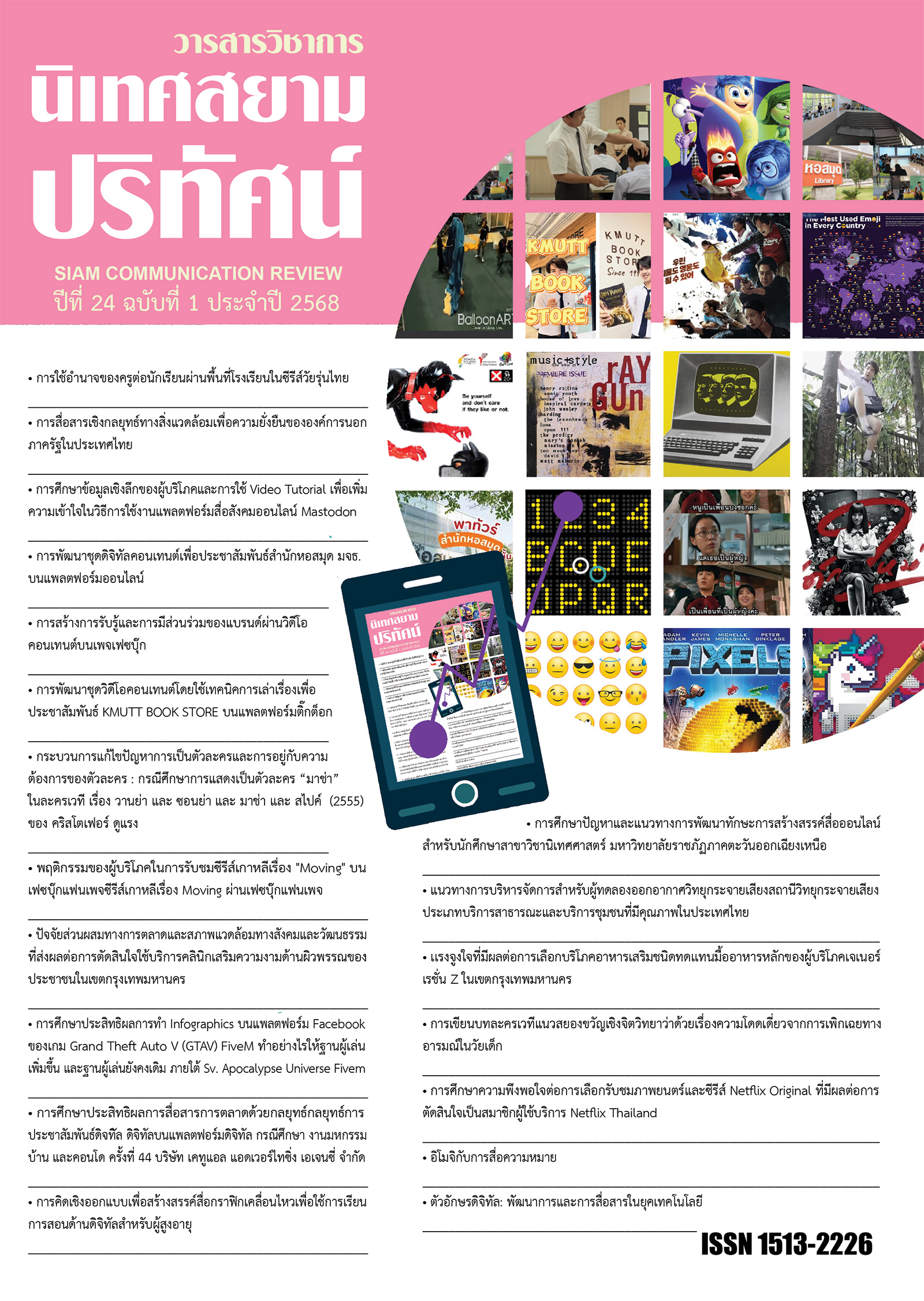
Problem Studies and Skill Development Guidelines in Creating Online Media for Communication Arts Program Students in Rajabhat Universities, Northeast Thailand
Article Sidebar
Main Article Content
Abstract
This research aimed to explore the problems, needs, and guidelines for developing skills in creating online media for Communication Arts program students in the at Rajabhat Universities in Northeast Thailand. A mixed-methods research approach was used in this study. The quantitative data was collected through a survey of students from 10 Rajabhat Universities in the northeast region, involving 400 participants. The qualitative data was gathered through focus group discussions with representatives from faculty, students, graduate users, and graduates. The survey results revealed that 54.5% of the Communication Arts students aspired to pursue careers as online YouTubers, TikTokers, bloggers, influencers, or content creators. In terms of skill development needs, students expressed the highest need for skills in using image editing, graphic design, photo enhancement, and drawing (x̄ = 4.19, S.D. = .902). The focus group discussions revealed that stakeholders in the Communication Arts program identified the rapid changes in technology as a significant problem, leading to the quick obsolescence of learning support materials and the necessity to update instructors to keep pace with technological advancements. The suggested guidelines for developing online media creation skills among Communication Arts students included enhancing the curriculum to focus on utilizing technology for information gathering to create content, fostering creativity, and improving skills in online media usage and production for online platforms, as this aligns with modern job trends that cater to contemporary individuals and organizations.
Article Details

This work is licensed under a Creative Commons Attribution-NonCommercial-NoDerivatives 4.0 International License.
References
กระทรวงพาณิชย์. (2564). พาณิชย์เผย โควิดดันยอดซื้อสินค้าออนไลน์เพิ่มขึ้น 0.45 เท่า. https://www.price.moc.go.th/price/fileuploader/file_admin_sum/news_survey-042564.pdf
กรุงเทพธุรกิจ. (2565). FB-IG กับการปรับตัวตาม TikTok. https://www.bangkokbiznews.com/columnist/1018467
จุฬาลงกรณ์มหาวิทยาลัย (2519). เอกสารในพิธีเปิดคณะนิเทศศาสตร์. คณะนิเทศศาสตร์.
ธีร์ คันโททอง และคณะ. (2566). การประเมินหลักสูตรนิเทศศาสตรบัณฑิต (หลักสูตรปรับปรุง) พ.ศ.2561 คณะนิเทศศาสตร์ มหาวิทยาลัยวงษ์ชวลิตกุล ตามแนวคิดซิปป์ โมเดล. วารสารมหาวิทยาลัยวงษ์ชวลิตกุล (มนุษยศาสตร์และสังคมศาสตร์). 1(1). 39-48.
วิรัช ลภิรัตนกุล. (2544). นิเทศศาสตร์กับการประชาสัมพันธ์เพื่อการตลาด. ซีเอ็ดยูเคชั่น.
ศิริชัย พงษ์วิจัย. (2555). การวิเคราะห์ข้อมูลทางสถิติด้วยคอมพิวเตอร์ (พิมพ์ครั้งที่ 23) . สำนักพิมพ์แห่งจุฬาลงกรณ์มหาวิทยาลัย.
สำนักงานพัฒนาธุรกรรมทางอิเล็กทรอนิกส์. (2564). E-commerce ไทย ยุคหลัง Covid-19. https://www.etda.or.th/th/Useful-Resource/Knowledge-Sharing/Perspective-on-Future-of-e-Commerce.aspx
อรรณพ แสงภู. (2567). ปัจจัยที่ส่งผลต่อการตัดสินใจเลือกเรียนหลักสูตรนิเทศศาสตรบัณฑิต คณะวิทยาการจัดการ มหาวิทยาลัยราชภัฏหมู่บ้านจอมบึง. วารสารสังคมศาสตร์และวัฒนธรรม. 8(9). 292-302.
อวยพร พานิช, ทัศนีย์ ดำเกิงศักดิ์, นันธิการ์ จิตรีงาม, กันทลัส ทองบุญมา. (2564). การโฆษณาและประชาสัมพันธ์คณะนิเทศศาสตร์ในยุคโลกพลิกผัน. วารสารสหวิทยาการสังคมศาสตร์และการสื่อสาร, 4(2), 103-114
อังศุมาริน สุชัยรัตนโชค และคณะ. (2563). ปัจจัยที่ส่งผลต่อการตัดสินใจเข้าศึกษาต่อในหลักสูตร
นิเทศศาสตรบัณฑิต สาขานิเทศศาสตร์ (สามภาษา) คณะนิเทศศาสตร์ มหาวิทยาลัยราชภัฏรำไพพรรณี. วารสารบัณฑิตวิทยาลัยรำไพพรรณี. 3(2). 41-59.
อัญมณี พิทึกทักษ์ (2563). การศึกษาปัญหาและแนวทางการบริหารงานวิชาการของโรงเรียนมาตรฐานสากล จังหวัดนครราชสีมา. วิทยานิพนธ์ปริญญามหาบัณฑิต. มหาวิทยาลัยราชภัฏบุรีรัมย์.
Krejcie, R. V., & Morgan, D. W. (1970). Determining sample size for research activities. Educational and Psychological Measurement, 30(3), 607–610.
