
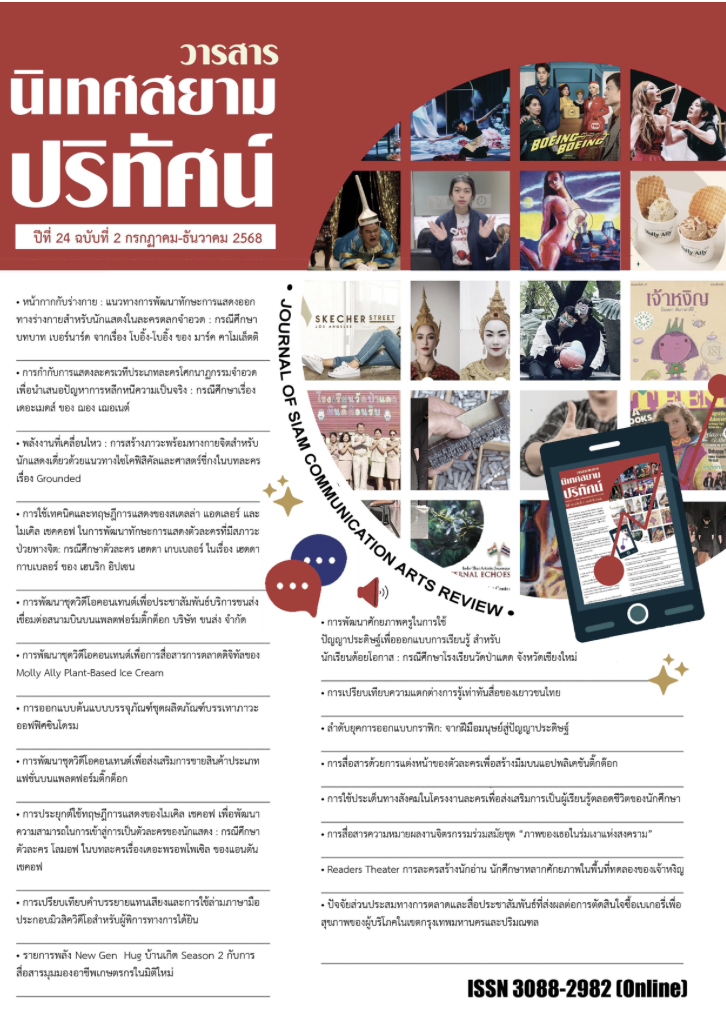
พลังงานที่เคลื่อนไหว : การสร้างภาวะพร้อมทางกายจิตสำหรับนักแสดงเดี่ยวด้วยแนวทางไซโคฟิสิคัลและศาสตร์ชี่กงในบทละครเรื่อง Grounded
Article Sidebar
Main Article Content
บทคัดย่อ
การฝึกฝนการแสดงด้วยแนวทางไซโคฟิสิคัล (Psychophysical) คือการฝึกที่ให้ความสำคัญกับร่างกายและจิตใจอย่างเท่าเทียม ขณะที่ชี่กงเป็นศาสตร์จีนที่เน้นการเคลื่อนไหวแบบแผนให้ร่างกายประสานกับลมหายใจ เพื่อเสริมสร้างการรับรู้พลังชีวิต ผู้วิจัยทดลองนำทั้งสองแนวทางมาผสานใช้ในการแสดงเดี่ยวเรื่อง กราวด์ (Grounded) ของ จอร์จ บรานท์ (George Brant)โดยมีสมมติฐานว่า การฝึกชี่กงควบคู่กับการฝึกการแสดงแบบไซโคฟิสิคัลตามแนวทางของไมเคิล เชคอฟ (Michael Chekhov) และรูดอล์ฟ ฟอน ลาบาน (Rudolf Von Laban) ช่วยให้เกิดภาวะพร้อมทางกายจิต ส่งผลให้นักแสดงถ่ายทอดตัวละครได้อย่างมีพลังและสื่อสารสารหลักของบทละครได้อย่างมีประสิทธิภาพ ผู้วิจัยใช้ศาสตร์ชี่กงสร้างความพร้อมให้ร่างกายและจิตใจ จากนั้นนำแนวทางของเชคอฟและลาบานมาสร้างตัวละครและทำงานกับบท โดยเก็บข้อมูลจากหลากหลายวิธี เช่น บันทึกการซ้อม วิดีโอการแสดง การสัมภาษณ์ เสวนาหลังการแสดง และแบบสอบถามจากผู้ชม ผลการศึกษาพบว่า การฝึกฝนทั้งสองแนวทางอย่างสม่ำเสมอช่วยให้นักแสดงเข้าถึงพลังงานภายในที่ นิ่ง ลึก และมั่นคง เกิดความวางใจในตนเอง ไม่หวั่นไหวแม้ต้องอยู่บนเวทีเพียงลำพัง การเคลื่อนไหวทุกจังหวะจึงเปี่ยมด้วยความหมายส่งผลให้ผู้ชมรับรู้ถึงพลังงานความจริงและสารของบทละครได้อย่างชัดเจน
Article Details

อนุญาตภายใต้เงื่อนไข Creative Commons Attribution-NonCommercial-NoDerivatives 4.0 International License.
เอกสารอ้างอิง
กฤษณะ พันธุ์เพ็ง. (2567). การฝึกนักแสดงสำหรับศตวรรษที่ 21 แนวทางไซโคฟิสิคัล.โรงพิมพ์แห่งจุฬาลงกรณ์มหาวิทยาลัย.
บอยเออร์, พอล เอส. (2561). ประวัติศาสตร์อเมริกา: ความรู้ฉบับพกพา [American History: A Very Short Introduction] (ธเนศ อาภรณ์สุวรรณ และ อาวุธ ธีระเอก, ผู้แปล). สำนักพิมพ์บุ๊คสเคป.
หยาง เผยเซิน. (2560). ชี่กง 18 ท่า พลังปราณต้านโรค. หจก. เบสท์ กราฟฟิค อินเตอร์พริ้นท์.
เทอดศักดิ์ เดชคง. (2547). คู่มือการบริหารกาย-จิตแบบชี่กง. สำนักพัฒนาสุขภาพจิต กรมสุขภาพจิต
Adrian, B. (2010). Actor training the Laban way: An integrated approach to voice, speech, and movement. Simon and Schuster.
Bacevich, A. J. (2002). American empire: The realities and consequences of U.S. diplomacy. Harvard University Press.
Monday, M. (2019). Application of the Michael Chekhov Technique to Shakespeare’s Sonnets, Soliloquies and Monologues. Routledge.
Thornton, S. (1971). Laban’s theory of movement: A new perspective. Plays, Inc.
Wright, L. (2006). The looming tower: AI-Qaeda and the road to 9/11. Knopf.
