Reflections of Fashion Trends in the 15th-17th Century From the Patterns and Preferences of Female Attire in Phanom Rung Historical Park
Keywords:
Reflection of Fashion trends, Clothing values, Carved images of Women and Female DeitiesAbstract
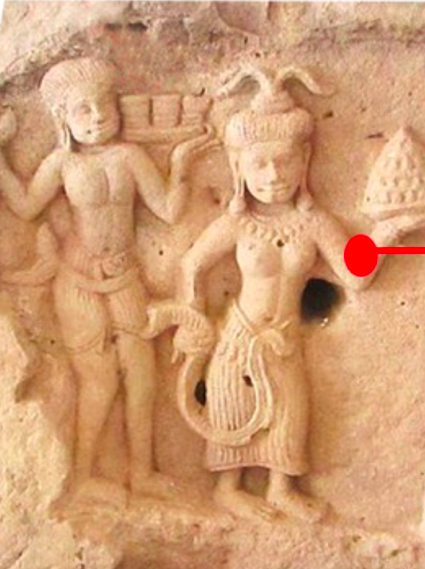
This article is part of a research project on the patterns and preferences of Female's Fashion Attire Deity, Isaan South Stone Castle, during the 15th-17th Centuries. It's aims to contribute to the design and packaging of cultural fashion product, with a study of fashion trends during the 15th-17th centuries from the patterns and preferences of female's fashion attire sculptures at Phanom Rung Historical Park in Buriram Province. The objectives of this study are: 1. To study the patterns and preferences of female 's fashion attire sculptures at Phanom Rung Historical Park. 2. To study the fashion trends during the 15th-17th centuries from the patterns and preferences of female 's fashion attire sculptures at Phanom Rung Historical Park. This is a qualitative research using data collection from documentary sources within the framework of concepts and theories to collect and analyze data on patterns, structures, motifs, and symbols in female 's fashion attire sculptures at Phanom Rung Historical Park. The study of values will include both artistic and religious values displayed in female 's fashion attire sculptures at Phanom Rung Historical Park. The data was collected from fieldwork using semi-structured interviews with knowledgeable informants, totaling 3 people, to analyze fashion trends using configurationalism theories and concepts. The data will be analyzed into two parts: constructing conclusions and analyzing data from content, presenting data in tables and illustrations through comparative analysis, the research results are: 1. Patterns and preferences of female 's fashion attire sculptures at Phanom Rung Historical Park divided by human proportions, finding that female will show their breasts, have various hairstyles, use hair accessories and headwear, as well as various types of jewelry such as necklaces, earrings, bracelets, and anklets with popularly wearing folded scarves and male clothes. On the value side, females' sculptures represent the birth according to beliefs in Hinduism-Buddhism or the beauty of female as symbols of worship, birth, and growth. 2. Reflections of fashion trends during the 15th-17th centuries from the patterns and preferences of female 's fashion attire sculptures at Phanom Rung Historical Park. By analyzing fashion trends and configurationalism definitions, it was found that female 's fashion trends during the 15th-17th centuries have distinctive patterns and preferences in hairstyles, accessories, and fabrics. There was structural management, categorization of clothing categories according to different parts of the female body to make them beautiful and communicate symbolically, based on the structural framework of the Indian and Khom models. It is assumed that there was actual clothing use of female at that time, which should be part of the influence of high-status female 's clothing, which is considered a prototype of important female 's fashion attire and widely accepted by society, leading to widespread popularity. Therefore, it appears in female 's sculptures during the same period and reflects the fashion trends of female popular during the 15th-17th centuries.
References
กรมศิลปากร. (ม.ป.ป.). อุทยานประวัติศาสตร์พนมรุ้ง. http://virtualhistoricalpark.finearts.go.th/phanomrung/index.php/th/virtual-model-360/phanomrung.html
กูรูพนมรุ้ง. (2554). Phnomrung พนมรุ้ง. https://phnomrung.blogspot.com
เฉลิม ยงบุญเกิด. (2557). บันทึกว่าด้วยขนบธรรมเนียมประเพณีของเจินละ (พิมพ์ครั้งที่ 3). มติชน.
นงคราญ สุขสม. (2561). ถอดรหัสพระเจ้าฮินดู. พระรามศรีเอชั่น.
พลอยชมพู ปุณณวานิชศิริ. (2556). ลวดลายผ้านุ่งอัปสรา ปราสาทนครวัด (วิทยานิพนธ์ ปริญญาศิลปศาสตรมหาบัณฑิต). มหาวิทยาลัยศิลปากร.
วรรณวิภา สุเนต์ตา. (2556). ศิราภรณ์และงานประดับศิลปะเขมรในประเทศไทย ช่วงพุทธศตวรรษที่ 16-18. คณะมัณฑนศิลป์ มหาวิทยาลัยศิลปากร.
ศุภลักษณ์ สนธิชัย. (2554). ภาพสลักเทพีในปราสาทนครวัด (พิมพ์ครั้งที่ 2). อทิตตา.
สุภัทรดิศ ดิศกุล. (2547). ศิลปะขอมเล่ม 3. คณะโบราณคดี มหาวิทยาลัยศิลปากร.
Kroeber Alfred L. (2014-2015). History, Anthropology Department, UC Berkeley. University of California, Berkeley. Archived from the original.
Kent, D. (2013). Devata Goddess Temples. Apsara Research Archives.
Marchal, s. (2007). Khmer Costumes and Ornaments of the Devatas of Angkor Wat. Orchid Press.