
Competency Development of Family-Owned Industrial Business Successors in the Digital Era
Article Sidebar
Main Article Content
Abstract
DOI : 10.14456/pnuhuso.2025.25
This research aims to examine the components and develop a competency development model for successors of family-owned industrial businesses in the digital era. The Delphi technique was employed to collect data from 18 experts, consisting of senior executives from family-owned industrial businesses and senior academics. Data collection involved in-depth interviews and opinion-based questionnaires, as well as a focus group discussion with 11 distinguished experts to provide opinions and recommendations, and to evaluate the appropriateness of the competency components and the draft model for competency development of successors of family-owned industrial businesses in the digital era.
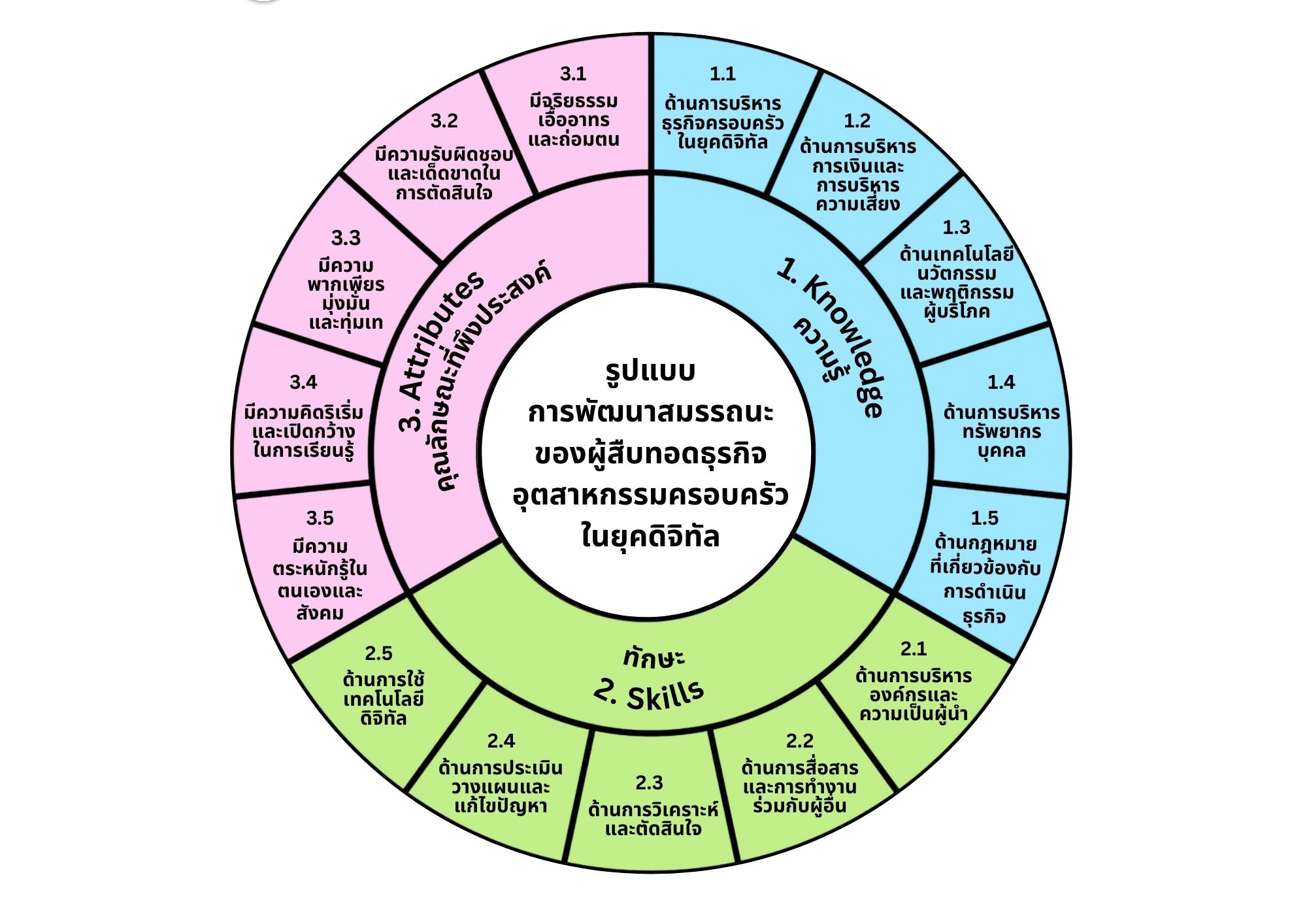
The research findings revealed that the competencies of successors in family-owned industrial businesses in the digital era consist of three main components: 1) Knowledge, which includes: (1) knowledge of digital-era business management, (2) knowledge of financial and risk management, (3) knowledge of technology, innovation, and consumer behavior, (4) knowledge of human resource management, and (5) knowledge of business-related law. 2) Skills, which include: (1) skills in organizational management and leadership, (2) skills in communication and collaboration with others, (3) skills in analysis and decision-making, (4) skills in evaluation, planning, and problem-solving, and (5) skills in using digital technology. 3) Desired attributes, which include: (1) ethics, compassion, and humility, (2) responsibility and decisiveness, (3) perseverance, determination, and dedication, (4) initiative and openness to learning, and (5) self-awareness and social awareness. The evaluation results showed that the competency components and the draft model for competency development of successors in family-owned industrial businesses in the digital age are appropriate.
Article Details

This work is licensed under a Creative Commons Attribution-NonCommercial-NoDerivatives 4.0 International License.
References
ตลาดหลักทรัพย์แห่งประเทศไทย. (2566, 1 กันยายน). ธุรกิจครอบครัว (family business) ในตลาดหุ้นไทย: บทบาทและการเติบโต. ตลาดหลักทรัพย์แห่งประเทศไทย. https://www.set.or.th/th/ about/setsource/insights/article/305-familybusiness
ทรงพล เทพคำ. (2557). การพัฒนาสมรรถนะของผู้บริหารสถานศึกษา สังกัดสำนักงานคณะกรรมการการศึกษาขั้นพื้นฐานในภาคเหนือตอนบน. วารสารสังคมศาสตร์วิชาการ, 7(1), 1-12.
ธนาคารกรุงเทพ. (2565, 10 มีนาคม). เคล็ด(ไม่)ลับ ส่งไม้สืบทอดธุรกิจครอบครัว วางแผนอย่างไร? ให้ประสบความสำเร็จ. ธนาคารกรุงเทพ. https://www.bangkokbanksme.com/en/family-business-inheritance
นิคม หมูหล้า. (2562). การจัดการการสืบทอดธุรกิจครอบครัวจากรุนสู่รุนใหประสบความสำเร็จ. วารสารวิชาการศรีปทุม ชลบุรี, 15(4), 112-121.
นุชจรินทร์ สายวิเศษ. (2552). ปัจจัยที่มีอิทธิพลต่อความเต็มใจของทายาทในการสืบทอดธุรกิจครอบครัวขนาดกลางและขนาดย่อมในจังหวัดนครราชสีมา [วิทยานิพนธ์ปริญญามหาบัณฑิต]. มหาวิทยาลัยเทคโนโลยีสุรนารี.
บริดตา อินรัญ. (2564). การพัฒนารูปแบบสมรรถนะนักเทคโนโลยีในอุตสาหกรรมดิจิทัล [วิทยานิพนธ์ปริญญาดุษฎีบัณฑิต]. มหาวิทยาลัยเทคโนโลยีพระจอมเกล้าพระนครเหนือ.
พิทยาภรณ์ พุ่มพวง. (2562). กระบวนการในการเตรียมความพร้อมของการสืบทอดธุรกิจครอบครัว กรณีศึกษา ธุรกิจครอบครัวในจังหวัดเชียงราย [การค้นคว้าอิสระปริญญามหาบัณฑิต]. มหาวิทยาลัยแม่ฟ้าหลวง.
พีรณัฐ เกิดเกตุ. (2564). แนวทางการสืบทอดธุรกิจครอบครัวธุรกิจค้าปลีกวัสดุก่อสร้าง:การวิจัยแบบพหุกรณีศึกษา ในเขตอำเภอเมือง จังหวัดสุโขทัย [วิทยานิพนธ์ปริญญามหาบัณฑิต]. มหาวิทยาลัยนเรศวร.
พีรพัฒน์ เงินสีเหม. (2567). การพัฒนารูปแบบศักยภาพผู้จัดการโรงงานในการบริหารจัดการอุตสาหกรรมผลิตเสื้อผ้าสำเร็จรูป เพื่อก้าวสู่การเป็นอุตสาหกรรมอัจฉริยะในยุคดิจิทัล [วิทยานิพนธ์ปริญญาดุษฎีบัณฑิต]. มหาวิทยาลัยเทคโนโลยีพระจอมเกล้าพระนครเหนือ.
ลภัสรดา โกมุทพงศ์ และประสพชัย พสุนนท์. (2559). ปัจจัยที่มีผลต่อการสืบทอดกิจการของทายาทธุรกิจเพศหญิงในประเทศไทย. วารสารธุรกิจปริทัศน์, 8(1), 103-117.
ศุภลักษณ์ นิติเจริญพงศ์ (2561). การสืบทอดกิจการของธุรกิจครอบครัว กรณีศึกษาหายาทหญิง
[การค้นคว้าอิสระปริญญามหาบัณฑิต]. มหาวิทยาลัยธรรมศาสตร์.
สุชาดี ธำรงสุข. (2563). การพัฒนารูปแบบสมรรถนะของผู้บริหารสนามบินนานาชาติเพื่อการแข่งขันในอุตสาหกรรมการบินยุคดิจิทัล [วิทยานิพนธ์ปริญญาดุษฎีบัณฑิต]. มหาวิทยาลัยเทคโนโลยีพระจอมเกล้าพระนครเหนือ.
สุประวีญ์ สายดี. (2558). การศึกษาการสืบทอดทายาทของธุรกิจครอบครัว กรณีศึกษา: ธุรกิจรับเหมาในจังหวัดชลบุรี [วิทยานิพนธ์ปริญญามหาบัณฑิต]. มหาวิทยาลัยบูรพา.
สุปราณี อุยยะเสถียร, ศรีปริญญา ธูปกระจ่าง, วรเดช จันทรศร และเสาวภาคย์ กระจ่างยุทธ. (2565). ปัจจัยกำหนดประสิทธิผลองค์กรดิจิทัลของอุตสาหกรรมค้าปลีกในประเทศไทย. วารสารรัชตภาคย์, 16(45), 266-280.
เสริมศักดิ์ ยั่งยืน. (2564). การพัฒนารูปแบบสมรรถนะของผู้จัดการแผนกซ่อมบำรุงในโรงงานอุตสาหกรรมแปรรูปอาหาร [วิทยานิพนธ์ปริญญาดุษฎีบัณฑิต]. มหาวิทยาลัยเทคโนโลยีพระจอมเกล้าพระนครเหนือ.
อัญชลี รักอริยะธรรม, สุวรณา พลอยศรี และพิชาภพ พันธุ์แพ. (2563). การจัดการธุรกิจครอบครัว ด้วย 5 ขั้นตอนของการวางแผนคู่ขนาน. วารสารวิชาการเครือข่ายบัณฑิตศึกษามหาวิทยาลัยราชภัฎภาคเหนือ, 10(1), 1-16.
อาภรณ์ ภู่วิทยพันธุ์. (2552). Competency Dictionary (พิมพ์ครั้งที่ 4). เอช อาร์ เซ็นเตอร์.
อำนาจ ธีระวนิช. (2544). การจัดการธุรกิจขนาดย่อม. มหาวิทยาลัยเกษตรศาสตร์.
อำพล นววงศ์เสถียร. (2552). ปัจจัยที่มีผลต่อความสำเร็จของธุรกิจครอบครัว. วารสารพัฒนบริหารศาสตร์, 49(1), 57-78.
อำพล นววงศ์เสถียร. (2555). ปัจจัยที่มีผลต่อการเติบโตที่ยั่งยืนของธุรกิจครอบครัวในตลาดหลักทรัพย์แห่งประเทศไทย. วารสารพัฒนบริหารศาสตร์, 50(1), 29-58.
IDM Council. (2566). ปรับธุรกิจอย่างไร ให้ธุรกิจอยู่รอดในยุคดิจิทัล. https://www.idmcouncil.com/ blog/business-digital-transformation/
PwC Thailand. (2565). รายงานผลสำรวจผู้นำธุรกิจครอบครัวรุ่นใหม่ ประจำปี 2565 ฉบับประเทศไทย. https://www.pwc.com/th/en/thailand/assets/family-business/2022/next-gen-survey-20 22-thailand-report-th.pdf
Adriansah, R., & Mubarok, T. (2023). The Relationship between Family-Owned Business and the Success of Small Medium Enterprise. International Journal of Business, Economics, and Social Development, 4(3), 139-145.
Arcese, G., Valeri, M., Poponi, S., & Elmo, G. (2020). Innovative drivers for family business models in tourism. Journal of Family Business Management, 11(4), 402-422.
Arnold, T., & Roth, S. (2024). Social Systems Theory and Family Business: A Perspective Article. Systemic Practice and Action Research, 37, 1015-1024.
Bryman, A., Stephens, M., & a Campo, C. (1996). The importance of context: Qualitative research and the study of leadership. The leadership quarterly, 7(3), 353-370.
Carlock, R.S., & Ward, J.L. (2010). When Family Businesses are Best: The Parallel Planning Process for Family Harmony and Business Success. Palgrave macmillan.
Davis, J. A., Hampton, M. M., & Lansberg, I. (1997). Generation to generation: Life cycles of the family business. Harvard Business Press.
Davis, P., & Stern, D. (1981). Adaptation, Survival, and Growth of the Family Business: An Integrated Systems Perspective. Human Relations, 34, 207-224.
Distelberg, B., & Sorenson, R. (2009). Updating Systems Concepts in Family Businesses. Family Business Review, 22, 65-81.
Dyer, W.G. (1988). Culture and continuity in family firms. Family Business Review, 1(1), 37.
Fernandez, V. (2023). Family entrepreneurship around the world. International Review of Financial Analysis, 89(October 2023), 102808.
Fox, M. S., Barbuceanu, M., & Gruninger, M. (1996). An organization ontology for enterprise modeling: Preliminary concepts for linking structure and behaviour. Computers in industry, 29(1-2), 123-134.
Goodstein, L.D., Nolan, T.M., & Pfeiffer, J.W. (1993). Applied Strategic Planning: How to Develop a Plan That Really Works. McGraw Hill Professional.
Habbershon, T.G., Williams, M., & MacMillan, I. (2003) A unified systems perspective of family firm performance. Journal of Business Venturing, 18(4), 451-465.
Handler, W. C. (1990). Succession in family firms: A mutual role adjustment between entrepreneur and next-generation family members. Entrepreneurship theory and practice, 15(1), 37-52.
Kumar, R., & Dubey, A. (2022). Family-owned enterprises and their role in entrepreneurial development: a bibliometric and content analysis of the literature. Journal of Asia Business Studies, 16(5), 8.2-832.
Kumar, S. (2024). Emerging Changes in Family Business. International Journal For Multidisciplinary Research, 6(4). https://doi.org/10.36948/ijfmr.2024.v06i04.26899.
Le Breton–Miller, I., Miller, D., & Steier, L. P. (2004). Toward an Integrative Model of Effective FOB Succession. Entrepreneurship Theory and Practice, 28(4), 305-328.
Massis, A., Chua, J. H., & Chrisman, J. J. (2008). Factors preventing intra-family succession. Family Business Review, 21(2), 183-199.
McClelland, D. C. (1973). Testing for Competence Rather Than for “Intelligence”. American Psychologist, 28(1), 1.
McMullan, M., Endacott, R., Gray, M. A., Jasper, M., Miller, C. M., Scholes, J., & Webb, C. (2003). Portfolios and assessment of competence: a review of the literature. Journal of advanced nursing, 41(3), 283-294.
Parry, S.B. (1997). Evaluating the Impact of Training. Alexandria. American Society for Training and Development. Association for Talent Development
Post, J. E. (1993). The greening of the Boston Park Plaza hotel. Family business review, 6(2), 131-148.
Rahmawati, V., & Cahyani, R. (2024). Family Business. Jurnal Manuhara: Pusat Penelitian Ilmu Manajemen dan Bisnis, 2(3). https://doi.org/10.61132/manuhara.v2i3.1055.
Ramadani, V., Memili, E., Palalić, R., & Chang, E. (2020). Nature of Family Business. Texts in Business and Economics, in: Entrepreneurial Family Businesses (pp 1-28). Springer.
Schlippe, A.V., & Frank, H. (2013). The Theory of Social Systems as a Framework for Understanding Family Businesses. Family Relations, 62, 384-398.
Seaman, C., & McQuaid, R. (2021). Integrating family, friendship and business networks in family firms. Journal of Family Business Management, 12(4), 799-815.
Snow, C. C., & Hambrick, D. C. (1980). Measuring organizational strategies: Some theoretical and methodological problems. Academy of management review, 5(4), 527-538.
Yongvongphaiboon, P., & Aryupong. M. (2020). The Effect of Family Business Succession Preparation and Implementation on Post Succession Performance: Evidence from Steel Industry in Thailand. Siam Academic Review, 21(1), 47-65.
