Development of a Competency Model for Railway System Technical Trainers in the Digital Era
Article Sidebar
Main Article Content
Abstract
This research aimed to examine the competency components, develop a competency model, and prepare a handbook for developing the performance competencies of railway system technical trainers in the digital era. This was a qualitative study employing the Delphi technique and focus group discussions. The informants consisted of 21 experts for the Delphi technique, 13 specialists for the focus group discussions, and 5 experts for handbook evaluation. The research instruments included semi-structured interviews, five-point rating-scale questionnaires, and suitability assessment forms. Data were analysed using medians (Mdn ≥ 3.50), interquartile ranges (IQR ≤ 1.50), Index of Item-Objective Congruence (IOC ≥ 0.50), and content analysis.
The findings revealed that the essential competencies of technical trainers comprised four domains with a total of 49 items: knowledge, including professional foundations, digital technology, safety, and maintenance; skills, involving work performance, problem-solving, and the use of tools and software for maintenance; personal attributes, emphasizing professional ethics, safety awareness, and adaptability to technological changes; and management, focusing on planning abilities, resource allocation, and collaboration with enterprises. With regard to the competency model, the findings indicated the need to integrate digital technology and innovation, such as simulation systems and virtual reality, to improve the effectiveness of practical training. The development handbook received unanimous approval from the experts (100%), indicating that it was highly appropriate and could be applied at a high level. It was also refined to align with the context of railway workforce development in the digital era.
Article Details

This work is licensed under a Creative Commons Attribution-NonCommercial-NoDerivatives 4.0 International License.
References
กระทรวงคมนาคม. (2562). ยุทธศาสตร์การพัฒนาระบบคมนาคมขนส่งของไทย ระยะ 20 ปี (พ.ศ. 2561–2580). ผู้แต่ง.
กษมา เตชะฤทธิ์ และอิทธิกร ขำเดช. (2566). การพัฒนาทรัพยากรมนุษย์เพื่อเพิ่มขีดความสามารถของการแข่งขันในเขตพัฒนาพิเศษภาคตะวันออก (EEC). วารสารศิลปการจัดการ, 7(3), 1089–1107.
กานต์รวี ทองพูล. (2565). การพัฒนารูปแบบศักยภาพผู้บริหารการรถไฟแห่งประเทศไทยเพื่อเพิ่มประสิทธิภาพในการให้บริการสาธารณะในยุคดิจิทัล [วิทยานิพนธ์ปริญญาดุษฎีบัณฑิต]. มหาวิทยาลัยเทคโนโลยีพระจอมเกล้าพระนครเหนือ.
ธนุวงษ์ จินดา. (2566). นโยบายและจุดเน้นการปฏิบัติราชการประจำปีงบประมาณ พ.ศ. 2566 ของสำนักงานคณะกรรมการการอาชีวศึกษาในการผลิตและพัฒนากำลังคนอาชีวศึกษาสมรรถนะสูง. วารสารวิชาการสถาบันการอาชีวศึกษาภาคใต้ 3, 3(1), 1–10.
ธรรมวรรธน์ สุติวรรธนวัตร. (2564). แนวทางการพัฒนาครูฝึกในสถานประกอบการสำหรับเครือข่ายสถานศึกษาอาชีวศึกษาของรัฐ เขตกรุงเทพมหานคร ตามแนวคิดสมรรถนะครูฝึกอาชีวศึกษาระบบทวิภาคี [วิทยานิพนธ์ปริญญามหาบัณฑิต]. จุฬาลงกรณ์มหาวิทยาลัย.
นรินทร์ อินต๊ะวงค์ และนพดล พันธุ์พานิช. (2565). แนวทางการจัดการนวัตกรรมการซ่อมบำรุงรางรถไฟของการรถไฟแห่งประเทศไทย. วารสารสังคมศาสตร์และมานุษยวิทยาเชิงพุทธ, 7(4), 113–128.
ปัญญา สำราญหันต์. (2565). การขนส่งสินค้าทางราง: โอกาสและทางเลือกใหม่ของการขนส่งสินค้าระหว่างไทย–จีน. มหาวิทยาลัยราชภัฏบ้านสมเด็จเจ้าพระยา.
ปิติสัณห์ อินทพิชัย. (2563). การพัฒนารูปแบบสมรรถนะผู้บริหารด้านความปลอดภัยในการก่อสร้างอุตสาหกรรมระบบราง [วิทยานิพนธ์ปริญญาดุษฎีบัณฑิต]. มหาวิทยาลัยเทคโนโลยีพระจอมเกล้า พระนครเหนือ.
ปิติสัณห์ อินทพิชัย, สมนึก วิสุทธิแพทย์, ธีรวัช บุณยโสภณ และปรีดา อัตวินิจตระการ. (2566). การพัฒนารูปแบบสมรรถนะผู้บริหารด้านความปลอดภัยในการก่อสร้างอุตสาหกรรมระบบราง. วารสารวิชาการพระจอมเกล้าพระนครเหนือ, 33(3), 1–10.
พงศ์เทพ จิระโร. (2564). บทวิเคราะห์ค่ามัธยฐาน (Mdn) และค่าพิสัยระหว่างควอร์ไทล์ (IQR) จากแบบวัดที่เป็นมาตรฐานประมาณค่า โดยการกำหนดน้ำหนักกับไม่กำหนดน้ำหนักให้สมาชิกในค่าคะแนนเดียวกัน. วารสารศึกษาศาสตร์ มหาวิทยาลัยบูรพา, 32(1), 1–13.
วิเชียร เกตุสิงห์. (2565). คู่มือการวิจัย: การวิจัยเชิงปฏิบัติการ (พิมพ์ครั้งที่ 1). ศูนย์ผลิตตำราเรียนและสิ่งพิมพ์ดิจิทัล มหาวิทยาลัยเทคโนโลยีพระจอมเกล้าพระนครเหนือ.
สถาบันคุณวุฒิวิชาชีพ (องค์การมหาชน). (2561). รายงานประจำปี 2561. ม.ป.ท.
สถาบันวิจัยและพัฒนาเทคโนโลยีระบบราง. (2566). รายงานการสำรวจความต้องการกำลังคนในอุตสาหกรรมระบบราง ประจำปี 2566. ผู้แต่ง.
สฤษดิ์ ติยะวงศ์สุวรรณ, เอกชัย พือสันเทียะ, พงศ์ทร สาตรา และวัฒนะ ทวนพรมราช. (2562). การพัฒนาทักษะวิชาชีพขั้นสูงสำหรับบุคลากรด้านรถไฟความเร็วสูงของประเทศไทย: กรณีศึกษาด้านพื้นฐานอาณัติสัญญาณสำหรับระบบราง. ใน การประชุมวิชาการวิศวกรรมโยธาแห่งชาติ ครั้งที่ 24 (หน้า 1963–1969). วิศวกรรมสถานแห่งประเทศไทย.
สำนักงานคณะกรรมการการอาชีวศึกษา. (2566). ประกาศกระทรวงศึกษาธิการ เรื่อง นโยบายและจุดเน้นของสำนักงานคณะกรรมการการอาชีวศึกษา ประจำปีงบประมาณ พ.ศ. 2566. ผู้แต่ง.
สุกัญญา พลวิก, ประกอบ ใจมั่น และศิริรัตน์ เพ็ชร์แสงศรี. (2566). การพัฒนาแบบจำลองสมรรถนะดิจิทัลสำหรับครูอาชีวศึกษา. วารสารสังคมศาสตร์และวัฒนธรรม, 7(9), 300–311.
แอนนี คำสร้อย. (2566). การก้าวออกไปของอาชีวศึกษาจีนกับรูปแบบความร่วมมือในการพัฒนากำลังคน ในต่างประเทศ: กรณีศึกษาศูนย์ปฏิบัติการเทคโนโลยีและนวัตกรรมลูปันในประเทศไทย. วารสารศิลปศาสตร์ มหาวิทยาลัยรังสิต, 18(2), 9–26.
แอนนี คำสร้อย. (2568). ปัญหา อุปสรรค และแนวทางการส่งเสริมความร่วมมืออาชีวศึกษาไทย–จีนในการผลิตและพัฒนากำลังคนระบบขนส่งทางรางไทย. วารสารมนุษยศาสตร์และสังคมศาสตร์ มหาวิทยาลัยมหาสารคาม, 44(2), 370–389.
Armstrong, M., & Taylor, S. (2014). Armstrong's handbook of human resource management practice (13th ed.). Ashford Colour Press.
Deming, W. E. (1986). Out of the crisis. Massachusetts Institute of Technology, Center for Advanced Engineering Study.
Fayol, H. (1916). Administration industrielle et générale. Bulletin de la Société de l’Industrie Minérale, 10(3), 5–162.
Jamal, A. (2023). The role of artificial intelligence (AI) in teacher education: Opportunities & challenges. International Journal of Research and Analytical Reviews (IJRAR), 10(1), 139–146.
Macmillan, T. T. (1971, April). The Delphi techniques [Paper presentation]. Annual Meeting of the California Junior Colleges Association Committee on Research and Development, Monterey, CA.
McClelland, D. C. (1973). Testing for competence rather than for "intelligence." American Psychologist, 28(1), 1–14.
Noe, R. A. (2017). Employee training and development. McGraw-Hill Education.
Organization for Economic Co-operation and Development (OECD). (2024). Vocational education and training (VET). https://www.oecd.org/en/topics/vocational-education-and-training-vet.html
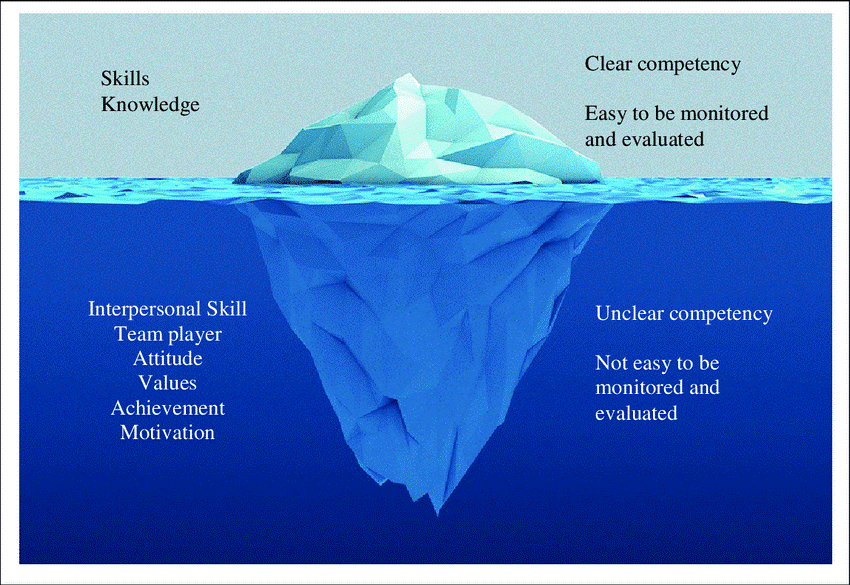
Salleh, K. M., et al. (2015). Competency of adult learners in learning: Application of the
iceberg competency model. Procedia - Social and Behavioral Sciences, 204, 326-334.
Spencer, L. M., & Spencer, P. S. M. (2008). Competence at work: Models for superior performance. John Wiley & Sons.
UNESCO-UNEVOC International Centre for Technical and Vocational Education and Training. (2018). Global Learning Forum 2018: Managing skills in a time of disruption. https://unevoc.unesco.org/learningforum/documents/UNEVOC-LF2018.pdf
World Bank. (2023, October 5). Teachers in technical and vocational education and training are critical for successful skills development. https://blogs.worldbank.org/en/education/teachers-technical-and-vocational-education-and-training-are-critical-successful
