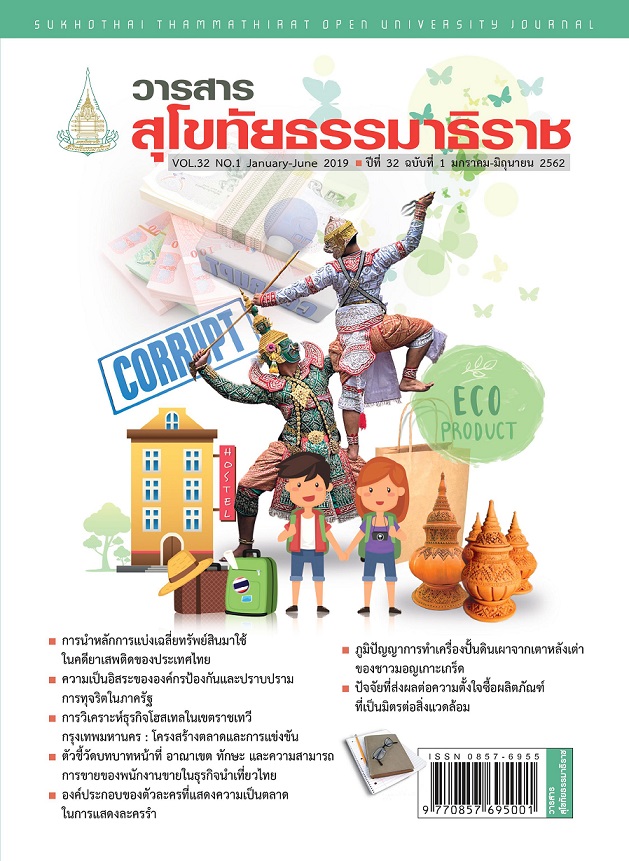
องค์ประกอบของตัวละครที่แสดง ความเป็นตลาดในการแสดงละครรำ
คำสำคัญ:
ความเป็นตลาด, ละครรำบทคัดย่อ
ตลาดในละครรำเป็นเครื่องบ่งชี้พฤติกรรมตัวละครที่สำแดงออกมาตามอารมณ์ความรู้สึกเช่นเดียวกับ พฤติกรรมมนุษย์ ละครรำแสดงสัญชาตญาณของมนุษย์ที่ชอบความรื่นเริงบันเทิงใจ ในขณะเดียวกันตลาด เป็นอุปนิสัยของมนุษย์ที่พร้อมจะแสดงออกทันทีทันใดเมื่อเกิดความขัดแย้งขึ้น การวิจัยนี้จึงมีวัตถุประสงค์ เพื่อศึกษาองค์ประกอบของตัวละครที่แสดงความเป็นตลาดในการแสดงละครรำ การวิจัยครั้งนี้เป็นการวิจัยเชิงคุณภาพ โดยใช้ระเบียบวิธีวิจัยเอกสารจากบทละครสมัยกรุงศรีอยุธยา บทละครสมัยกรุงธนบุรี บทละครสมัยกรุงรัตนโกสินทร์ และบทประกอบการแสดงของกรมศิลปากร ซึ่งใช้แสดง ละครรำ 4 ประเภทคือ โขน ละครชาตรี ละครนอก และละครใน เครื่องมือในการวิจัยใช้แบบวิเคราะห์เนื้อหา วิเคราะห์ข้อมูลเชิงตีความสรุปและนำเสนอรูปแบบพรรณนาวิเคราะห์ ผลการวิจัยพบว่า ความเป็นตลาดเป็นการแสดงพฤติกรรมไม่สำรวมด้วยอารมณ์ความรู้สึกนึกคิด คำพูดและกิริยาท่าทางของตัวละครที่เปรียบเสมือนตัวแทนมนุษย์ซึ่งเป็นพฤติกรรมที่มีอยู่ในทุกตัวละคร เป็นการ สร้างความสมจริงที่สะท้อนตัวตนของมนุษย์ได้ใกล้เคียงกับชีวิตจริง องค์ประกอบของตัวละครที่แสดงความเป็น ตลาดในการแสดงละครรำมี 3 ปัจจัยคือ 1) ปัจจัยหลักคือ ความขัดแย้งของตัวละคร 5 ลักษณะ 2) ปัจจัย รอง ได้แก่ สถานภาพของตัวละคร เพศสถานะของตัวละคร และบุคลิกลักษณะของตัวละคร และ 3) ปัจจัย เสริม ได้แก่ บรรยากาศที่ส่งเสริมความเป็นตลาดของตัวละคร ความเป็นตลาดเป็นสิ่งที่มีอยู่ในอุปนิสัยของ มนุษย์ทุกคนทั้งผู้ดีและไพร่ โดยมีกรอบมารยาททางสังคมเป็นแบบแผนให้ยึดถือปฏิบัติหรือเป็นเครื่องกลั่น กรองการแสดงออกทางพฤติกรรมที่ไม่เหมาะสมต่อสังคม หากมีสถานการณ์หรือเหตุการณ์มากดดันอารมณ์ให้เกิดความรู้สึกรัก โลภ โกรธ หลง ซึ่งอาจมีปัจจัยปรุงแต่งให้ความรู้สึกนั้นหนักเบาไปตามสถานการณ์ จะส่งผลให้มนุษย์มีปฏิกิริยาทางอารมณ์และแสดงพฤติกรรมโต้ตอบอย่างหนึ่งอย่างใดตามธรรมชาติของ แต่ละบุคคล แต่เมื่อความเป็นตลาดปรากฏเป็นบุคลิกลักษณะ อารมณ์และความรู้สึกนึกคิดของตัวละคร ตัวละครย่อมแสดงพฤติกรรมเช่นเดียวกับมนุษย์ หากแต่แสดงให้เป็นไปตามระเบียบแบบแผนทางการแสดง ละครแต่ละประเภทอย่างเคร่งครัด
เอกสารอ้างอิง
Bhramagunabhorn, Phra (P.A. Payutto). (2003). Dictionary of Buddhist Terminology. (10th ed.).
Bangkok: S.R. Printing Mass Product Co., Ltd. (in Thai)
Chiraphan, I. (2007). Wilar Dance Techniques in Lakon Nok “Chaiyachet”: Trickery of the Seven Concubines, Finding the Prince, and Mocking the King. Thesis for Master of Arts Program, Graduate School, Chulalongkorn University. (in Thai)
Chula Chom Klao Chao Yu Hua, Phra. (1997). Ngo Pa (Romance of the Sakai). Bangkok: Office of Literature and History, Fine Arts Department; Thai Khadi Research Institute, Thammasat University. (in Thai)
Fine Arts Department. (1955). Ramakien: the Drama of Phra Phutthaloetla Naphalai vol. 1. Phra Nakhon: Thai Wattana Panit (Printing Department). (in Thai)
Fine Arts Department. (1958). Khun Chang Khun Phaen: Phra Wai Is Defeated in Battle.
Phra Nakhon: Sivaporn Limited Partnership. (in Thai)
Fine Arts Department. (1959). Suwannahong: Kumphon Offers the Horse, Lakhon Nok drama performed at the Theater of Fine Arts in March, 1959. Bangkok: Sivaporn Limited Partnership. (in Thai)
Fine Arts Department. (1962). Kaew Na Ma: Child Offering. Phra Nakhon: Sivaporn Limited Partnership. (in Thai)
Fine Arts Department. (1965). Dramas from the Old Kingdom: Manohra and Sangthong, National Library edition. Phra Nakhon: Rungruang Ratana Printing. (in Thai)
Fine Arts Department. (1969). Ramakien: the Drama of Phra Phutthaloetla Naphalai, and the Origin of Ramakien by King Vajiravudh (National Library of Thailand Edition).
Phra Nakhon: Prachak Vittaya Printing House. (in Thai)
Fine Arts Department. (1972). Phra Aphai Mani, a Poem of Sunthorn Phu, National Library edition. (13th ed.). Nakhon Luang Krung Thep Thonburi: Rung Wattana Printng House. (in Thai)
Fine Arts Department. (1982). Lakhon Nok: the Drama of King Rama II. Bangkok: Thawee Printing. (in Thai)
Fine Arts Department. (2002). Unnarut: the Drama of Phra Phutthayotfa Chulalok. Bangkok: Kurusapa Printing Ladprao. (in Thai)
Jansuda, C. (2006). Conflicts in Thai literature in early Rattanakosin Period (Rama 1-3): Problem Coping and Solving of the Characters. Thesis for Master of Arts Program in Thai, Graduate School, Silpakorn University. (in Thai)
Jiraporn, T. (2013). General Psychology. Bangkok: V Print (1991) Co., Ltd. (in Thai)
Kasama, S. (2013). A Comparison of Provocation Processes in King Rama II’s Lakornnai and Lakornnok Plays. Thesis for Master of Arts Program in Thai, Graduate School, Silpakorn University. (in Thai)
Kulvacharee, T. (1997). Behavior Analysis of Characters in Literary Heritage Based on Psychological Theories. Independent Study for Master of Education Program in Teaching Thai, Graduate School, Chiang Mai University. (in Thai)
Kurusapa Business Organization. (1963). Ramakien: the Drama of King of Thonburi, and the Tale of Ramakien by Kee Yupho. Bangkok: Kurusapa Printing. (in Thai)
Kusuma, R. (1991). A Sanskrit Literary Theoretical Approach of Thai Literature. Academic document No. 1/2534, The Foundation for the Promotion of Social Sciences and Humanities Texbooks Projects, Faculty of Archaeology, Silpakorn University. (in Thai)
Navarat, N. (1997). Women - Sellers Life: Economic and Household Role in the Commercial Context. Thesis for Master of Arts Program in Anthropology, Faculty of Sociology and Anthropology, Thammasat University. (in Thai)
Oranuch, S., Nirun, W.-A., & Pichan, S. (2007). Community Noise in Tambolchumsang Municipality, Amphoe Wangchan, Rayong Province. Department of Resource and Environmental Management, Kasetsart University. (in Thai)
Patcharawan, T. (2001). Dramatic Principles of Ketsuriyong Plaeng in Lakon Nok, Suwanahong. Thesis for Master of Arts Program, Graduate School, Chulalongkorn University. (in Thai)
Phanee, S. (1997). Aesthetics of Thai Dance. Bangkok: Thana Printing Limited Partnership. (in Thai)
Phisamai, S.-A. (1983). Contemporary Literature, in Thai Culture, 22:9. Bangkok: Kurusapa Printing Ladphrao. (in Thai)
Phutthayotfa Chulalok, Phra. (1967). Ramakien vol. 1. Phra Nakhon: Silpa Bannakhan. (in Thai)
Phutthayotfa Chulalok, Phra. (1967). Ramakien vol. 2. Phra Nakhon: Silpa Bannakha. (in Thai)
Phutthaloetla Naphalai, Phra. (1997). Lakhon Nok: 6 Stories (Sang Thong, Chaiyachet, Krai Thong, Manee Phichai, Khawee, Sang Sinxay). (9th ed.). Phra Nakhon: Silpa Bannakhan. (in Thai)
Phutthaloetla Naphalai, Phra. (2000). Inao, the Play. (14th ed.). Bangkok: Silpa Bannakhan. (in Thai)
Phutthaloetla Naphalai, Phra. (2011). Inao, the Play. Bangkok: Petchkarat Publishing Co., Ltd. (in Thai)
Phuwanatenarinrit, Krom Luang. (2001). Kaew Na Ma: Lakhon Nok. Bangkok: Office of Literature and History. (in Thai)
Sahatorn, P., & Jaruwan, C. (2015). [Editor]. “Drama is the world” in Read Me 29 Egazine, March-April 2015. Bangkok: Office of Knowledge Management and Development (Public Organization). (in Thai)
Somrak, C. (2006). [Editor]. “Market...the place of life” in Market in Life, Life in Market. Bangkok: O.S. Printing House. (in Thai)
Suchada, T. “Woman, men and sexuality: gender studies in anthropology”. Journal of Social Science, vol.19, no.1/2007. (in Thai)
Suthiwong, P. (1979). Writing. Bangkok: Thai Wattana Panit. (in Thai)
Suwaree, S. (2006). General Psychology. Bangkok: Odian Store. (in Thai)
Wanchai, P. (1993). Research Report on Sound Volume Analysis of Bangkok Metropolis in 24 hours. Chulalongkorn University, Bangkok. (in Thai)
Weerasak, M. (2012). The Study of Traffic Noise Level in Phitsanulok Municipality, Phitsanulok Province. Thesis for Bachelor of Science Program in Natural Resources and Environment, Naresuan University. (in Thai)
Woranuch, D., Kantima, C., & Piyapong, P. (n.d.). Measurement and Mapping of Noise Level for Rajamangala University of Technology Phra Nakhon North Bangkok Campus. This research was funded by the revenue budget of 2014 fiscal year, Faculty of Science
and Technology. (in Thai)
Phutthaloetla Naphalai, Phra. (1973). Inao. (13th ed.). Bangkok: Charoen Rat Printing. (in Thai)
ดาวน์โหลด
เผยแพร่แล้ว
รูปแบบการอ้างอิง
ฉบับ
ประเภทบทความ
สัญญาอนุญาต
บทความที่ได้รับการตีพิมพ์เป็นลิขสิทธิ์ของวารสารมหาวิทยาลัยสุโขทัยธรรมาธิราช
ข้อความที่ปรากฏในบทความแต่ละเรื่องในวารสารวิชาการเล่มนี้เป็นความคิดเห็นส่วนตัวของผู้เขียนแต่ละท่านไม่เกี่ยวข้องกับมหาวิทยาลัยสุโขทัยธรรมาธิราช และคณาจารย์ท่านอื่นๆในมหาวิทยาลัยฯ แต่อย่างใด ความรับผิดชอบองค์ประกอบทั้งหมดของบทความแต่ละเรื่องเป็นของผู้เขียนแต่ละท่าน หากมีความผิดพลาดใดๆ ผู้เขียนแต่ละท่านจะรับผิดชอบบทความของตนเองแต่ผู้เดียว
ห้ามนำข้อความทั้งหมด หรือบางส่วนไปพิมพ์ซ้ำ เว้นแต่จะได้รับอนุญาตจากกองบรรณาธิการวารสาร

