
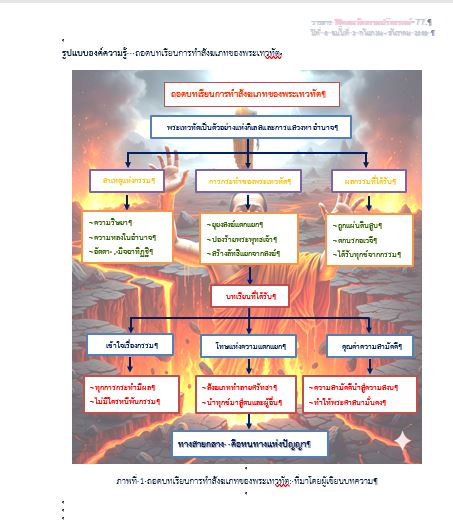
Extracting the lesson of the Sangha schism of Devadatta
Article Sidebar
Main Article Content
Abstract
This article examines the schism caused by Devadatta Bhikkhu in the Buddhist tradition with the objectives of (1) analyzing the causes and factors that led to division within the monastic community, (2) exploring the consequences of unwholesome actions for both the perpetrator and the Sangha, and (3) deriving ethical lessons that can be applied to conflict prevention in contemporary society. The study finds that jealousy, self-conceit, and rigid attachment to personal views were key factors leading to the schism, which caused harm both to Devadatta Bhikkhu himself and to the monastic institution as a whole. Nevertheless, through profound compassion, the Buddha allowed Devadatta Bhikkhu to be ordained so that the negative karma he had accumulated could eventually be resolved. This event reflects the nature of fragmentation within human society and reveals underlying mechanisms of conflict that may arise in any era. The lessons drawn from Devadatta’s behavior highlight the importance of self-awareness, living according to the Middle Way with mindfulness and vigilance, and maintaining harmony as a fundamental principle of communal life. These insights provide valuable guidance for fostering stability and social cohesion at both community and societal levels.
Article Details

This work is licensed under a Creative Commons Attribution-NonCommercial-NoDerivatives 4.0 International License.
เรื่องลิขสิทธิ์/เป็นความคิดเห็นของผู้เขียน
References
เอกสารอ้างอิง
หนังสือ :
พระพรหมคุณาภรณ์ (ป.อ. ปยุตฺโต). (2557). พจนานุกรมพุทธศาสตร์ ฉบับประมวลธรรม. กรุงเทพมหานคร มูลนิธิพุทธธรรม.
พระมหาสมบูรณ์ วุฑฺฒิกโร. (2562). สังฆเภท: การวิเคราะห์เชิงพระวินัย. กรุงเทพมหานคร: สำนักพิมพ์มหาจุฬาลงกรณราชวิทยาลัย.
มหาจุฬาลงกรณราชวิทยาลัย. (2539). พระไตรปิฎกภาษาไทย ฉบับมหาจุฬาลงกรณราชวิทยาลัย. กรุงเทพมหานคร: โรงพิมพ์มหาจุฬาลงกรณราชวิทยาลัย.
มหาจุฬาลงกรณราชวิทยาลัย. (2558). อรรถกถา พระไตรปิฎกภาษาไทย ฉบับมหาจุฬาลงกรณราชวิทยาลัย. กรุงเทพมหานคร: โรงพิมพ์มหาจุฬาลงกรณราชวิทยาลัย.
วารสาร :
พระชัฏฐวีร์ อนาลโย (อนันตกลิ่น). (มกราคม – มิถุนายน 2564). หลักการปกครองตามแนวพุทธศาสตร์. วารสารพุทธนวัตกรรมปริทรรศน์. 2(1); 104-105.
จิณวัตร ก้อนทองดี. (มกราคม – เมษายน 2565). กฎแห่งกรรม :ความยุติธรรมทางพระพุทธศาสนา. วารสารพุทธนวัตกรรมปริทรรศน์. 3(1); 44-48.
วิทยานิพนธ์ :
พระปลัดกำพล ปญฺญาวุฑฺโฒ. (2562). ศึกษาวิเคราะห์กรรมของพระเทวทัตที่ปรากฏในพระพุทธศาสนาเถรวาท. วิทยานิพนธ์พุทธศาสตรมหาบัณฑิต สาขาวิชาพระพุทธศาสนา บัณฑิตวิทยาลัย มหาวิทยาลัยมหาจุฬาลงกรณราชวิทยาลัย.
พระมหาไกรวรรณ ชินทตฺติโย (ปุณขันธ). (2546). การศึกษาวิเคราะห์บทบาทของพระเทวทัตที่ปรากฏในคัมภีรพระพุทธศาสนา. วิทยานิพนธ์พุทธศาสตรมหาบัณฑิต สาขาวิชาพระพุทธศาสนา บัณฑิตวิทยาลัย มหาวิทยาลัยมหาจุฬาลงกรณราชวิทยาลัย.
พระสมุห์สัมพันธ์ สุธีโร (เนาว์แก้ว). (2556). วิเคราะห์พฤติกรรมการประพฤติผิดและการกลับใจของบุคคลในสมัยพุทธกาล. วิทยานิพนธ์พุทธศาสตรมหาบัณฑิต สาขาวิชาพระพุทธศาสนา บัณฑิตวิทยาลัย มหาวิทยาลัยมหาจุฬาลงกรณราชวิทยาลัย.
พระอุทัย จิรธมฺโม (เอกสะพัง). (2543). ทัศนะเรื่องกรรมในพระพุทธศาสนาเถรวาทและปัญหาเรื่องกรรมในสังคมชาวพุทธปัจจุบัน. วิทยานิพนธ์พุทธศาสตรมหาบัณฑิต สาขาวิชาปรัชญา บัณฑิตวิทยาลัย มหาวิทยาลัยมหาจุฬาลงกรณราชวิทยาลัย.
Reference
Books :
Phra Phromkunaphon (P.A. Payutto). (2014). Dictionary of Buddhism: Dhamma Edition. Bangkok: Buddhadhamma Foundation.
Phra Maha Somboon Wuddhikaro. (2019). Sanghaphetha: A Vinaya Analysis. Bangkok: Mahachulalongkornrajavidyalaya University Press.
Mahachulalongkornrajavidyalaya. (2539). Thai Tripitaka Mahachulalongkornrajavidyalaya. Bangkok: MCU Press.
Mahachulalongkornrajavidyalaya. (2558). Commentaries Thai Tripitaka Mahachulalongkornrajavidyalaya. Bangkok: MCU Press.
Journal :
Phra Chattawi Analayo (Anantaklin). (January – June 2021). Principles of Governance in Buddhist Concept. Journal of Buddhist Innovation Review. 1 (2); 104-105.
Jinnawat Kontongdee. (January – April 2022). The law of krama : justice according to Buddhism. Journal of Buddhist Innovation Review. 3 (1); 44-48.
Thesis :
Phra Palad Kamphon Pannyawuttho. (2013). An analytical Study of kamma of Thevatatta in theravada Buddhism. Master of Arts thesis. Graduate School Mahachulalongkornrajavidyalaya University.
Phra Maha Kraivan Jinadattiyo (Punnakhan). (2003). An Analytical Study Of The Roles Of Devadatta Bhikkhu As Found In The Buddhist Texts. Master of Arts Thesis in Buddhist Studies. Graduate School Mahachulalongkornrajavidyalaya University.
Phra Samu Sumpan Suchiro (Naokaeq). (2013). An Analysis of Misconduct and Repentance in the Buddha’s Time. Master of Arts Thesis in Buddhist Studies. Graduate School, Mahachulalongkornrajavidyalaya University.
Phra Uthai Jiradhammo (Eaksaphang). (2000). The Concept of Kamma in Theravāda Buddhism and the Problem of Kamma in Contemporary Buddhist Society. Master of Arts Thesis in Philosophy. Graduate School. Mahachulalongkornrajavidyalaya University.
