
The Ethical Foundation of the Five Precepts
Article Sidebar
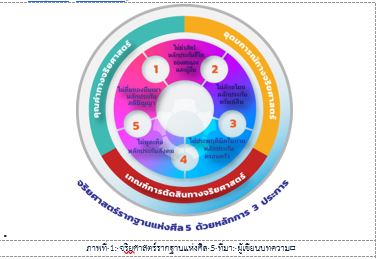
Main Article Content
Abstract
This academic article presents a study of the ethical principles that are the foundation of the Five Precepts. Ethics is the science that seeks the highest good in human life. It seeks criteria for judging human behavior as right or wrong, good or bad, proper or inappropriate, and considers the problem of the state of moral values. It mentions three principles: (1) ethical values, (2) ethical ideology, and (3) ethical criteria. The Five Precepts are practices that create normalcy by refraining from evil deeds, both physical and verbal, for the sake of peace and tranquility in society. The Five Precepts consist of (1) not killing animals as a guarantee of life; (2) not stealing as a guarantee of property; (3) not engaging in sexual misconduct as a guarantee of family; (4) not telling lies as a guarantee of society; and (5) not drinking alcohol and intoxicants as a guarantee of intelligence. Therefore, in summary, the Five Precepts are considered a guarantee of life, creating stability for humans in their present life. Those who act according to the Five Precepts will experience benefits for themselves and society. The criteria for judging violations of the Five Precepts lies primarily in the doer's intention. Ethics is therefore the foundation of the Five Precepts. Ethics discusses the value of behavior. The value of human life, ideology, and ethical criteria for judgment, while the Five Precepts are basic human practices that enable practitioners to be good people for peaceful coexistence in society. The method of observing the Five Precepts is explained according to the values, ideology, and criteria for judgment that are consistent with ethics. Therefore, if we look at ethics, it is like the foundation of stability and peace, and the Five Precepts are like methods of practice to ensure stability and peace in society.
Article Details

This work is licensed under a Creative Commons Attribution-NonCommercial-NoDerivatives 4.0 International License.
เรื่องลิขสิทธิ์/เป็นความคิดเห็นของผู้เขียน
References
เอกสารอ้างอิง
หนังสือ:
กีรติ บุญเจือ. (2542). จริยศาสตร์. กรุงเทพมหานคร: ไทยวัฒนาพานิช.
ชัยวัฒน์ อัตพัฒน์. (2520). จริยศาสตร์. กรุงเทพมหานคร: มหาวิทยาลัยรามคำแหง.
บุญมี .แท่นแก้ว. (2539). จริยศาสตร์. กรุงเทพมหานคร: โอ เอส พรินติง เฮาส์.
ประเวศ อินทองปาน. (2563). ศาสนาเชิงวิเคราะห์และเปรียบเทียบ. กรุงเทพมหานคร: สำนักพิมพ์มหาวิทยาลัยเกษตรศาสตร์.
พระเทวินทร์ เทวินฺโท. (2550). แก่นพุทธจริยศาสตร์. กรุงเทพมหานคร: รุ่งแสงการพิมพ์.
พระธรรมปิฎก (ป.อ. ปยุตโต). (2538). วัฒนธรรมไทยสู่ยุคเป็นผู้นำและเป็นผู้ให้. กรุงเทพมหานคร: โรงพิมพ์การศาสนา.
พระพรหมคุณาภรณ์ (ป.อ. ปยุตฺโต). (2551). พุทธธรรม ฉบับขยายความ, พิมพ์ครั้งที่ 15. กรุงเทพมหานคร: บริษัทสหธรรมิก จำกัด.
พระมหาธิติพงศ์ อุตฺตมปญฺโญ. (2562). มังคลัตถทีปนีแปล ภาค 1 เล่ม 1. กรุงเทพมหานคร: บริษัท สหมิตรพัฒนาการพิมพ์ (1992) จำกัด.
มหาวิทยาลัยมหาจุฬาลงกรณราชวิทยาลัย. (2539). พระไตรปิฎกภาษาไทย ฉบับมหาจุฬาลงกรณราชวิทยาลัย. กรุงเทพมหานคร: โรงพิมพ์มหาจุฬาลงกรณราชวิทยาลัย.
มหาวิทยาลัยมหาจุฬาลงกรณราชวิทยาลัย. (2556). อรรถกถาภาษาไทย ฉบับมหาวิทยาลัยมหาจุฬาลงกรณราชวิทยาลัย. กรุงเทพมหานคร: โรงพิมพ์มหาจุฬาลงกรณราชวิทยาลัย.
วิทย์ วิศทเวทย์. (2520). ปรัชญาทั่วไป. กรุงเทพมหานคร: อักษรเจริญทัศน์.
วีระชัย ยศโสธร. (2556). จริยศาสตร์. บุรีรัมย์: คณะมนุษยศาสตร์และสังคมศาสตร์ มหาวิทยาลัยราชภัฏบุรีรัมย์.
สิทธิ์ บุตรอินทร์. (2554). ปรัชญาเปรียบเทียบมนุษยนิยมตะวันออกกับตะวันตก. กรุงเทพมหานคร: สร้างสรรค์ บุ๊คส์.
วารสาร:
สำเนียง ยอดคีรี. (กรกฎาคม – ธันวาคม 2560). จริยศาสตร์. จริยธรรม และคุณธรรม ตามแนวความคิดของนักปรัชญา. วารสารปรัชญาปริทรรศน์. 22(2); 38.
Reference
Book:
Boonmee.Taenkaew. (1996). Ethics. Bangkok: O.S. Printing House.
Chaiwat Atthaphat. (1977). Ethics. Bangkok: Ramkhamhaeng University.
Kirati Bunchuea. (1999). Ethics. Bangkok: Thai Wattana Panich.
Mahachulalongkornrajavidyalaya. (2539). Thai Tripitaka Mahachulalongkornrajavidyalaya. Bangkok: MCU Press.
Mahachulalongkornrajavidyalaya. (2558). Commentaries Thai Tripitaka Mahachulalongkornrajavidyalaya. Bangkok: MCU Press.
Phra Maha Thitiphong Uttamapannayo. (2019). Mangalatthadipani Translation. Part 1. Bangkok: Samit Phatthana Printing Company (1992) Co., Ltd.
Phra Phromkunaphon (P.A. Payutto). (2008). Buddhism, expanded edition, 15th printing. Bangkok: Sahathammik Company Limited.
Phra Thammapitok (P.A. Payutto). (1995). Thai culture towards the era of leadership and giving. Bangkok: Religious Printing House.
Phra Thewin Thewintho. (2007). The Essence of Buddhist Ethics. Bangkok: Rungsaeng Printing.
Prawet Inthongpan. (2020). Analytical and Comparative Religion. Bangkok: Kasetsart University Press.
Sit But-in. (2011). Comparative Philosophy of Eastern and Western Humanism. Bangkok: Sangsan
Books.
Wirachai Yotsodhon. (2013). Ethics. Buriram: Faculty of Humanities and Social Sciences. Buriram Rajabhat University.
Wit Wisutthawet. (1977). General Philosophy. Bangkok: Aksorn Charoentat.
Journal :
Samneang Yodkiri. (July – December 2017). Ethics morality and virtue according to the ideas of philosophers. Journal of Philosophy Review. 22(2): 38.
