
บูรณาการความเชื่อเรื่องพญานาคเพื่อการเรียนรู้วิชาปรัชญา ความเชื่อ และศาสนากรณีศึกษาในเขตจังหวัดนครพนม มุกดาหาร บึงกาฬ
Article Sidebar
Main Article Content
บทคัดย่อ
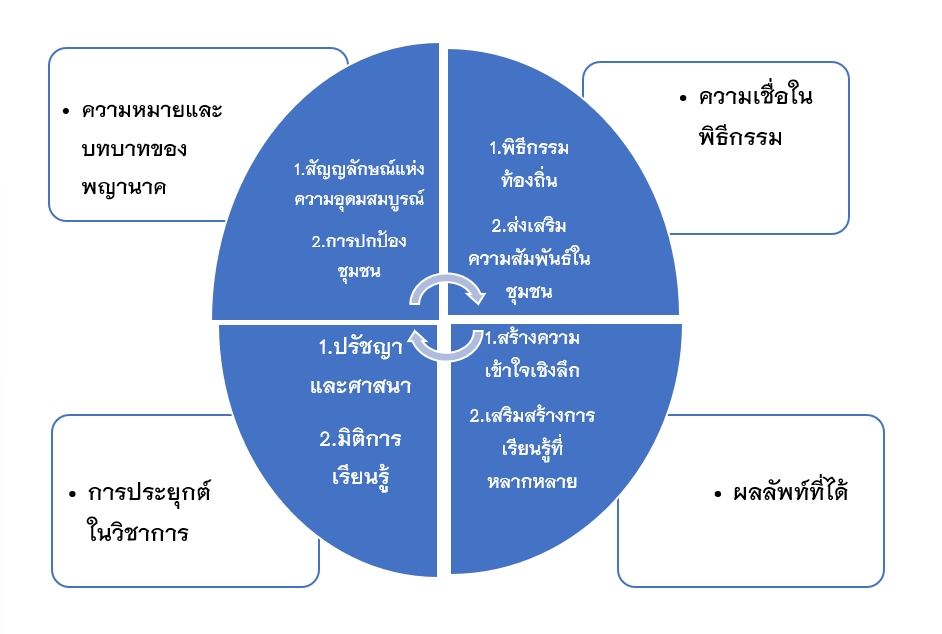
การวิจัยนี้ มีวัตถุประสงค์ 1) เพื่อศึกษาความเชื่อเกี่ยวกับพญานาคในชุมชนริมแม่น้ำโขงในเขตจังหวัดนครพนม มุกดาหาร บึงกาฬ 2) เพื่อศึกษาวิธีการนำความเชื่อเกี่ยวกับพญานาคมาประยุกต์ใช้ในการเรียนการสอนวิชาปรัชญา ความเชื่อ และศาสนา มุ่งศึกษาการบูรณาการความเชื่อเรื่องพญานาคเพื่อการเรียนรู้ในวิชาปรัชญา ความเชื่อ และศาสนา โดยใช้กรณีศึกษาในเขตจังหวัดนครพนม มุกดาหาร และบึงกาฬ ความเชื่อเรื่องพญานาคถือเป็นส่วนสำคัญของวัฒนธรรมไทย โดยเฉพาะในชุมชนริมแม่น้ำโขง ซึ่งพญานาคถูกมองว่าเป็นสัญลักษณ์แห่งความอุดมสมบูรณ์ การปกป้อง และความศักดิ์สิทธิ์ การศึกษาครั้งนี้ใช้วิธีการวิจัยเชิงคุณภาพ ประกอบด้วยการวิจัยเอกสารและการสัมภาษณ์เชิงลึก สัมภาษณ์ผู้ให้ข้อมูลสำคัญจำนวน 15 คน วิเคราะห์ข้อมูลเชิงเนื้อหา นำเสนอเชิงพรรณนาวิเคราะห์
ผลการวิจัยพบว่า ความเชื่อเรื่องพญานาคในคัมภีร์พระพุทธศาสนาเถรวาทสะท้อนถึงมิติทางศาสนา วัฒนธรรม และจิตวิญญาณของชุมชน ผลการวิจัยแสดงให้เห็นว่า การบูรณาการความเชื่อนี้เข้ากับการเรียนการสอนช่วยเสริมสร้างความเข้าใจในประวัติศาสตร์ ความหลากหลายทางวัฒนธรรม และหลักธรรมคำสอนในพระพุทธศาสนาได้อย่างลึกซึ้ง นอกจากนี้ การศึกษายังเน้นถึงบทบาทของพญานาคในฐานะตัวแทนความสัมพันธ์ระหว่างมนุษย์กับธรรมชาติ และผู้ปกป้องพระธรรมคำสอน การวิจัยครั้งนี้เสนอแนวทางการนำความเชื่อเรื่องพญานาคมาประยุกต์ใช้ในกระบวนการเรียนการสอน เช่น การวิเคราะห์ตำนานพญานาค การเยี่ยมชมสถานที่สำคัญ และการจัดกิจกรรมเชิงปฏิบัติ เพื่อสร้างมิติการเรียนรู้ที่ครอบคลุมและมีความหมาย
Article Details

อนุญาตภายใต้เงื่อนไข Creative Commons Attribution-NonCommercial-NoDerivatives 4.0 International License.
เนื้อหาและข้อมูลในบทความที่ลงตีพิมพ์ในวารสาร มจร บาฬีศึกษาพุทธโฆสปริทรรศน์ถือเป็นข้อคิดเห็นและความรับผิดชอบของผู้เขียนบทความโดยตรงซึ่งกองบรรณาธิการวารสาร ไม่จำเป็นต้องเห็นด้วย หรือร่วมรับผิดชอบใด ๆ บทความ ข้อมูล เนื้อหา รูปภาพ ฯลฯ ที่ได้รับการตีพิมพ์ในวารสาร มจร บาฬีศึกษาพุทธโฆสปริทรรศน์ถือเป็นลิขสิทธิ์ของวารสาร มจร บาฬีศึกษาพุทธโฆสปริทรรศน์หากบุคคลหรือหน่วยงานใดต้องการนำทั้งหมดหรือส่วนหนึ่งส่วนใดไปเผยแพร่ต่อหรือเพื่อกระทำการใด ๆ จะต้องได้รับอนุญาตเป็นลายลักอักษรจากวารสาร มจร บาฬีศึกษาพุทธโฆสปริทรรศน์ก่อนเท่านั้น
เอกสารอ้างอิง
กิติพัฒน์ เพชรทอง. พุทธศาสนากับพญานาค: ศึกษาวิเคราะห์พญานาคในคัมภีร์
พระพุทธศาสนาเถรวาทกับวัฒนธรรมอีสาน. วิทยานิพนธ์อักษรศาสตร์มหาบัณฑิต. มหาวิทยาลัยมหิดล. 2546.
กีรติ บุญเจือ. ศาสนาศาสตร์เบื้องต้น. กรุงเทพฯ: ไทยวัฒนาพานิช. 2541.
จิตรกร เอมพันธุ์. พญานาคเจ้าฝั่งโขง: พิธีกรรมกับความเชื่อในวัฒนธรรมอีสาน. วิทยานิพนธ์
มนุษยศาสตร์มหาบัณฑิต. จุฬาลงกรณ์มหาวิทยาลัย. 2545.
ธนู แก้วโอภาส. ศาสนาโลก. กรุงเทพฯ: สำนักพิมพ์สากลศึกษา. 2541.
พระพรหมมุนี (พิมพ์ ธมฺมธโร). สากลศาสนา ภาค 1-2. กรุงเทพฯ: มหามกุฏราชวิทยาลัย. 2505.
พระโสภณวิหารการ (พิสิษฐ์ สุวีโร ธรรมโรจน์). ศึกษาวิเคราะห์แนวคิดเรื่องพญานาคในคัมภีร์
พระพุทธศาสนาเถรวาท. กรุงเทพมหานคร: มหาจุฬาลงกรณราชวิทยาลัย. 2554.
พลธรรม จันทรคำ. พญานาค: อุดมการณ์ที่คำชะโนดสู่การทำให้เป็นสินค้า. วิทยานิพนธ์
ศิลปะศาสตรมหาบัณฑิต. มหาวิทยาลัยธรรมศาสตร์. 2551.
พิเชฐ สายพันธ์. นาคาคติ: อีสานลุ่มแม่น้ำโขง. วิทยานิพนธ์สังคมวิทยามานุษยวิทยามหาบัณฑิต.
มหาวิทยาลัยธรรมศาสตร์. 2539.
มหาวิทยาลัยมหาจุฬาลงกรณราชวิทยาลัย. พระไตรปิฎกภาษาไทย ฉบับมหาจุฬาลงกรณราช
วิทยาลัย. กรุงเทพมหานคร : โรงพิมพ์มหาจุฬาลงกรณราชวิทยาลัย, 2539.
ศ. แสงจันทร์งาม. ศาสนศาสตร์. กรุงเทพฯ: ไทยวัฒนาพานิช. 2531.
สุจิตต์ วงษ์เทศ. นาคในประวัติศาสตร์อุษาคเนย์. กรุงเทพฯ: มติชน. 2543.
