
ANALYSIS OF DHARMA PRACTICE ACCORDING TO THE PRINCIPLES OF FOUNDATIONS MINDFULNESS IN THE CASE STUDY OF WAT KAO MAFAI PRACHINBURI PROVINCE
Article Sidebar
Main Article Content
Abstract
This research has 3 objectives: 1) to study the motivation for meditation practice of Wat Kao Mafai practitioners, Prachinburi province, 2) to study the meditation practice according to the principles of mindfulness of Wat Kao Mafai, Prachinburi province, and 3) to analyze the Dhamma practice according to the principles of mindfulness.
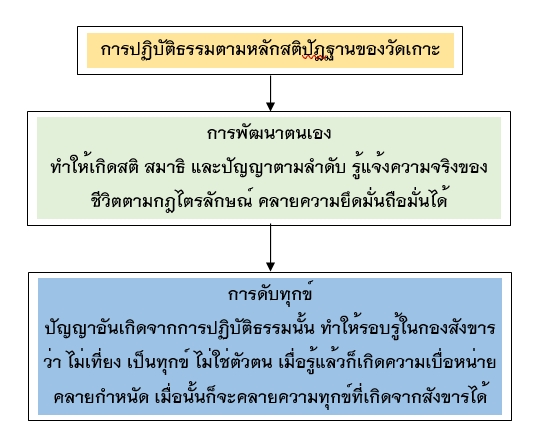
It was found that meditation practice based on principles of mindfulness at Wat Kao Mafai, Prachinburi province was conducted through a process of training and self-development for realizing the true nature of life as impermanent and uncontrollable which is the cause of suffering. Those who practiced consistently and accurately will bring wisdom, knowledge and understanding in name and forms as they were, realizing the Three Characteristics law, namely impermanence, suffering, non-self, with emotional stability and mental immunity. It helps to enhance physical health and able to develop wisdom for living properly and leading to the elimination of defilements to attain paths, results, and Nibbana, which is the path to finally get rid of suffering.
Article Details

This work is licensed under a Creative Commons Attribution-NonCommercial-NoDerivatives 4.0 International License.
Copyright Notice
The content and information in the articles published in Journal of MCU Palisueksabuddhaghosa Review, are regarded as opinions and responsibilities of article author only. It definitely does not mean that the editor must agree or share any responsibility to the author.
Articles, information, content, figure etc. that have been published in the Journal of MCU Palisueksabuddhaghosa Review is considered as the copyright of the Journal. If any individual or organization will to bring any parts of article for promote or to do anything, must be licensed only in official form from the Journal of MCU Palisueksabuddhaghosa Review.
The content and information in the articles published in Journal of MCU Palisueksabuddhaghosa Review, are regarded as opinions and responsibilities of article author only. It definitely does not mean that the editor must agree or share any responsibility to the author.
Articles, information, content, figure etc. that have been published in the Journal of MCU Palisueksabuddhaghosa Review is considered as the copyright of the Journal. If any individual or organization will to bring any parts of article for promote or to do anything, must be licensed only in official form from the Journal of MCU Palisueksabuddhaghosa Review.
References
นภาพัทธ์ งามบุษบงโสภิน. การพัฒนาชีวิตด้วยการดูจิต. วารสารปณิธาน, ปีที่ 18 ฉบับที่ 1 (มกราคม-มิถุนายน 2565).
พระปลัดสมภาร สมภาโร. “การปฏิบัติวิปัสสนากรรมฐานที่ส่งผลต่อการพัฒนาสุขภาพจิตของบุคคล”. วิทยานิพนธ์พุทธศาสตรดุษฎีบัณฑิต. บัณฑิตวิทยาลัย: มหาวิทยาลัยมหาจุฬาลงกรณราชวิทยาลัย, 2564.
พระพยุง เมธาวี (สืบสราญ). “การประยุกต์ใช้วิปัสสนากรรมฐานวัดราษฎ์บำรุงหนองลี ตำบลโพทะเล อำเภอบางระจัน จังหวัดสิงห์บุรี”. วิทยานิพนธ์พุทธศาสตรมหาบัณฑิต, บัณฑิตวิทยาลัย: มหาวิทยาลัยมหาจุฬาลงกรณราชวิทยาลัย, 2560.
พระมหาใจสิงห์ เถื่อนศรี.“การปฏิบัติธรรม คือวิถีทางสู่ความสุขที่ยั่งยืน”. วารสารวนัมฎองแหรกพุทธศาสตรปริทรรศน์. ปีที่ 9 ฉบับที่ 1 (มกราคม –มิถุนายน 2565).
พระมหาใจสิงห์ เถื่อนศรี.“การปฏิบัติธรรม คือวิถีทางสู่ความสุขที่ยั่งยืน”, วารสารวนัมฎองแหรกพุทธศาสตรปริทรรศน์. ปีที่ 9 ฉบับที่ 1 (มกราคม –มิถุนายน 2565).
มหาจุฬาลงกรณราชวิทยาลัย. พระไตรปิฎกภาษาไทย.ฉบับมหาจุฬาลงกรณราชวิทยาลัย.กรุงเทพมหานคร: โรงพิมพ์มหาจุฬาลงกรณราชวิทยาลัย,2539.
