
A Model for Strengthening Buddhist Unity in The Perspective Of Yothinburana School, Bangkok
Article Sidebar
Main Article Content
Abstract
This dissertation contains 3 objectives: 1) to study the unity-building from the perspective of Yothinburana School, Bangkok; 2) to examine the Buddhist principles that strengthening unity-building as perceived of Yothinburana School, Bangkok; and 3) to propose a model for strengthening the integrative Buddhist unity-building based on the perspective of Yothinburana School, Bangkok. This research employed a qualitative approach, involving documentary research and in-depth interviews. The research tool used was an in-depth interview guide. The key informants consist of 17 monks and laypersons. The data were analyzed using content analysis and presented in a descriptive-analytical format.
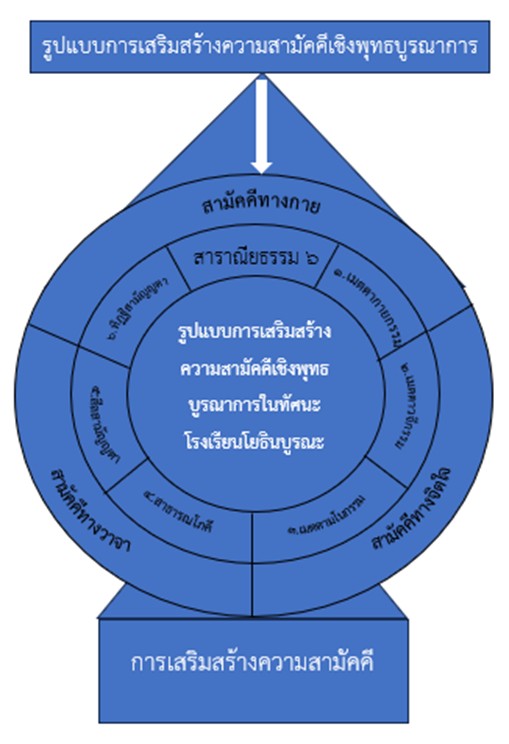
The research findings revealed that the promotion of unity at Yothinburana School was achieved through well-planned student activities designed to facilitate learning in accordance with specific objectives. The implementation involves introducing the activities, outlining procedures, and encouraging participation using active learning approach, motivational media employed to stimulate student interest and engagement, effective assessment and evaluation, leading to positive outcomes in terms of student participation and overall school unity enhancement. The Buddhist principle integrated into the activity framework to instill moral values and foster unity is the Six Saārānīya Dhamma or principles conducive to harmony. The forms of unity-building activities implemented at the school include Buddhist moral camps, scout camps, sports day, and volunteer service programs. The core contribution of this study was the development of the PVS Model for nurturing virtuous individuals within society, consisting of: 1.P = Physical Unity – unity through cooperative physical actions, 2.V = Verbal Unity – unity through harmonious speech, and 3.S = Spiritual Unity – unity through shared mental and emotional values. This model demonstrates a practical application of Buddhist teaching for promoting genuine and sustainable unity among students. Summary the knowledge gained is PVS Model.
Article Details

This work is licensed under a Creative Commons Attribution-NonCommercial-NoDerivatives 4.0 International License.
Copyright Notice
The content and information in the articles published in Journal of MCU Palisueksabuddhaghosa Review, are regarded as opinions and responsibilities of article author only. It definitely does not mean that the editor must agree or share any responsibility to the author.
Articles, information, content, figure etc. that have been published in the Journal of MCU Palisueksabuddhaghosa Review is considered as the copyright of the Journal. If any individual or organization will to bring any parts of article for promote or to do anything, must be licensed only in official form from the Journal of MCU Palisueksabuddhaghosa Review.
The content and information in the articles published in Journal of MCU Palisueksabuddhaghosa Review, are regarded as opinions and responsibilities of article author only. It definitely does not mean that the editor must agree or share any responsibility to the author.
Articles, information, content, figure etc. that have been published in the Journal of MCU Palisueksabuddhaghosa Review is considered as the copyright of the Journal. If any individual or organization will to bring any parts of article for promote or to do anything, must be licensed only in official form from the Journal of MCU Palisueksabuddhaghosa Review.
References
กรมการศาสนา. การพัฒนารูปแบบการจัดการศึกษาพระปริยัติธรรมแผนกบาลี. กรุงเทพมหานคร: โรงพิมพ์การศาสนา. 2541.
จันทร แสงสุวรรณวาว. “โมเดลความสัมพันธ์เชิงสาเหตุทางพุทธจิตวิทยาการสร้างความ
สามัคคี เพื่อทีมงานที่ประสบความสำเร็จ”. ดุษฎีนิพนธ์ พุทธศาสตร์มหาบัณฑิต (พุทธจิตวิทยา). บัณฑิตวิทยาลัยมหาวิทยาลัยมหาจุฬาลงกรณราชวิทยาลัย. 2561.
พระธรรมโกศาจารย์ ศ. (ประยูร ธมฺมจิตฺโต). พุทธวิธีการบริหาร. กรุงเทพมหานคร : โรงพิมพ์มหาจุฬาลงกรณราชวิทยาลัย, 2549.
พระมหากฤษดา สิริวฑฺฒโน . “การบริหารจัดการชุมชนสร้างสรรค์ตามหลักสาราณียธรรม 6”. วารสารสังคมศาสตร์บูรณการ ปีที่ 2 ฉบับที่ 5 (พฤษภาคม-สิงหาคม 2565).
พระมหานำเกียรติ วิสุทฺโธ (ทองทวี). “การบริหารจัดการชุมชนสร้างสรรค์ตามหลักสาราณียธรรม 6”.วารสารบัณฑิตศึกษามหาจุฬาขอนแก่น. ปีที่ 8 ฉบับที่ 3 (กรกฏาคม-กันยายน 2564).
มหาจุฬาลงกรณราชวิทยาลัย. พระไตรปิฎกภาษาไทย ฉบับมหาจฬาลงกรณราชวิทยาลัย. กรุงเทพมหานคร : โรงพิมพ์มหาจุฬาลงกรณราชวิทยาลัย, 2539.
มหาจุฬาลงกรณราชวิทยาลัย. พระไตรปิฎกภาษาบาลี ฉบับมหาจุฬาเตปิฏกํ 2500. กรุงเทพมหานคร : โรงพิมพ์รุ่งเรืองธรรม. 2506.
วันชนะ กลั่นสุวรรณ. การสังเคราะห์องค์ความรู้ เกี่ยวกับการสร้างความสามัคคีปรองดองเพื่อการ
ปฏิรูปประเทศสู่ความมั่นคงมั่งคั่งและยั่งยืน(รายงานการวิจัย). (กรุงเทพฯ:วิทยาลัยกองทัพบก. 2560.
สมโภชน์ สุวรรณรัตน์. “การสร้างความสามัคคีในหมู่บ้านเศรษฐกิจพอเพียงต้นแบบด้วยหลักพุทธธรรม”. ศาสนาศาสตรดุษฎีบัณฑิต. (บัณฑิตวิทยาลัย: มหาวิทยาลัยมหามกุฎ วิทยาลัย, 2560.
