
Tipiṭaka Pali Aphidhāna: Transliteration Translation and Analysis of (ya – rambhā)
Article Sidebar
Main Article Content
Abstract
This dissertation has three objectives: 1) to transliterate the Tipiṭaka Pāli Aphidhāna (the section from ya to rambhā) from Burmese to Thai script; 2) to translate the Pali headwords of the Tipiṭaka Pāli Aphidhāna (ya-rambhā); and 3) to study its history and content structure, while also analyzing its phonetics, its value, and Pāli passages related to vipassanā-bhāvanā (insight meditation). This study is qualitative, employing a documentary research methodology.
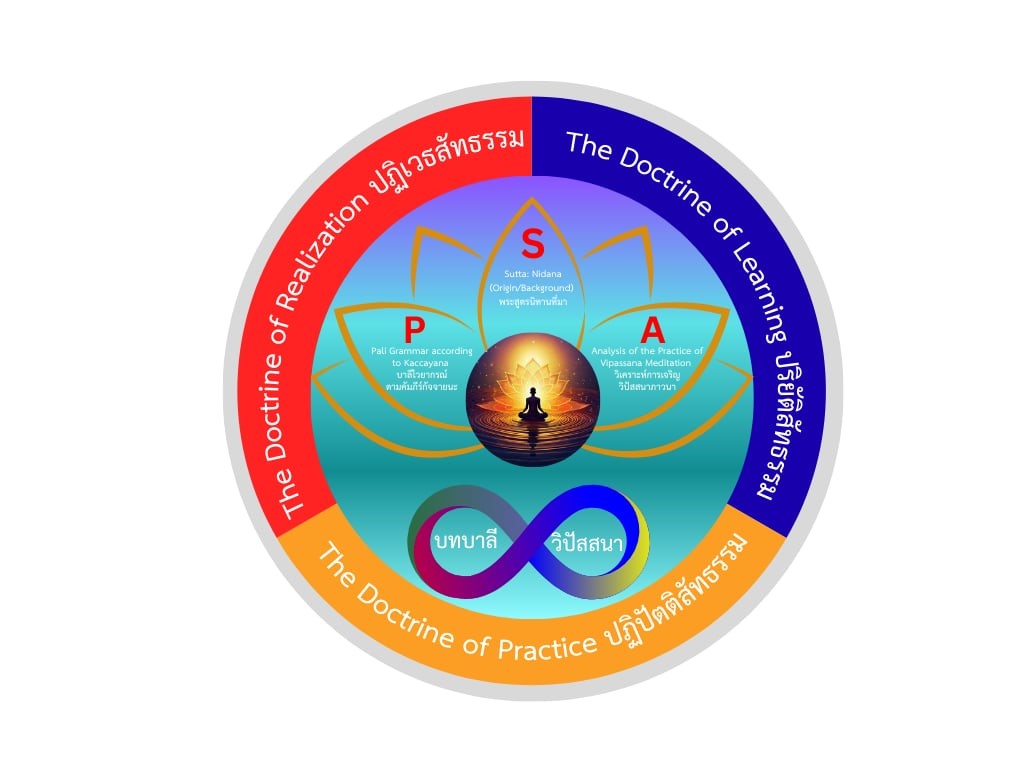
The research yielded the following results: 1) The complete and successful transliteration of 500 pages from the original Pāli in Burmese script into Thai script has created a database that is easily accessible to Thai scholars. 2) The translation of the Pali headwords revealed that accessing their true meaning requires profound contextual analysis; for example, the term "Yakkha" has as many as nine different meanings, ranging from the Buddha to an ordinary person. 3) The in-depth analysis confirms the immense value of the text as a "Key to the Tipiṭaka," which originated from the Sixth Buddhist Council in Myanmar and exhibits a high standard of Pāli grammatical precision. The most significant finding of this research is the creation of an "Integrative Lexicographical Study Model". Developed through the analysis of six key terms related to vipassanā-bhāvanā, this model demonstrates a new paradigm for Pāli studies that moves beyond mere theoretical learning (pariyatti). It serves as an "intellectual bridge" connecting linguistic knowledge (pariyatti) with practice (patipatti), ultimately guiding one toward liberation (pativedha). This dissertation, therefore, extends and completes the existing body of knowledge by presenting the Aphidhāna as an encyclopedic reference tool for accessing the essence of the True Dhamma (Saddhamma).
Article Details

This work is licensed under a Creative Commons Attribution-NonCommercial-NoDerivatives 4.0 International License.
Copyright Notice
The content and information in the articles published in Journal of MCU Palisueksabuddhaghosa Review, are regarded as opinions and responsibilities of article author only. It definitely does not mean that the editor must agree or share any responsibility to the author.
Articles, information, content, figure etc. that have been published in the Journal of MCU Palisueksabuddhaghosa Review is considered as the copyright of the Journal. If any individual or organization will to bring any parts of article for promote or to do anything, must be licensed only in official form from the Journal of MCU Palisueksabuddhaghosa Review.
The content and information in the articles published in Journal of MCU Palisueksabuddhaghosa Review, are regarded as opinions and responsibilities of article author only. It definitely does not mean that the editor must agree or share any responsibility to the author.
Articles, information, content, figure etc. that have been published in the Journal of MCU Palisueksabuddhaghosa Review is considered as the copyright of the Journal. If any individual or organization will to bring any parts of article for promote or to do anything, must be licensed only in official form from the Journal of MCU Palisueksabuddhaghosa Review.
References
ตินทวนอ่อง, “ประวัติคัมภีร์ติปิฏกปาฬิ-เมียนมาอภิธาน จารึกแห่งมหากุศล”, แปลบทนำและเรียบเรียงบทนำโดย พระคันธสาราภิวงศ์ ป.ธ. 9, พธ.ด., เจติยังคณะ คณวาจกธรรมาจริยะ และสาสนธชธรรมาจริยะ, (อัดสำเนา).
นะยาปูรสยาดอ พระเมธิยาภิวงศ์ สักยสีหธัมมาจริยะ อภิธชมหารัฏฐคุรุ นะยาวิหาร วัดทักขิณาราม เมืองมัณฑะเลย์ และคณะ, “ติปิฏกบาลี-เมียนมาอภิธาน เล่มที่ 17”, แปลและเรียบเรียงบทนำโดย พระคันธสาราภิวงศ์ ป.ธ. 9, พธ.ด., เจติยังคณะ คณวาจกธรรมาจริยะ และสาสนธชธรรมาจริยะ, มปท, (อัดสำเนา).
พระคันธสาราภิวงศ์ (แปลและอธิบาย), เนตติปกรณ์, กรุงเทพมหานคร: โรงพิมพ์พระพุทธศาสนาของธรรมสภา, 2564.
พระมหาโกมล กมโล และคณะ, เอกสารการวิจัย นามานุกรมศัพท์ วิปัสสนาภาวนา, มหาวิทยาลัยมหาจุฬาลงกรณราชวิทยาลัย วิทยาเขตบาฬีศึกษาพุทธโฆส นครปฐม, 2565.
พระมหาสมปอง มุทิโต, คัมภีร์อภิธานวรรณนา, พิมพ์ครั้งที่ 2, กรุงเทพมหานคร: บริษัท ประยูรวงศ์พริ้นท์ติ้ง จำกัด, 2547.
มหาจุฬาลงกรณราชวิทยาลัย, พระไตรปิฎกภาษาบาลี ฉบับมหาจุฬาเตปิฏกํ, กรุงเทพมหานคร: โรงพิมพ์มหาจุฬาลงกรณราชวิทยาลัย, 2500.
เวทย์ บรรณกรกุล, “ศึกษาวิเคราะห์คันถารัมภะในคัมภีร์ธัมมปทัฏฐกถา”, สารนิพนธ์พุทธศาสตรดุษฎีบัณฑิต, บัณฑิตวิทยาลัย: มหาวิทยาลัยมหาจุฬาลงกรณราชวิทยาลัย, 2559.
สมเด็จพระพุทธชินวงศ์ สมศักดิ์ อุปสมเถระ และคณะ, สัททานุกรมพระไตรปิฎกเชิงวิจัย ฉบับบาลี - ไทย เล่ม 1 (อ - องฺโคฬาริกตา), จัดพิมพ์โดยศูนย์เผยแผ่พระพุทธศาสนาแห่งชาติ สำนักงานพระพุทธศาสนาแห่งชาติ, กรุงเทพมหานคร: หจก.ประยูรสาส์นไทย การพิมพ์, 2556.
สมาคมบาลีปกรณ์ (Pali Text Society), “พจนานุกรม” เว็ปไซต์, [ออนไลน์], แหล่งที่มา: https://palitextsociety.org/a-dictionary-of-pali-online/ {11 ต.ค. 2568}.
อุทิส ศิริวรรณ ศ. ดร. และคณะ, พจนานุกรมพระไตรปิฎกบาลีเถรวาท เล่ม 1-24, กรุงเทพมหานคร: บจก.ปัญญมิตร การพิมพ์, 2565.
