
Analysis of the Process of Realizing the Four Noble Truths in Vipassana Meditation
Article Sidebar
Main Article Content
Abstract
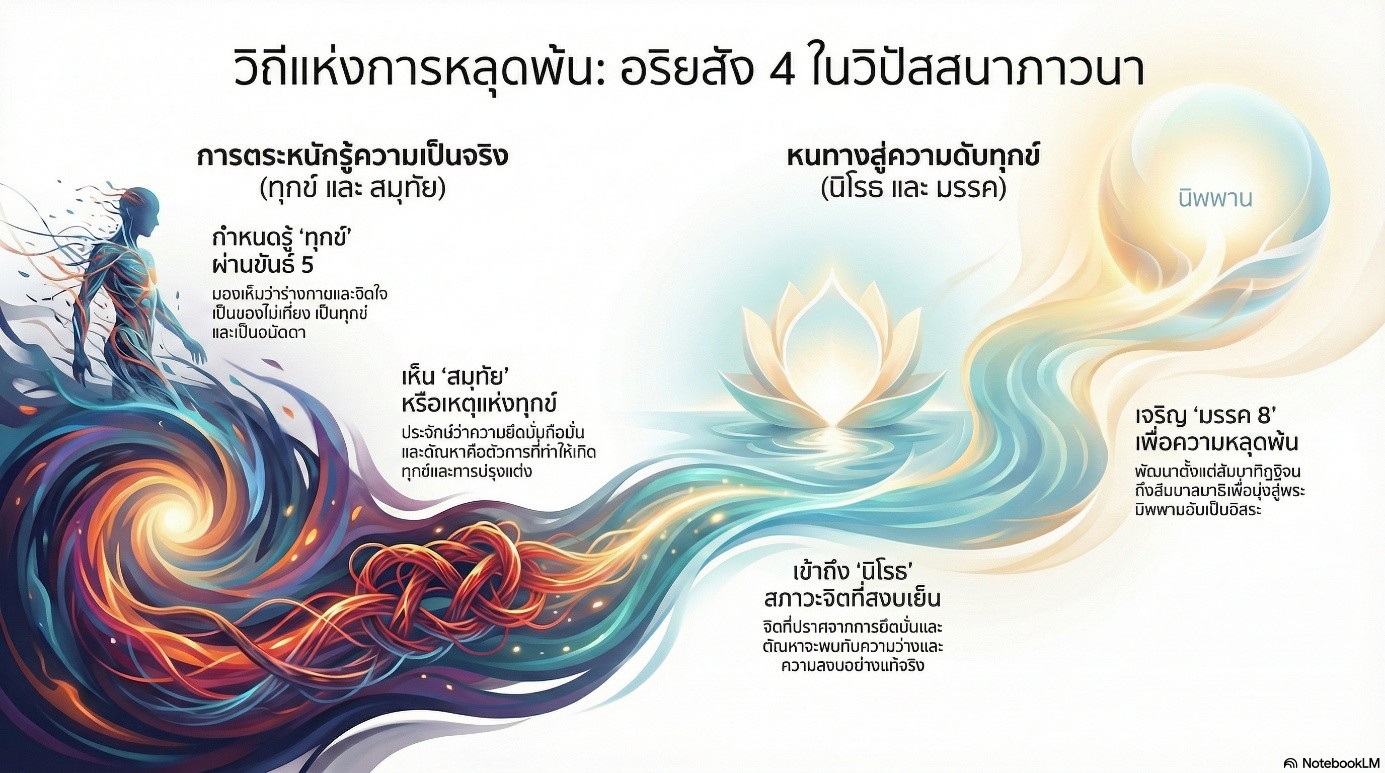
This research has two objectives: 1) to study the Four Noble Truths in Theravada Buddhism and 2) to analyze the process of realizing the Four Noble Truths in the practice of Vipassana meditation. This study is a documentary research. Data from Theravada Buddhist scriptures and related documents were collected, summarized, analyzed, arranged, and described descriptively. The research results showed that the Four Noble Truths in Theravada Buddhism are the noble truths, the truths that enable those who attain them to become noble ones, namely: 1) All Noble Truths (Dukkha) are suffering or a condition that is difficult to endure; 2) All Noble Truths (Samudaya) are the cause of suffering or the cause of suffering; 3) All Noble Truths (Nirodha) are the cessation of suffering, the state reached when ignorance and craving are eliminated; and 4) All Noble Truths (Magga) are the path to the cessation of suffering. The Path Leading to the Cessation of Suffering or the Practice to Cessation of Suffering The process of realizing the Four Noble Truths in Vipassana meditation practice is to develop the Four Foundations of Mindfulness – body, feelings, mind, and dharma – by clearly realizing “suffering.” In Vipassana, suffering does not just refer to physical or mental pain, but also refers to the Five Aggregates as impermanent, suffering, and not-self. One sees the cause of suffering as “samudaya.” When wisdom sees suffering, the practitioner sees that clinging and craving are the causes of suffering. When wisdom works until the mind does not cling, does not fabricate, and the mind is calm and cool, that is “nirodha.” The practitioner may realize emptiness, a state without craving to control it, which leads to the development of the “Noble Eightfold Path,” namely right view and right concentration, which leads to the liberation that is freedom, that is, Nirvana.
Article Details

This work is licensed under a Creative Commons Attribution-NonCommercial-NoDerivatives 4.0 International License.
Copyright Notice
The content and information in the articles published in Journal of MCU Palisueksabuddhaghosa Review, are regarded as opinions and responsibilities of article author only. It definitely does not mean that the editor must agree or share any responsibility to the author.
Articles, information, content, figure etc. that have been published in the Journal of MCU Palisueksabuddhaghosa Review is considered as the copyright of the Journal. If any individual or organization will to bring any parts of article for promote or to do anything, must be licensed only in official form from the Journal of MCU Palisueksabuddhaghosa Review.
The content and information in the articles published in Journal of MCU Palisueksabuddhaghosa Review, are regarded as opinions and responsibilities of article author only. It definitely does not mean that the editor must agree or share any responsibility to the author.
Articles, information, content, figure etc. that have been published in the Journal of MCU Palisueksabuddhaghosa Review is considered as the copyright of the Journal. If any individual or organization will to bring any parts of article for promote or to do anything, must be licensed only in official form from the Journal of MCU Palisueksabuddhaghosa Review.
References
มหาจุฬาลงกรณราชวิทยาลัย. พระไตรปิฎกภาษาไทย ฉบับมหาจุฬาลงกรณราชวิทยาลัย. กรุงเทพมหานคร: โรงพิมพ์มหาจุฬาลงกรณราชวิทยาลัย, 2539.
________. อรรถกถาภาษาไทย.ฉบับมหาจุฬาลงกรณราชวิทยาลัย. กรุงเทพมหานคร: โรงพิมพ์มหาจุฬาลงกรณราชวิทยาลัย, 2553.
ขุนสรรพกิจโกศล (โกวิท ปัทมะสุนทร). ลักขณาทิจตุกะแห่งปรมัตถธรรม. พิมพ์ครั้งที่ 3. กรุงเทพมหานคร: บริษัท รุ่งเรืองวิริยะพัฒนาโรงพิมพ์ จำกัด, 2559.
พระครูใบฎีกาเจษฎาคม สิริมงฺคโล (แก่นแก้ว). “รูปแบบการพัฒนาอริยมรรคมีองค์ 8 ในการปฏิบัติวิปัสสนาภาวนา: กรณีศึกษาศูนย์ปฏิบัติธรรม ธรรมโมลี อำเภอปากช่อง จังหวัดนครราชสีมา”. ดุษฎีนิพนธ์พุทธศาสตรดุษฎีบัณฑิต สาขาวิชาวิปัสสนาภาวนา. บัณฑิตวิทยาลัย: มหาจุฬาลงกรณราชวิทยาลัย, 2567.
พระใบฎีกาธีรเชฎฐ์ สุรธีโร (โพนสุวรรณ). “รูปแบบการพัฒนาปัญญาของผู้ปฏิบัติธรรมตามหลักเมตตาภาวนาของวัดศิริพงษ์ธรรมนิมิต เขตบางเขน กรุงเทพมหานคร”. ดุษฎีนิพนธ์พุทธศาสตรดุษฎีบัณฑิต สาขาวิชาวิปัสสนาภาวนา. บัณฑิตวิทยาลัย: มหาวิทยาลัยมหาจุฬาลงกรณราชวิทยาลัย, 2567.
พระพรหมวชิรปัญญาจารย์ (ทองดี สุรเตโช, ป.ธ. 9, ราชบัณฑิต). พจนานุกรมเพื่อการศึกษาพุทธศาสน์ ชุด คำวัด. พิมพ์ครั้งที่ 4. กรุงเทพมหานคร: ธรรมสภาและสถาบันบันลือธรรม, 2553.
พระพุทธโฆสเถระ. คัมภีร์วิสุทธิมรรค. แปลโดย สมเด็จพระพุฒาจารย์ (อาจ อาสภมหาเถร). พิมพ์ครั้งที่ 10. กรุงเทพมหานคร: บริษัท ธนาเพรส จำกัด, 2554.
พระมหาชินวัฒน์ จกฺกวโร. พระอภิธรรม เจตสิกปรมัตถ์. กรุงเทพมหานคร: บริษัท เอบุ๊ค ดิสทริบิวชั่น จำกัด, 2556.
พระฤาโชติ ปญฺาวชิโร (รชฎทรัพย์). “รูปแบบการพัฒนาปัญญาของผู้ปฏิบัติธรรมตามหลักเมตตาภาวนาของวัดศิริพงษ์ธรรมนิมิต เขตบางเขน กรุงเทพมหานคร”. ดุษฎีนิพนธ์พุทธศาสตรดุษฎีบัณฑิต สาขาวิชาวิปัสสนาภาวนา. บัณฑิตวิทยาลัย: มหาวิทยาลัยมหาจุฬาลงกรณราชวิทยาลัย, 2567.
สมเด็จพระพุทธโฆษาจารย์ (ป.อ. ปยุตฺโต). พจนานุกรมพุทธศาสตร์ ฉบับประมวลธรรม. พิมพ์ครั้งที่ 39. กรุงเทพมหานคร: บริษัท สหธรรมิก จำกัด, 2560.
________. พุทธธรรม ฉบับปรับขยาย. พิมพ์ครั้งที่ 47. กรุงเทพมหานคร: บริษัท สำนักพิมพ์เพ็ทแอนด์โฮม จำกัด, 2559.
สมเด็จพระพุทธชินวงศ์ (สมศักดิ์ อุปสมมหาเถร). อริยวังสปฏิปทา ปฏิปทาอันเป็นวงศ์แห่งพระอริยเจ้า. กรุงเทพมหานคร: ห้างหุ้นส่วนจำกัด ประยูรสาส์นไทย การพิมพ์, 2554.
