
A Model for Applying the Four Noble Truths in the Work of Plan Paint Company Limited
Article Sidebar
Main Article Content
Abstract
This research has three objectives: 1) study the working conditions of employees in contemporary Thai society; 2) to study the Four Noble Truths in Buddhism; and 3) to present a model for applying the Four Noble Truths in the work of Plan Paint Company Limited. The research findings are summarized as follows:
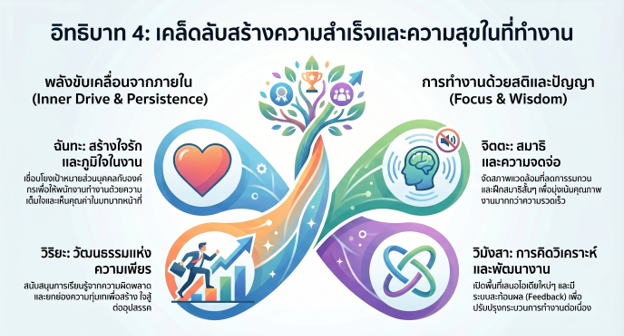
The study found that: 1) The working conditions of employees in contemporary Thai society are undergoing a significant transition. Previously focused solely on material productivity, the emphasis has shifted to "intrinsic value." Modern employees seek not only monetary compensation for their labor but also meaningful life experiences and contributions to society. Under the challenges of the volatile digital world, organizations must adapt their management style from directive and control-oriented approaches. 1) It is a holistic management approach that cares for physical, mental, and intellectual health, with leaders serving as moral role models to integrate individual and organizational goals. 2) The study the Four Noble Truths in Buddhism are found not just as principles in scriptures, but as a modern management system that works dynamically. It begins with Chanda, the power of love for work that transforms duty into happiness; Viriya, the diligence focused on reaching the essence of the work; Citta, the responsibility and concentration that create prudence amidst complexity; and Vimamsa, the use of wisdom and judgment to review for development and innovation. These four principles are therefore important tools that help individuals achieve mental freedom and sustainable self-reliance. 3) The a model for applying the Four Noble Truths in the work of Plan Paint Company Limited. shows that the Four Bases of Success are applied It is possible to concretely transform employees into intelligent workers, such as production department employees who take pride in their work that creates beautiful and durable cars for customers (Chantha), those who endure monotonous work conditions and chemicals (Virya), the accounting and IT departments who use concentration to reduce errors in tight deadlines (Citta), and the organization that provides a safe space for employees to dare to ask questions in order to improve systems to be more modern and safer (Vimamsa). The knowledge from research shows that the Four Bases of Success (Iddhipada 4) are interconnected gears of wisdom, with Chantha as motivation, Virya as a mechanism for skill development, Citta as a quality control mechanism, and Vimamsa as a creator of innovation. When an organization gives employees opportunities to participate and see their potential, it will naturally create job satisfaction and organizational commitment without relying solely on material incentives. Applying this principle, therefore, integrates competence with virtue, which is the highest foundation leading to sustainable organizational growth in the context of Thai society.
Article Details

This work is licensed under a Creative Commons Attribution-NonCommercial-NoDerivatives 4.0 International License.
Copyright Notice
The content and information in the articles published in Journal of MCU Palisueksabuddhaghosa Review, are regarded as opinions and responsibilities of article author only. It definitely does not mean that the editor must agree or share any responsibility to the author.
Articles, information, content, figure etc. that have been published in the Journal of MCU Palisueksabuddhaghosa Review is considered as the copyright of the Journal. If any individual or organization will to bring any parts of article for promote or to do anything, must be licensed only in official form from the Journal of MCU Palisueksabuddhaghosa Review.
The content and information in the articles published in Journal of MCU Palisueksabuddhaghosa Review, are regarded as opinions and responsibilities of article author only. It definitely does not mean that the editor must agree or share any responsibility to the author.
Articles, information, content, figure etc. that have been published in the Journal of MCU Palisueksabuddhaghosa Review is considered as the copyright of the Journal. If any individual or organization will to bring any parts of article for promote or to do anything, must be licensed only in official form from the Journal of MCU Palisueksabuddhaghosa Review.
References
มหาจุฬาลงกรณราชวิทยาลัย. พระไตรปิฎกภาษาไทย ฉบับมหาจุฬาลงกรณราชวิทยาลัย. กรุงเทพมหานคร: โรงพิมพ์มหาจุฬาลงกรณราชวิทยาลัย, 2539.
มหาจุฬาลงกรณราชวิทยาลัย. อรรถกถาภาษาไทย ฉบับมหาจุฬาลงกรณราชวิทยาลัย. กรุงเทพมหานคร: โรงพิมพ์มหาจุฬาลงกรณราชวิทยาลัย, 2559.
พระธรรมปิฎก (ป.อ. ปยุตฺโต). ธรรมะกับการทำงาน. พิมพ์ครั้งที่ 3. กรุงเทพมหานคร: สำนักพิมพ์มูลนิธิพุทธธรรม, 2543.
นางสาวสุฑาภรณ์ เกตุแดง. “คุณภาพชีวิตในการทำงานที่มีผลต่อการปฏิบัติงานตามบทบาทหน้าที่ผ่านความผูกพัน ต่อองค์กรของพนักงานธนาคารกรุงไทย จำกัด (มหาชน) สำนักงานเขตภาคตะวันตก”. วิทยานิพนธ์บริหารธุรกิจมหาบัณฑิต สาขาวิชาบริหารธุรกิจ. บัณฑิตวิทยาลัย: มหาวิทยาลัยศิลปากร, 2565.
พระชวัลวิทย์ อคฺคธมฺโม (เจนดลวาการ). “การศึกษาวิเคราะห์ความสัมพันธ์ของอิทธิบาท 4 เพื่อความสำเร็จ”. วิทยานิพนธ์พุทธศาสตรมหาบัณฑิต สาขาวิชาพระไตรปิฎกศึกษา. บัณฑิตวิทยาลัย: มหาจุฬาลงกรณราชวิทยาลัย, 2562.
พระอธิการประเสริฐ กาญฺจโน (วงเวียน). “ศึกษาแนวทางการประยุกต์ใช้อิทธิบาท 4 เพื่อการพัฒนาคุณภาพชีวิต”. วิทยานิพนธ์พุทธศาสตรมหาบัณฑิต สาขาวิชาพระพุทธศาสนา. บัณฑิตวิทยาลัย: มหาจุฬาลงกรณราชวิทยาลัย, 2559.
พระครูปลัดเฉลิมพร อภิวโร. “การดำเนินชีวิตสมัยใหม่สู่ความสำเร็จในการทำงานโดยใช้หลักอิทธิบาท 4”. วารสารมหาจุฬานาครทรรศน์. ปีที่ 8 ฉบับที่ 5 (พฤษภาคม 2564): 22-24.
