
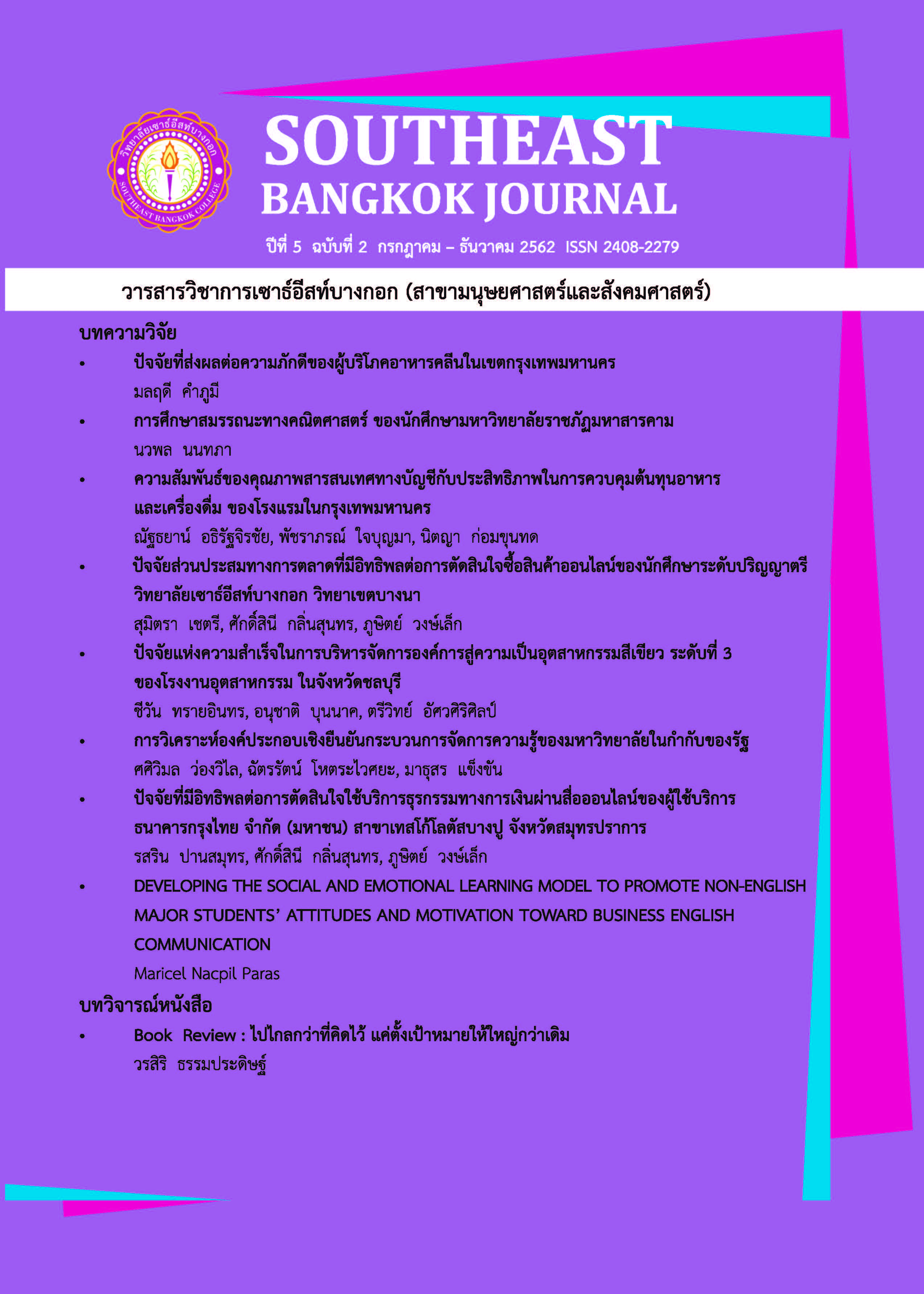
ปัจจัยที่ส่งผลต่อความภักดีของผู้บริโภคอาหารคลีนในเขตกรุงเทพมหานคร
Article Sidebar
Main Article Content
บทคัดย่อ
การวิจัยครั้งนี้มีวัตถุประสงค์ เพื่อศึกษาปัจจัยด้านประชากรศาสตร์ ด้านพฤติกรรมการบริโภคอาหารคลีน ด้านส่วนประสมทางการตลาด และปัจจัยด้านการรับรู้ในคุณค่าที่ได้รับจากการบริโภคอาหารคลีนที่ส่งผลต่อความภักดีของผู้บริโภคอาหารคลีนในเขตกรุงเทพมหานคร รูปแบบการวิจัยเป็นแบบผสมผสาน (Mixed Methods) กลุ่มประชากร ได้แก่ ผู้ที่เคยบริโภคอาหารสะอาด อาศัยอยู่ในเขตกรุงเทพมหานคร กลุ่มตัวอย่างมีจำนวน 400 คน โดยใช้วิธีการสุ่มกลุ่มตัวอย่างแบบหลายขั้นตอน เครื่องมือที่ใช้ในการเก็บรวบรวมข้อมูลคือ แบบสอบถาม และแบบสัมภาษณ์ โดยเลือกสัมภาษณ์กลุ่มตัวอย่างเพียง 15 คน เลือกสุ่มกลุ่มตัวแบบตามความสะดวก ผลการวิจัยพบว่า เหตุผลสำคัญที่เลือกบริโภคอาหารคลีนเพราะให้คุณค่าทางโภชนาการ สถานที่ที่เลือกเป็นร้านอาหารในห้างสรรพสินค้า ความถี่ในการซื้อ 2 - 3 ครั้ง/สัปดาห์ ค่าใช้จ่ายต่อครั้ง 201-300 บาท โดยตนเองเป็นบุคคลที่มีอิทธิพลในการบริโภค ความสำคัญของส่วนประสมทางการตลาด (4P’s) มีความสำคัญตามลำดับ ดังนี้คือ ผลิตภัณฑ์ ช่องทางการจัดจำหน่าย ราคา และการส่งเสริมการตลาด นอกจากนี้ ผลการวิจัยยังพบว่ากลุ่มตัวอย่างมีการรับรู้คุณค่าของอาหารคลีนในระดับมากที่สุด คือ อาหารคลีนมีใยอาหารช่วยในการขับถ่าย และผู้บริโภคมีการแนะนำอาหารคลีนให้กับผู้ที่ต้องการรับประทานอาหารคลีนในระดับมากที่สุด ผลการทดสอบสมมติฐาน พบว่า อายุ รายได้ต่อเดือน เหตุผลและความถี่ในการซื้อ ราคา และช่องทางการจัดจำหน่าย ตลอดจนการรับรู้คุณค่าที่ได้รับที่แตกต่างกันส่งผลต่อความภักดีของผู้บริโภคต่ออาหารสะอาดแตกต่างกันอย่างมีนัยสำคัญทางสถิติที่ 0.05 ข้อเสนอแนะจากการวิจัย คือ ในด้านผลิตภัณฑ์ ผู้ผลิตควรคำนึงถึงความสดของวัตถุดิบ รสชาติเมนูอาหารควรแปลกใหม่และดึงดูดความสนใจ และควรใช้บรรจุภัณฑ์ที่รักษ์โลก ด้านราคา ควรปรับราคาให้ใกล้เคียงอาหารทั่วไป ด้านช่องทางการจัดจำหน่าย ควรเพิ่มเขตพื้นที่ร้านอาหารคลีนให้ครอบคลุม ด้านการส่งเสริมการตลาด ควรมีการให้ข้อมูลความรู้ และประชาสัมพันธ์เกี่ยวกับอาหารคลีนผ่านแอพลิเคชั่น
Article Details
เอกสารอ้างอิง
กัลยา วานิชย์บัญชา. (2549). สถิติสำหรับงานวิจัย. กรุงเทพฯ: จุฬาลงกรณ์มหาวิทยาลัย.
จริยา จิรวัฒนานนท์. (2560). การศึกษาข้อมูลส่วนบุคคลและพฤติกรรม คุณภาพด้านรสชาติ ความสะอาดความปลอดภัย และการส่งเสริมการตลาด ที่มีผลต่อการตัดสินใจเลือกซื้ออาหารคลีนของพนักงานบริษัทเอกชนในเขตกรุงเทพมหานคร. ใน การประชุมวิชาการและนำเสนอผลงานวิชาการระดับชาติ UTCC วันที่ 7 มิถุนายน 2560. กรุงเทพฯ: มหาวิทยาลัยหอการค้าไทย.
ชลลดา พันธ์ประมูล. (2559). ปัจจัยที่มีผลต่อการซื้ออาหารคลีนสำเร็จรูปของผู้บริโภคในเขตกรุงเทพมหานคร. ใน การประชุมวิชาการระดับชาติ ด้านบริหารธุรกิจราชมงคลพระนคร และการนำเสนอผลงานวิจัยเชิงสร้างสรรค์ “การจัดการธุรกิจและเทคโนโลยีดิจิทัล” วันศุกร์ที่ 16-17 ธันวาคม พ.ศ.2559. กรุงเทพฯ: มหาวิทยาลัยเทคโนโลยีราชมงคลพระนคร.
ณัฐกฤตา นันทะสิน. (2558). ปัจจัยที่ส่งผลต่อพฤติกรรมการบริโภคและความภักดีต่ออาหารเพื่อสุขภาพของผู้บริโภค ในเขตกรุงเทพมหานคร. วารสารกระแสวัฒนธรรม คณะศิลปศาสตร์ มหาวิทยาลัยสยาม, 16(29).
ณัฐภัทร วัฒนถาวร. (2559). ปัจจัยที่ส่งผลต่อการตัดสินใจบริโภคอาหารคลีนฟู๊ดของประชากรในกรุงเทพมหานคร. ใน การประชุมวิชาการระดับชาติ ด้านบริหารธุรกิจราชมงคลพระนคร และการนำเสนอผลงานวิจัยเชิงสร้างสรรค์ “การจัดการธุรกิจและเทคโนโลยีดิจิทัล” วันศุกร์ที่ 16-17 ธันวาคม พ.ศ.2559. กรุงเทพฯ: มหาวิทยาลัยเทคโนโลยีราชมงคลพระนคร.
ศูนย์วิจัยกสิกรไทย. (2560). โอกาสทำเงิน เกาะกระแสอาหารสุขภาพ. กรุงเทพฯ: ธนาคารกสิกรไทย.
สุรีพร ณ บางช้าง. (2556). ความคาดหวัง การรับรู้จริง ทัศนคติ ภาพลักษณ์ ความภักดีและพฤติกรรมการบริโภคขนมไทยของผู้บริโภคในตลาดน้ำอัมพวาจังหวัดสมุทรสงคราม. วารสารการบริการและการท่องเที่ยว, 8(1), 20-30.
เสกสรร วีระสุข. (2557). การศึกษาพฤติกรรมผู้บริโภคผลิตภัณฑ์อาหารประเภทวิตามินในกรุงเทพมหานคร. วารสารบริหารธุรกิจศรีนครินทรวิโรฒ, 5(1), 65-66.
อรรถสิทธิ์ สกลคณาพงษ์. (2559). ปัจจัยส่วนประสมทางการตลาดที่ส่งผลต่อการตัดสินใจซื้ออาหารคลีนของผู้บริโภคในเขตกรุงเทพฯ และปริมณฑล. ใน การประชุมวิชาการระดับชาติ มหาวิทยาลัยรังสิต ประจำปี 2559 วันที่ 29 เมษายน 2559. กรุงเทพฯ: มหาวิทยาลัยรังสิต.
Fisher, Roxanne. (2016). Clean eating: All you need to know. สืบค้น 26 กันยายน 2560, จาก https://www.bbcgoodfood.com
Kotler, P. (2003). Marketing management. (11th ed.). New Jersey: Prentice-Hall.
ThaiSMECenter. (2559). ธุรกิจอาหารคลีนฟู้ด (Clean Food) การกินเพื่อสุขภาพ รูปแบบอาชีพยุคใหม่ที่เติบโตเร็วมาก. สืบค้น 22 กันยายน 2560, จาก https://www.thaismescenter.com
