The Creation of Dance from the Faith in Hindu Deity: Trimurti
The Creation of Dance from the Faith in Hindu Deity: Trimurti
Keywords:
Trimurti, Creative Dance, PranayamaAbstract
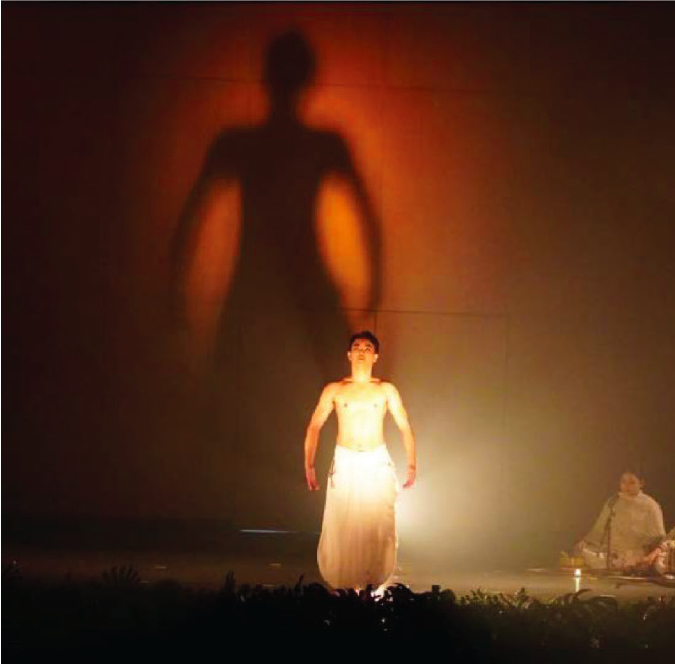
The creation of dance, a set of "Trimurati," aims to create and study the pattern of the creation of dance performing that consist of six characteristics, namely 1)Play, 2)Actor, 3)Movement, 4)Sound and Music 5) Costume and 6)Light which generate the research-creation based on the three concepts; Indian theism, Pranayama, and Aesthetic of dramatic arts—with the researcher studied and employed collected documentary data, observation, and interview also the information from various sources to analyze, synthesis, and summarize the research objectives.
The objective of the creative work is to present the relevant idea of the belief of Indian theism which occurs in Thai society. Moreover, the controlled breathing known as Pranayama implemented in the performance allowed the dancers to self-control, relax, and reduce the effect of the stress to present the power of God as the belief with the exquisite performance. This creative work can utilize the knowledge from the creative work's approach to enhancing further designing dancing and various performance.
References
คมกฤช อุ่ยเต็กเค่ง. (2565, 18-24 กุมภาพันธ์). ผี-พราหมณ์-พุทธ. มติชนสุดสัปดาห์ออนไลน์, https://www.matichonweekly.com/column/article_52541
โครงการเครือข่ายศิลปวัฒนธรรมการอบรมเชิงปฏิบัติการและมหกรรมศิลปะดนตรีและการแสดง ครั้งที่ 10. (2565). https://m.facebook.com/swufofa/videos/โครงการเครือข่ายศิลปวัฒนธรรมการอบรมเชิงปฏิบัติการ-และมหกรรมศิลปะ-ดนตรี-และการแสดง.
จุติกา โกศลเหมมณี. (2556). รูปแบบและแนวคิดในการสร้างสรรค์งานนาฏศิลป์ไทยร่วมสมัยของนราพงษ์ จรัสศรี [วิทยานิพนธ์ศิลปศาสตรดุษฎีบัณฑิต]. จุฬาลงกรณ์มหาวิทยาลัย.
มัทนี รัตนิน. (2546). ความรู้เบื้องต้นเกี่ยวกับศิลปะการกำกับการแสดงละคอนเวที. สำนักพิมพ์มหาวิทยาลัยธรรมศาสตร์.
ดวงใจ อมาตยกุล. (2545). การขับร้องประสานเสียง. สำนักพิมพ์แห่งจุฬาลงกรณ์มหาวิทยาลัย.
นรีรัตน์ พินิจธนสาร. (2563). รูปแบบการสร้างสรรค์นาฏยศิลป์จาการตีความ "ราม" ในรามายณะผ่านทฤษฎีภาวะและรส โดยคำนึงถึงองค์ประกอบทางการแสดงทั้ง 8 ประการ. ศิลปกรรมสาร. 13(1), 17-34.
พระครูปลัดบุญทัน ธีรงฺกุโร (จําปาทอง). (2558). ศึกษาเปรียบเทียบตรีมูรติในศาสนาพราหมณ์-ฮินดู กับตรีกายในพุทธศาสนามหายาน [วิทยานิพนธ์พุทธศาสตรมหาบัณฑิต]. มหาวิทยาลัยมหาจุฬาลงกรณราชวิทยาลัย.
พระตรีมูรติ. (2565). https://www.horonumber.com.
อรุณศักดิ์ กิ่งมณี. (2551). ตรีมูรติ อภิมหาเทพของฮินดู. เมืองโบราณ.
อภิโชติ เกตุแก้ว. (2563). การสร้างสรรค์นาฏยศิลป์จากสัญลักษณ์โอมในความเชื่อของศาสนาพราหมณ์-ฮินดู. วารสารสถาบันวัฒนธรรมและศิลปะ มหาวิทยาลัยศรีนทรินทรวิโรฒ, 21(2). 94-110.