Peking Opera culture fused with Scrap Art: Raising Public Awareness of Environmental Protection
Keywords:
Peking Opera Culture, Scrap art, Public Environmental AwarenessAbstract
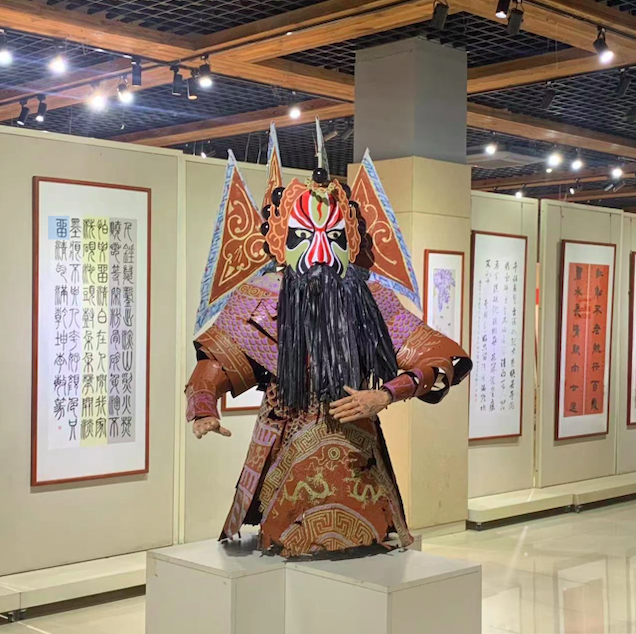
This study aims to investigate the fusing of cultural components of Peking Opera with junk art due to the need for more works in the current landscape that integrate traditional cultural heritage with contemporary environmental tales. The goal was to ascertain how such a combination may raise environmental awareness among the general people. The use of quantitative hypothesis testing and qualitative design interpretation was combined. In this study, junk art made in the style of Peking Opera was created, and its impact on public opinion was then assessed. Artworks are displayed in exhibitions, and a feedback system is implemented. In order to confirm the validity of the selected technique, the researchers conducted a thorough data analysis of the obtained data, including hypothesis testing using statistical tools. The study showed how the creative blending of waste art and Peking Opera themes has the power to preserve cultural heritage and raise environmental consciousness. This fusion resonates artistically and becomes a powerful tool for environmental advocacy. Theoretically, this study bridges the gap between traditional cultural theories and contemporary environmental advocacy paradigms, offering new perspectives on both fields. It serves as a blueprint for artists and environmentalists, showing how tradition can be harmoniously integrated with modernity to achieve broader social goals.
References
Ametova, L. (2021). PECULIARITIES OF THE ARTISTIC LANGUAGE OF THE UKRAINIAN ARTIST YEVHENIA GAPCHYNSKA. Innovative Solution in Modern Science, 6(42), 230. https://doi.org/10.26886/2414-634X. 6(42), 2020.14
Andrzejewski, A., & Maliszewska, M. (2022). Public Art in (Local) Communities: Multiple Publics and the Dynamic Between Them. Aisthesis. Pratiche, Linguaggi e Saperi Dell’estetico, 15(1), 5–14. https://doi.org/10.36253/Aisthesis-13456
Blagoeva, N. (2018). Promoting integrative teaching through interdisciplinary arts and crafts collaboration between after-school clubs. Nordic Journal of Art and Research, 7(1). https://doi.org/10.7577/information.v7i1.2709
Grebosz-Haring, K., & Weichbold, M. (2020). Contemporary art music and its audiences: Age, gender, and social class profile. Musicae Scientiae, 24(1), 60–77. https://doi.org/10.1177/1029864918774082
John Ph.D, I. A., Ekwere Ph.D, S. E., & Edem Etim Peters, P. (2022). VISUAL ART EXHIBITION: A CATALYST FOR SOCIAL UNIFICATION IN NIGERIA. International Journal of Applied Science and Research, 05(04), 01–04. https://doi.org/10.56293/IJASR.2022.5401
Negi, N., & Singh, G. (2023). SOCIAL METAPHORS IN THE INSTALLATION ART OF CONTEMPORARY INDIAN WOMEN ARTISTS: -. ShodhKosh: Journal of Visual and Performing Arts, 4(1). https://doi.org/10.29121/shodhkosh.v4.i1.2023.373
Sharma, Y. P. (2020). Tracing the Traditional Contents and Forms in Contemporary Nepali Paintings. Molung Educational Frontier, 169–180. https://doi.org/10.3126/mef.v10i1.34040