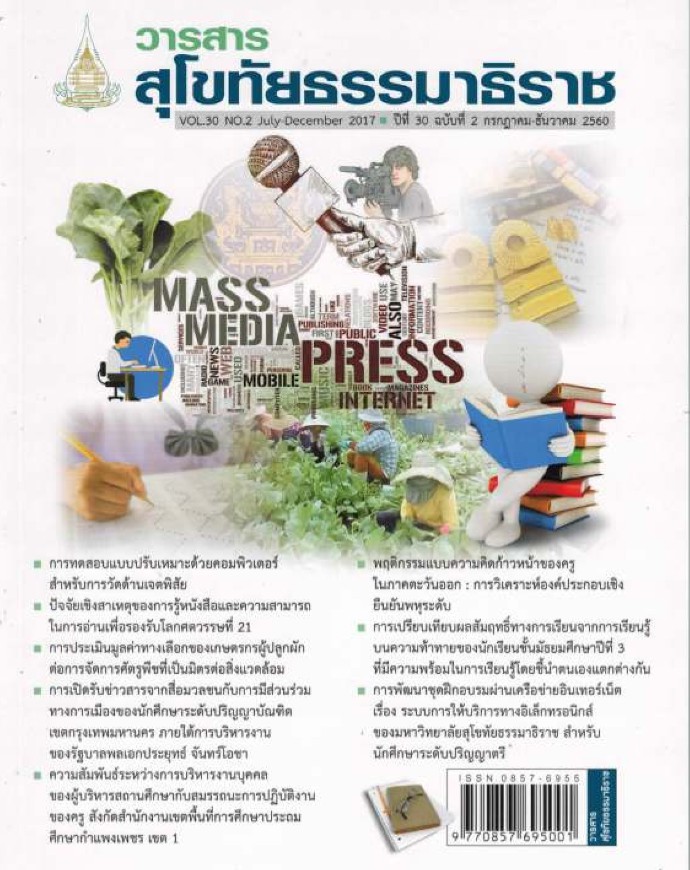
การเปรียบเทียบผลสัมฤทธิ์ทางการเรียนจากการเรียนรู้บนความท้าทายของนักเรียนชั้นมัธยมศึกษาปีที่ 3 ที่มีความพร้อมในการเรียนรู้โดยชี้นำตนเองแตกต่างกัน
คำสำคัญ:
ผลสัมฤทธิ์ทางการเรียน, การเรียนรู้บนความท้าทาย, ความพร้อมในการเรียนรู้โดยชี้นำตนเองบทคัดย่อ
การวิจัยครั้งนี้มีวัตถุประสงค์เพื่อเปรียบเทียบผลสัมฤทธิ์ทางการเรียนจากการเรียนรู้บนความท้าทาย ของนักเรียนชั้นมัธยมศึกษาปีที่ 3 ที่มีความพร้อมในการเรียนรู้โดยชี้นำตนเองแตกต่างกัน กลุ่มทดลองที่ใช้ใน การวิจัยคือ นักเรียนชั้นมัธยมศึกษาปีที่ 3 โรงเรียนสุรศักดิ์มนตรี กรุงเทพมหานคร ภาคเรียนที่ 1 ปีการศึกษา 2559 จำนวน 91 คน แบ่งตามระดับความพร้อมในการเรียนรู้โดยชี้นำตนเองเป็น 3 กลุ่ม เครื่องมือที่ใช้ในการ วิจัยครั้งนี้ประกอบด้วย แผนการเรียนรู้บนความท้าทาย แบบวัดความพร้อมในการเรียนรู้โดยชี้นำตนเอง แบบทดสอบก่อนเรียน และแบบทดสอบวัดผลสัมฤทธิ์ทางการเรียน สถิติที่ใช้ในการวิเคราะห์ข้อมูลคือ ค่าเฉลี่ย ส่วนเบี่ยงเบนมาตรฐาน และการวิเคราะห์ความแปรปรวนทางเดียว ผลการวิจัยพบว่า เมื่อจัดการสอนตามแผนการเรียนรู้บนความท้าทายผลสัมฤทธิ์ทางการเรียนของ นักเรียนชั้นมัธยมศึกษาปีที่ 3 ที่มีระดับความพร้อมในการเรยนร้โดยชี้นำตนเองในระดับต่ำแตกตางจากนักเรียน ที่มีระดับความพร้อมในการเรียนรู้โดยชี้นำตนเองในระดับสูงและระดับปานกลาง อย่างมีนัยสำคัญทางสถิติ ที่ระดับ 0.05 ส่วนนักเรียนที่มีระดับความพร้อมในการเรียนรู้โดยชี้นำตนเองในระดับสูงและระดับปานกลาง มีผลสัมฤทธิ์ทางการเรียนไม่แตกต่างกัน
เอกสารอ้างอิง
Binthaprasitthi, S. (1997). Effects of using learning contracts on learning achievement and self-directed learning readiness of nursing students. Master Degree (Nursing Education). Chulalongkorn University. (in Thai)
Chuchat, A. (2000). Innovative Learning for Reformer Education Teachers. Chulalongkorn University Press. (in Thai)
Gulielmino, L. M., and Gulielmino, P. J. (1994). Practice experience with self-directed learning in business and industry human resource development. Retrieved from http://www.distance.syr.edu/ndacesdch5.html (July 4, 2016)
Johnson, L., and Adams, S. (2011). Challenge based learning: The report from the implementation project. Austin, Texas: The New Media Consortium.
Knowles, M. S. (1980). The modern practice of adult education: From pedagogy. New York. Cambridge: The adult education co.
Kulsirisawatdi, S. (1994). The degree of self-directed learning readiness of agricultural college students, Department of Vocational Education. Master Degree of Arts (Adult Education). Kasetsart University. (in Thai)
Niramitchainont, P. ( 2010). Social psychological factors related to students’ self-directed learning at Srinakharinwirot university. Journal of Behavioral Science; Vol 12, (1): 129-141. (in Thai)
Poopan, S. (2005). Antecedents and consequences of secondary school student’s self-directed learning readiness. Master Degree of Education (Research and Psychology). Chulalongkorn University. (in Thai)
Robroo, I. (2010). Development of a blended instructional model for enhancing self-knowledge acquisition. Doctoral Dissertation (Technical Education Technology), King Mongkut’s University of Technology North Bangkok. (in Thai)
Saengrutsamee, A. (2000). Effects of problem-based learning on self-directed learning, environment science achievement and satisfaction towards instruction of mathayom suksa four students. Master Degree of Education (Science Education). Chulalongkorn University. (in Thai)
Thienphut, D. (2014). Challenge based learning. Bangkok: Human capital. (in Thai)
ดาวน์โหลด
เผยแพร่แล้ว
รูปแบบการอ้างอิง
ฉบับ
ประเภทบทความ
สัญญาอนุญาต
บทความที่ได้รับการตีพิมพ์เป็นลิขสิทธิ์ของวารสารมหาวิทยาลัยสุโขทัยธรรมาธิราช
ข้อความที่ปรากฏในบทความแต่ละเรื่องในวารสารวิชาการเล่มนี้เป็นความคิดเห็นส่วนตัวของผู้เขียนแต่ละท่านไม่เกี่ยวข้องกับมหาวิทยาลัยสุโขทัยธรรมาธิราช และคณาจารย์ท่านอื่นๆในมหาวิทยาลัยฯ แต่อย่างใด ความรับผิดชอบองค์ประกอบทั้งหมดของบทความแต่ละเรื่องเป็นของผู้เขียนแต่ละท่าน หากมีความผิดพลาดใดๆ ผู้เขียนแต่ละท่านจะรับผิดชอบบทความของตนเองแต่ผู้เดียว
ห้ามนำข้อความทั้งหมด หรือบางส่วนไปพิมพ์ซ้ำ เว้นแต่จะได้รับอนุญาตจากกองบรรณาธิการวารสาร

