
Promoting leadership according to the Mahosodbandit
Article Sidebar
Main Article Content
Abstract
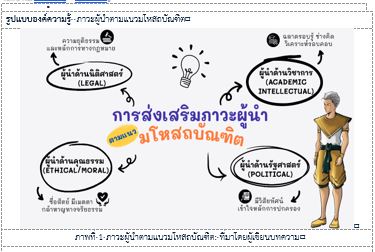
The promotion of leadership based on the principles of Mahosodbandit represents a developmental approach that emphasizes wisdom, virtue, and compassion as core foundations. Mahosodbandit serves as an exemplary model of a leader endowed with intelligence, comprehensive knowledge, and keen discernment, capable of analyzing and resolving problems with ingenuity while prioritizing the common good over personal gain. This leadership approach integrates ethical wisdom and compassion with legal principles, employing moral values and rational judgment as the basis for fair decision-making. In terms of virtue, it emphasizes moral integrity, honesty, and selflessness for the benefit of society. Academically, it encourages continuous learning and the application of knowledge to creatively solve problems. Politically, it advocates for just, compassionate governance centered on public welfare. Developing and promoting leadership in accordance with the Mahosodbandit model thus provides a vital foundation for cultivating leaders of quality—characterized by knowledge, moral excellence, and capability—ultimately contributing to a virtuous and sustainably progressive society.
Article Details

This work is licensed under a Creative Commons Attribution-NonCommercial-NoDerivatives 4.0 International License.
เรื่องลิขสิทธิ์/เป็นความคิดเห็นของผู้เขียน
References
เอกสารอ้างอิง
หนังสือ :
พระธรรมปิฎก (ป.อ. ปยุตฺโต). (2545). ภาวะผู้นำเชิงพุทธ. กรุงเทพมหานคร: สำนักพิมพ์มูลนิธิพุทธธรรม.
มหาวิทยาลัยมหาจุฬาลงกรณราชวิทยาลัย. (2564). ภาวะผู้นำและการพัฒนาคุณธรรมจริยธรรมของผู้บริหาร. นครปฐม: โรงพิมพ์มหาวิทยาลัยมหาจุฬาลงกรณราชวิทยาลัย.
มหาจุฬาลงกรณราชวิทยาลัย. (2539). พระไตรปิฎกภาษาไทย ฉบับมหาจุฬาลงกรณราชวิทยาลัย. กรุงเทพมหานคร: โรงพิมพ์มหาจุฬาลงกรณราชวิทยาลัย.
มหาจุฬาลงกรณราชวิทยาลัย. (2556). อรรถกถา พระไตรปิฎกภาษาไทย ฉบับมหาจุฬาลงกรณราชวิทยาลัย. กรุงเทพมหานคร: โรงพิมพ์มหาจุฬาลงกรณราชวิทยาลัย.
ภาณุวัฒน์ ศรีสุข. (2553). ภาวะผู้นำและการบริหารจัดการ. กรุงเทพมหานคร: สำนักพิมพ์แห่งจุฬาลงกรณ์มหาวิทยาลัย
สำนักงานคณะกรรมการการพัฒนาเศรษฐกิจและสังชาติ. (2549). แผนพัฒนาเศรษฐกิจและสังคมแห่งชาติ ฉบับที่ 9 พ.ศ. 2545-2549. กรุงเทพมหานคร: โรงพิมพ์คุรุสภาลาดพร้าว.
สมเด็จพระเทพรัตนราชสุดาฯ สยามบรมราชกุมารี. (2534). ทศบารมีในพุทธศาสนาเถรวาท. กรุงเทพมหานคร: โรงพิมพ์มหามกุฎราชวิทยาลัย.
วารสาร :
พระชัฏฐวีร์ อนาลโย (อนันตกลิ่น). (มกราคม – มิถุนายน 2564). หลักการปกครองตามแนวพุทธศาสตร์. วารสารพุทธนวัตกรรมปริทรรศน์. 5(1); 57-60.
นิธิวรรณ กระจ่างคันถมาตร. (กรกฎาคม – ธันวาคม 2563). ถอดรหัสคติธรรมผ่านภาพจิตรกรรมฝาผนังเรื่องมโหสถชาดก ในพระอุโบสถวัดสุวรรณารามราชวรวิหาร วารสารพุทธนวัตกรรมปริทรรศน์. 1(1); 2-12.
วิทยานิพนธ์ :
พระชนาเมธ เตชธโร (คำมุงคุณ). (2565). ศึกษาวิเคราะห์ภาวะผู้นำของพระโพธิสัตว์ในอรรถกถาชาดกที่มีต่อสังคมไทย. วิทยานิพนธ์ดุษฎีบัณฑิต สาขาพระพุทธศาสนา บัณฑิตวิทยาลัย มหาวิทยาลัยมหาจุฬาลงกรณราชวิทยาลัย.
ปกรณ์ ศรีปลาด. (2553). การไกล่เกลี่ยข้อพิพาทในพระพุทธศาสนาเถรวาท : กรณีศึกษามโหสถชาดก. วิทยานิพนธ์พุทธศาสตรมหาบัณฑิต สาขาพระพุทธศาสนา บัณฑิตวิทยาลัย มหาวิทยาลัยมหาจุฬาลงกรณราชวิทยาลัย.
สัมภาษณ์:
รศ.ดร.ประพันธ์ ศุภษร. รองคณบดีบัณฑิตวิทยาลัย. (วันที่สัมภาษณ์ 28 ตุลาคม 2566)
Reference:
Books:
Burns, J. M. Leadership. (1978). Harper & Row. New York, USA. Harper & Row.
Covey, S. R. (1990). The 7 Habits of Highly Effective People. New York USA : Free Press.
Goleman, D. (1998). Working with Emotional Intelligence. USA: Bantam Books.
Her Royal Highness Princess Maha Chakri Sirindhorn. (1991). The Ten Perfections (Paramis) in Theravāda Buddhism. Bangkok: Mahamakut Buddhist University Press.
Hersey, P., & Blanchard, K. H. (1982). Management of Organizational Behavior: Utilizing Human Resources Englewood Cliffs. New Jersey USA: Prentice Hall.
Kouzes, J. M., & Posner, B. Z. (2002). The Leadership Challenge. San Francisco, USA: Jossey-Bass.
Phanuwat Srisuk. (2010). Leadership and Management. Bangkok: Chulalongkorn University Press.
Phra Dhammapitaka (P.A. Payutto). (2002). Buddhist Leadership. Bangkok: Buddhadhamma Foundation Publishing House.
Mahachulalongkornrajavidyalaya. (2021). Leadership and the Development of Moral and Ethical Values of Executives. Nakhon Pathom: Mahachulalongkornrajavidyalaya University Press.
Mahachulalongkornrajavidyalaya. (1996). Thai Tripitaka Mahachulalongkornrajavidyalaya. Bangkok: MCU Press.
Mahachulalongkornrajavidyalaya. (2013). Commentaries Thai Tripitaka Mahachulalongkornrajavidyalaya. Bangkok: MCU Press.
Maxwell, J. C. (2007). The 21 Irrefutable Laws of Leadership. Nashville. Tennessee USA: Thomas Nelson.
Office of the National Economic and Social Development Board. (2006). The 9th National Economic and Social Development Plan, B.E. 2545–2549 (2002–2006). Bangkok: Kurusapa Ladprao Press.
Robbins, S. P., & Judge, T. A. (2019). Organizational Behavior. Hoboken New Jersey USA: Pearson.
Journal :
Sretthapong Srilert. (January – April 2024). The Development of Moral and Ethics of Personnel in the Seretariat of the House of Representatives Base on Buddhist Integration. Journal of Buddhist Innovation Review. 5(1); 57-60.
Nitiwan Krajangkhanthamat. (July – December 2022). Decoding Buddhist Moral Teachings through the Mural Paintings of the Mahosadha Jātaka in the Ordination Hall of Wat Suwannaram Ratchaworawihan. Journal of Buddhist Innovation Review. 1(1); 2-12.
Thesis:
Phra Chanamet Tejadharo (Khammungkhun). (2022). An Analytical Study of Leadership of the Bodhisattva in the Jataka Commentaries as Affected to Thai Society. Doctor of Philosophy A Dissertation in Buddhist Studies Graduate School Mahachulalongkornrajavidyalaya University.
Pakorn Sriplad. (2010). The Mediation of Dispute in Theravada Buddhism: A Case Study of Mahosatha Jātaka. Master of Arts Thesis in Buddhist Studies Graduate School Mahachulalongkornrajavidyalaya University.
Interview:
Assoc. Prof. Dr. Prapan Suphasorn. Deputy Dean of the Graduate School. (Interviewed 28 October 2025)
