
Methods for Relinquishing Kāmupādāna among Modern People in Thai Society
Article Sidebar
Main Article Content
Abstract
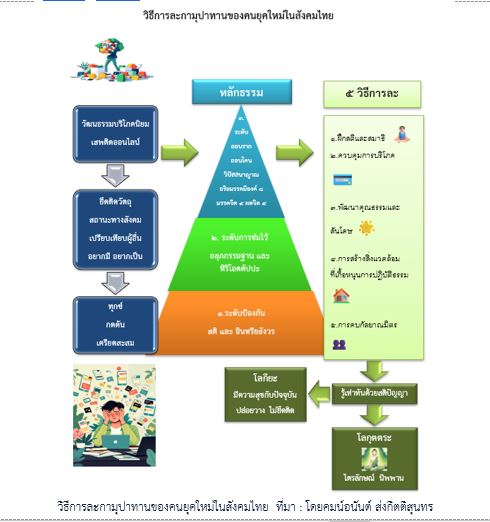
The modern Thai society, kāmupādāna extends far beyond sexual desire to include attachment to material possessions, physical appearance, reputation, and social status. These forms of clinging generate chronic stress, social comparison, and persistent suffering. Buddhist teachings provide three levels of practice for addressing kāmupādāna: (1) preventive discipline through mindfulness and sense restraint, (2) suppressive discipline through contemplations on impurity and the cultivation of moral shame and moral dread, and (3) root-eradication through insight meditation (vipassanā-ñāṇa), the Noble Eightfold Path, and the attainment of the four path moments (magga-citta) and four fruition moments (phala-citta). This article proposes a five-step integrative framework suitable for modern practitioners: (1) cultivating mindfulness and concentration, (2) regulating consumption, (3) developing moral virtues and contentment, (4) creating supportive environments for spiritual practice, and (5) associating with kalyāṇamitta (spiritual friends). Together, these approaches foster an “unbound mind” that is no longer dominated by sensual clinging. When mindfulness concentration and wisdom are firmly established, they lead to genuine well-being and liberation from all forms of attachment. This article is an academic analytical and synthetic study based on the Tipiṭaka, commentarial texts, and contemporary academic literature, aiming to propose an integrative framework for relinquishing kāmupādāna in modern Thai society.
Article Details

This work is licensed under a Creative Commons Attribution-NonCommercial-NoDerivatives 4.0 International License.
เรื่องลิขสิทธิ์/เป็นความคิดเห็นของผู้เขียน
References
Reference
Books :
Buddhaghosa Thera. (2011). Visuddhimagga (The Path of Purification). Translated and compiled by Somdet Phra Phutthachan (Aj Asabhamahathera). Bangkok: Thana Press Co., Ltd.
Mahachulalongkornrajavidyalaya. (1996). Thai Tripitaka Mahachulalongkornrajavidyalaya. Bangkok: MCU Press.
Payutto, P. A. (Somdet Phra Buddhaghosacariya). (2003). Dictionary of Buddhism: A Compendium of Buddhist Teachings. Bangkok: Sahadhammika Co., Ltd.
Payutto, P. A. (Somdet Phra Buddhaghosacariya). (2024). Buddhadhamma. Bangkok: Phalidhamma Printing.
Venerable Buddhaghosa. (2011). The Visuddhimagga. Translated and compiled by (Somdej PhraPhutthacharn Ajahn Asabhamahathera). (10th edition). Bangkok: Thanapress Co., Ltd.
Journal :
Phra Chattawi Analayo (Anantaklin). (January–June 2021). Principles of Governance in Buddhist Concept. Journal of Buddhist Innovation Review. 1(2); 95-106.
Jinnawat Kontongdee. (January-April 2022). The Law of Krama: Justice according to Buddhism. Journal of Buddhist Innovation Review. 3(1); 43-55.
Phramaha Thongsuk Paññavanno (Phrommidet). (April–May 2025). Awakening in Daily Life according to the Principle of the Dependent Origination. Journal of Buddhist Innovation Review. 6(2); 15-29.
Thesis :
Phra Palad Kamphon Pannyawuttho. (2013). An Analytical Study of Kamma of Thevatatta in Theravada Buddhism. Master of Arts Thesis in Buddhist Studies Graduate School Mahachulalongkornrajavidyalaya University.
Phra Maha Kraivan Jinadattiyo (Punnakhan). (2003). An Analytical Study of The Roles of Devadatta Bhikkhu As Found In The Buddhist Texts. Master of Arts Thesis in Buddhist Studies Graduate School Mahachulalongkornrajavidyalaya University.
Phra Samu Sumpan Suchiro (Naokaeq). (2013). An Analysis of Misconduct and Repentance. In the Buddha’s Time. Master of Arts Thesis in Buddhist Studies Graduate School Mahachulalongkornrajavidyalaya University.
Phra Uthai Jiradhammo (Eaksaphang). (2000). The Concept of Kamma in Theravāda Buddhism and the Problem of Kamma in Contemporary Buddhist Society. Master of Arts Thesis in Philosophy Graduate School Mahachulalongkornrajavidyalaya University.
เอกสารอ้างอิง
หนังสือ :
พระพุทธโฆสเถระ. (2554). คัมภีร์วิสุทธิมรรค. แปลและเรียบเรียงโดย (สมเด็จพระพุฒาจารย์ อาจ อาสภมหาเถร). กรุงเทพมหานคร: บริษัท ธนาเพรส จำกัด.
มหาจุฬาลงกรณราชวิทยาลัย. (2539). พระไตรปิฎกภาษาไทย ฉบับมหาจุฬาลงกรณราชวิทยาลัย. กรุงเทพมหานคร: โรงพิมพ์มหาจุฬาลงกรณราชวิทยาลัย.
สมเด็จพระพุทธโฆษาจารย์ (ป.อ.ปยุตฺโต). (2546). พจนานุกรมพุทธศาสตร์ ฉบับประมวลธรรม. พิมพ์ครั้งที่ 12. กรุงเทพมหานคร: บริษัท สหธรรมิก จำกัด.
สมเด็จพระพุทธโฆษาจารย์ (ป.อ.ปยุตฺโต). (2567). พุทธธรรม. กรุงเทพมหานคร : โรงพิมพ์ผลิธัมม์.
วารสาร :
พระชัฏฐวีร์ อนาลโย (อนันตกลิ่น). (มกราคม-มิถุนายน 2564). หลักการปกครองตามแนวพุทธศาสตร์. วารสารทธนวัตกรรมปริทรรศน์. 2(1); 95-106.
จิณวัตร ก้อนทองดี. (มกราคม-เมษายน 2565). กฎแห่งกรรม :ความยุติธรรมทางพระพุทธศาสนา. วารสารพุทธนวัตกรรมปริทรรศน์. 3(1); 43-55.
พระมหาทองสุข ปญฺาวณฺโณ (พรมมีเดช). (เมษายน – พฤษภาคม 2568). การตื่นรู้ในชีวิตประจำวันตามหลักปฏิจจสมุปบาท. วารสารพุทธนวัตกรรมปริทรรศน์. 6(2); 15-29.
วิทยานิพนธ์ :
พระปลัดกำพล ปญฺญาวุฑฺโฒ. (2562). ศึกษาวิเคราะห์กรรมของพระเทวทัตที่ปรากฎในพระพุทธศาสนาเถรวาท. วิทยานิพนธ์พุทธศาสตรมหาบัณฑิต สาขาวิชาพระพุทธศาสนา บัณฑิตวิทยาลัย มหาวิทยาลัยมหาจุฬาลงกรณราชวิทยาลัย.
พระมหาไกรวรรณ ชินทตฺติโย (ปุณขันธ). (2546). การศึกษาวิเคราะห์บทบาทของพระเทวทัตที่ปรากฏในคัมภีรพระพุทธศาสนา. วิทยานิพนธ์พุทธศาสตรมหาบัณฑิต สาขาวิชาพระพุทธศาสนา บัณฑิตวิทยาลัย มหาวิทยาลัยมหาจุฬาลงกรณราชวิทยาลัย.
พระสมุห์สัมพันธ์ สุธีโร (เนาว์แก้ว). (2556). วิเคราะห์พฤติกรรมการประพฤติผิดและการกลับใจของบุคคลในสมัยพุทธกาล. วิทยานิพนธ์พุทธศาสตรมหาบัณฑิต สาขาวิชาพระพุทธศาสนา บัณฑิตวิทยาลัย มหาวิทยาลัยมหาจุฬาลงกรณราชวิทยาลัย.
พระอุทัย จิรธมฺโม (เอกสะพัง). (2543). ทัศนะเรื่องกรรมในพระพุทธศาสนาเถรวาทและปัญหาเรื่องกรรมในสังคมชาวพุทธปัจจุบัน. วิทยานิพนธ์พุทธศาสตรมหาบัณฑิต สาขาวิชาปรัชญา บัณฑิตวิทยาลัย มหาวิทยาลัยมหาจุฬาลงกรณราชวิทยาลัย.
