
The Application of the Four Noble Truths in Daily Life
Article Sidebar
Main Article Content
Abstract
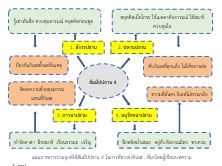
The application of the Four Right Efforts (Sammappadhāna) represents a fundamental approach in Buddhist practice for purifying the mind and breaking the cycle of defilements (kilesa). This principle serves as a systematic method for mental cultivation and ethical development. The Four Right Efforts consist of Saṃvara-padhāna – the effort to prevent unwholesome states from arising; Pahāna-padhāna – the effort to abandon unwholesome states that have already arisen; Bhāvanā-padhāna – the effort to cultivate and develop wholesome qualities; and Anurakkhaṇa-padhāna – the effort to maintain and strengthen wholesome qualities that have already arisen. When applied in daily life, these efforts serve as a guide for controlling defilements and nurturing virtuous behavior. Mindfulness plays a key role in monitoring thoughts and actions, preventing the emergence of greed, anger, and delusion. Wisdom assists in eradicating defilements that have already appeared, thereby cutting off the cycle of mental impurities. The cultivation of virtue replaces negative tendencies with goodness, while the preservation of wholesome states allows moral qualities to become stable and continuously developed. Consistent practice of these principles strengthens the mind, leading to calmness, purity, and balance in life. Moreover, it promotes the growth of virtue and ethical awareness within society, fostering harmony and spiritual well-being for both individuals and communities.
Article Details

This work is licensed under a Creative Commons Attribution-NonCommercial-NoDerivatives 4.0 International License.
เรื่องลิขสิทธิ์/เป็นความคิดเห็นของผู้เขียน
References
Book :
Mahachulalongkornrajavidyalaya University. (2539). The Thai Tripitaka, Mahachulalongkornrajavidyalaya University Edition. Bangkok: Mahachulalongkornrajavidyalaya University Printing House.
Phra Brahmagunabhorn (P.A. Payutto). (2005). Buddhadhamma (Revised and Expanded Edition). Bangkok: Buddhadhamma Foundation.
Setthipong Wannapak. (2009). The Eightfold Noble Path and its Application in Life. Bangkok: Mahachulalongkornrajavidyalaya University.
SomdejPhra Buddhaghosacharya (P.A. Payutto). (2021). Buddhist Dictionary: A Compilation of Dhamma Teachings. 35th edition. Bangkok: Buddhadhamma Foundation.
Suphir Thumthong. (2016). The Four Right Efforts and the Four Bases of Spiritual Power. Bangkok: Phap Phim.
หนังสือ :
พระพรหมคุณาภรณ์ (ป.อ. ปยุตฺโต). (2548). พุทธธรรม (ฉบับปรับขยาย). กรุงเทพมหานคร: มูลนิธิพุทธ-ธรรม.
มหาจุฬาลงกรณราชวิทยาลัย. (2539). พระไตรปิฎกภาษาไทย ฉบับมหาจุฬาลงกรณราชวิทยาลัย. กรุงเทพมหานคร: โรงพิมพ์มหาจุฬาลงกรณราชวิทยาลัย.
สมเด็จพระพุทธโฆษาจารย์ (ป.อ. ปยุตฺโต). (2564). พจนานุกรมพุทธศาสน์ ฉบับประมวลธรรม. พิมพ์ครั้งที่ 35. กรุงเทพมหานคร: มูลนิธิพุทธธรรม.
เสถียรพงษ์ วรรณปก. (2552). อริยมรรคมีองค์ 8 กับการดำเนินชีวิต. กรุงเทพมหานคร: มหาจุฬาลงกรณ-ราชวิทยาลัย.
สุภีร์ ทุมทอง. (2559). สัมมัปปธาน 4 อิทธิบาท 4. กรุงเทพมหานคร: ภาพพิมพ์.
