
THE DHAMMA PRACTICE BASED ON GITA METHOD OF BUDDHAMAHAMETTA DHAMMA PRACTICE CENTER BANG PA-IN DISTRICT, PHRA NA KHON SRI AYUTTHAYA PROVINCE
Article Sidebar
Main Article Content
Abstract
This research contains 3 primary objectives: (1) to examine the practice of Dhamma as described in the Theravāda Buddhist scriptures, (2) to explore the Dhamma practice according to the Dhamma Keeta approach at the Dhamma Practice Center of Phuttha Mahāmettā, located in Bang Pa-In District, Phra Nakhon Si Ayutthaya province, and (3) to analyze and present the model of Dhamma practice based on the Dhamma Gita approach at the aforementioned center. This study adopts a qualitative research methodology through documentary work and in-depth interviews. The interviewees comprise four resident meditation instructors, 15 practitioners who have completed an intensive meditation retreat, and a total of 20 experts and practitioners.
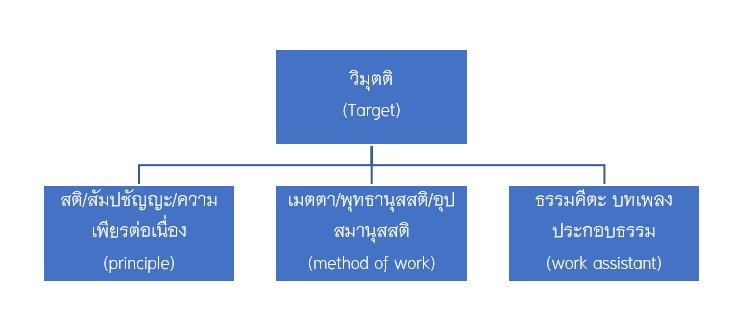
The findings indicated that the Dhamma Gita performed at the Dhamma Practice Center of Phuttha Mahāmetta adheres to the Four Foundations of Mindfulness (Satipaṭṭhāna) framework, incorporating three primary Samatha meditative objects: (1) loving-kindness (Mettā) from the Brahmavihāra, and (2) two recollections (Anussati), namely Buddhānussati and Upasamānussati. The practice integrates Dhamma Gita as a meditative chant to support the mental cultivation and mindfulness in all bodily postures. The practice is structured into 3 main stages: Principles of Practice: Practitioners maintain mindfulness and clear comprehension (Sati-Sampajañña) based on bodily postures, with loving-kindness as a central meditative object. The practice incorporates Buddha and tranquility recollection, alongside Dhamma Gita chanting, to cultivate mindfulness, concentration (Samādhi), and insight (Paññā). Method of Practice: Practitioners are required to sustain continuous mindfulness and clear comprehension in all bodily postures. Loving-kindness is developed through Dhamma Keeta chanting to refine the mind, making it receptive to meditation. Buddha recollection is applied alongside Dhamma Gita to generate the joy on Dhamma. Tranquility recollection is used to facilitate the experience of inner peace by subduing all defilements. Outcomes of Practice: Practitioners experience mindfulness and clear comprehension, with loving-kindness integrated with Dhamma Gita fostering an initial sense of mental relaxation and relief from suffering. Buddha recollection, when combined with Dhamma Gita, results in joy and spiritual upliftment. Tranquility recollection leads to deep serenity called Passaddhi, arising from a mind free from defilements.
Article Details

This work is licensed under a Creative Commons Attribution-NonCommercial-NoDerivatives 4.0 International License.
Copyright Notice
The content and information in the articles published in Journal of MCU Palisueksabuddhaghosa Review, are regarded as opinions and responsibilities of article author only. It definitely does not mean that the editor must agree or share any responsibility to the author.
Articles, information, content, figure etc. that have been published in the Journal of MCU Palisueksabuddhaghosa Review is considered as the copyright of the Journal. If any individual or organization will to bring any parts of article for promote or to do anything, must be licensed only in official form from the Journal of MCU Palisueksabuddhaghosa Review.
The content and information in the articles published in Journal of MCU Palisueksabuddhaghosa Review, are regarded as opinions and responsibilities of article author only. It definitely does not mean that the editor must agree or share any responsibility to the author.
Articles, information, content, figure etc. that have been published in the Journal of MCU Palisueksabuddhaghosa Review is considered as the copyright of the Journal. If any individual or organization will to bring any parts of article for promote or to do anything, must be licensed only in official form from the Journal of MCU Palisueksabuddhaghosa Review.
References
พระธรรมธีราชมหามุนี (โชดก ญาณสิทฺธิ ป.ธ.9). วิปัสสนากรรมฐาน. พิมพ์ครั้งที่ 3. กรุงเทพมหานคร:
พิมพ์ที่ บริษัทประยูรวงศ์พริ้นท์ติ้ง จำกัด, 2554.
พระธรรมปิฎก (ป.อ.ปยุตฺโต). พจนานุกรมพุทธศาสน์ ฉบับ ประมวลธรรม. พิมพ์ครั้งที่ 11. กรุงเทพมหานคร: พิมพ์ที่ บริษัท สหธรรมิก จำกัด, 2545.
พระพุทธโฆสเถระ รจนา. สมเด็จพระพุฒาจารย์ (อาจ อาสภมหาเถร) แปลและเรียบเรียง. คัมภีร์
วิสุทธิมรรค. พิมพ์ครั้งที่ 7. กรุงเทพมหานคร: โรงพิมพ์ บริษัท ธนาเพรส จำกัด, 2551.
พระพรหมคุณาภรณ์ (ป.อ.ปยุตฺโต). พจนานุกรมพุทธศาสน์ ฉบับ ประมวลศัพท์. พิมพ์ครั้งที่ 26. กรุงเทพมหานคร: จัดพิมพ์โดย สำนักพิมพ์เพ็ทแอนด์โฮม จำกัด, 2558.
พระอาจารย์มั่น ภูริทตฺตมหาเถร. บูรพาจารย์. พิมพ์ครั้งที่ 5. กรุงเทพมหานคร: พิมพ์ที่ บริษัท ชวน พิมพ์ 50 จำกัด, 2557.
พระอาจารย์กิตติเชษฐ์ สิริวฑฺฒโก, ดร. คีตะธรรม ลำนำสู่นิพพาน. กรุงเทพมหานคร: พิมพ์ที่ บริษัท เนติกุลการพิมพ์ จำกัด, 2567.
. หลักสูตรพุทธบุตร. กรุงเทพมหานคร: พิมพ์ที่ โรงพิมพ์ไฮสปีด เลเซอร์ปริ้นต์ จำกัด, 2567.
. คีตะธรรม ลำนำสู่นิพพาน. กรุงเทพมหานคร: พิมพ์ที่ บริษัท เนติกุลการพิมพ์ จำกัด, 2567.
. มีสติ รักษาจิต. (ออนไลน์). แหล่งที่มา: https://www.youtube.com/watch?v=
lf2zYWwiq0c (9 พ.ค. 2564).
มหาจุฬาลงกรณราชวิทยาลัย. พระไตรปิฎกภาษาไทย ฉบับมหาจุฬาลงกรณราชวิทยาลัย. กรุงเทพมหานคร : โรงพิมพ์มหาจุฬาลงกรณราชวิทยาลัย, 2539.
มหามกุฏราชวิทยาลัย. พระไตรปิฎกและอรรถกถาแปล ชุด 91 เล่ม. กรุงเทพมหานคร : โรงพิมพ์ มหามกุฏราชวิทยาลัย, 2534.
