
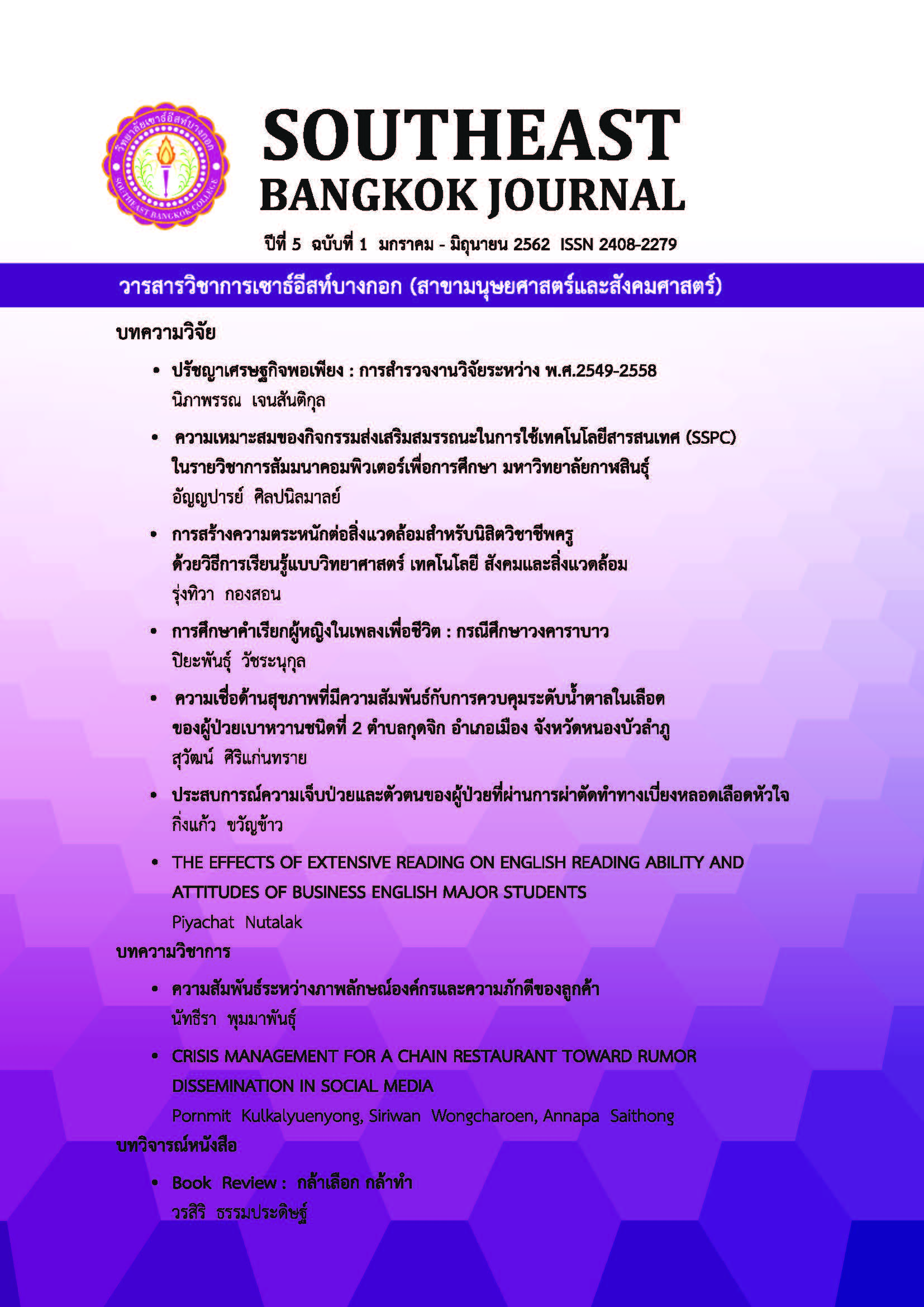
CRISIS MANAGEMENT FOR A CHAIN RESTAURANT TOWARD RUMOR DISSEMINATION IN SOCIAL MEDIA
Article Sidebar
Published:
Jan 29, 2019
Keywords:
Chain Restaurant Crisis Management Crisis Response Rumor Social Media
Main Article Content
Abstract
The rise of social media has brought an increasing interaction between customers and business. Anyone can share thoughts and opinions with anyone else. This new technology creates new challenges in many fields including the field of crisis management. The question is how companies should handle a crisis in social media. The purpose of this paper was to develop the ideas of how chain restaurants plan for crisis management regarding rumors dissemination in social media. The author starts by providing the definitions of crisis, crisis management, social media, and chain restaurant. Then, the author uses a three-stage approach for crisis management suggested by Coombs to explain how chain restaurants can respond.
Article Details
How to Cite
Kulkalyuenyong, P., Wongcharoen, S., & Saithong, A. (2019). CRISIS MANAGEMENT FOR A CHAIN RESTAURANT TOWARD RUMOR DISSEMINATION IN SOCIAL MEDIA. Southeast Bangkok Journal (Humanities and Social Sciences), 5(1), 116–131. retrieved from https://so05.tci-thaijo.org/index.php/SB_Journal/article/view/151181
Section
Academic Articles
References
Arora, R., Chawla, A., and Bansal, M. (2014). Eating out behaviour of individuals: A casestudy. International Journal of Management and Social Science, 2(10), pp. 23-40.
Augustine N. R. (1995). Managing the crisis you tried to prevent. Harvard Business Review, 73(6), pp. 147-158.
Bateson, J and Hoffman, K. (2017). Service marketing: Concepts, strategies, and cases. 5th edition. Mason: South-Western College Pub.
Bertsche, E. (2010). Bridging babel: New social media and interreligious and intercultural understanding. Georgetown University. Retrieved on June 13, 2018 from http://repository.berkleycenter.georgetown.edu//UGFNewSocialMedia.pdf.
Burnett, J. J. (1999). A strategic approach to managing crises. Public Relations Review, 24(4), pp. 475-488.
Burusnukul, P., Binkley, M., and Sukalakamala, P. (2011). Understanding tourists' patronage of Thailand foodservice establishments: An exploratory decisional attribute approach. British Food Journal, 113(8), pp. 965-981.
Coombs, W. T. and Holladay, S. J. (2002). Helping crisis manager protect reputational assets: Initial tests of the situational crisis communication theory. Management Communication Quarterly, 16(2), pp. 165-186.
Coombs, W.T. (2019), Ongoing crisis communication: Planning, managing, and responding. Thousand Oaks: Sage Publications.
Evans, D. and Bratton, S. (2012). Social media marketing: An hour a day. 2nd edition. Indiana: Wiley Publishing.
Facebook. (2018). Statistics. Retrieved on June 13, 2018 from http://www.facebook.com.
Fassh, R.E., Dipietro, R., and Smith, W. (2015). Pay more for McLocal? Examining motivators for willingness to pay for local food in a chain restaurant setting. Journal of Hospitality Marketing and Management, 24, pp. 411-434.
Fearn-Banks, K. (2017), Crisis communications: A casebook approach, 5th edition. Kentucky: Routledge.
Fotis, J., Buhalis, D., Rossides N. (2012). Social media use and impact during the holidaytravel planning process. Information and Communication Technologies in Tourism. Vienna: Springer-Verlag, pp. 13-24.
Hale, J. E., Dulek, R. E. and Hale, D. P. (2005). Crisis response communication challenges. Journal of Business Communication, 42(2), pp. 112-134.
Hollensen, S. (2014). Global marketing: A decision-oriented approach. 5th edition. Harlow: Pearson Education.
Hubspot. (2012). “120 Marketing stats, charts and graphs”. Retrieved on May 15, 2018 from https://cdn2.hubspot.net.
Jaques, T. (2007), Issue management and crisis management: An integrated, non-linear, relational construct. Public Relations Review, 33(2), pp. 147-157.
Java, A., Song, X., Finin, T., and Tseng, B. (2007). Why we Twitter: Understanding microblogging usage and communities. Retrieved on June 13, 2018 from http://ebiquity.umbc.edu.
Kasikorn Research Center. (2015). A growth of chain restaurants. K Econ Analysis, 19(2377), pp. 1-5.
Lerbinger, O. (2012), The crisis manager: Facing disasters, conflicts, and failures. New York: Routledge.
McCartney, M., Crandall, W. and Ziemnowicz, C. (1999). Why plan for something bad if it may not happen?. Internal Auditing, 14(1), pp. 11–17.
Meyers, G. C., and Holusha. (2018). Managing crisis: A positive approach. Boston: Houghton Mifflin.
Millar, D.P. and Heath, R.L. (2004). Responding to crisis: A rhetorical approach to crisis communication. New Jersey: Lawrence Elbaum Associates.
Nowak, A. (2008). IPhone description- part I. Retrieved on June 13, 2018 from http://www.articlesbase.com/computers-articles/iphone-description-part-i-420010.html.
Ostrow, A. (2010). YouTube is the top social media innovation of the decade, Retrieved on June 13, 2018 from source: http://mashable.com/2009/12/22/youtube-2010/.
Pearson, C. M., and Mitroff, I. I. (1993). From crisis prone to crisis prepared: A framework for crisis management. The Academy of Management Executive, 7(1), pp. 48-59.
Pearson, C.M. and Clair, J.A. (1998), Reframing crisis management. Academic Management Review, 23(1), pp. 59–76.
Penrose, J. M. (2000). The role of perception in crisis planning. Public Relations Review,26(2), pp. 155–171.
Richardson, B. (1994). Socio-technical disasters: profile and prevalence. Disaster Prevention and Management, 3(4), pp. 41-69.
Scott, E. (2013). Chain VS Franchise. Retrieved on June 17, 2018 from http://smallbusiness.chron.com.
Solis, B. (2007). The definition of social media. Retrieve on May 13, 2018 from http://www.webpronews.com
YouTube (2018). Statistics. Retrieved on June 13, 2018 from https://www.youtube.com.
Veil, S.R., T. Buehner and M.J. Palenchar. (2011). A work-in-process literature review: Incorporating social media in risk and crisis communication. Journal of Contingencies and Crisis Management, 19(2), pp. 110-122.
Augustine N. R. (1995). Managing the crisis you tried to prevent. Harvard Business Review, 73(6), pp. 147-158.
Bateson, J and Hoffman, K. (2017). Service marketing: Concepts, strategies, and cases. 5th edition. Mason: South-Western College Pub.
Bertsche, E. (2010). Bridging babel: New social media and interreligious and intercultural understanding. Georgetown University. Retrieved on June 13, 2018 from http://repository.berkleycenter.georgetown.edu//UGFNewSocialMedia.pdf.
Burnett, J. J. (1999). A strategic approach to managing crises. Public Relations Review, 24(4), pp. 475-488.
Burusnukul, P., Binkley, M., and Sukalakamala, P. (2011). Understanding tourists' patronage of Thailand foodservice establishments: An exploratory decisional attribute approach. British Food Journal, 113(8), pp. 965-981.
Coombs, W. T. and Holladay, S. J. (2002). Helping crisis manager protect reputational assets: Initial tests of the situational crisis communication theory. Management Communication Quarterly, 16(2), pp. 165-186.
Coombs, W.T. (2019), Ongoing crisis communication: Planning, managing, and responding. Thousand Oaks: Sage Publications.
Evans, D. and Bratton, S. (2012). Social media marketing: An hour a day. 2nd edition. Indiana: Wiley Publishing.
Facebook. (2018). Statistics. Retrieved on June 13, 2018 from http://www.facebook.com.
Fassh, R.E., Dipietro, R., and Smith, W. (2015). Pay more for McLocal? Examining motivators for willingness to pay for local food in a chain restaurant setting. Journal of Hospitality Marketing and Management, 24, pp. 411-434.
Fearn-Banks, K. (2017), Crisis communications: A casebook approach, 5th edition. Kentucky: Routledge.
Fotis, J., Buhalis, D., Rossides N. (2012). Social media use and impact during the holidaytravel planning process. Information and Communication Technologies in Tourism. Vienna: Springer-Verlag, pp. 13-24.
Hale, J. E., Dulek, R. E. and Hale, D. P. (2005). Crisis response communication challenges. Journal of Business Communication, 42(2), pp. 112-134.
Hollensen, S. (2014). Global marketing: A decision-oriented approach. 5th edition. Harlow: Pearson Education.
Hubspot. (2012). “120 Marketing stats, charts and graphs”. Retrieved on May 15, 2018 from https://cdn2.hubspot.net.
Jaques, T. (2007), Issue management and crisis management: An integrated, non-linear, relational construct. Public Relations Review, 33(2), pp. 147-157.
Java, A., Song, X., Finin, T., and Tseng, B. (2007). Why we Twitter: Understanding microblogging usage and communities. Retrieved on June 13, 2018 from http://ebiquity.umbc.edu.
Kasikorn Research Center. (2015). A growth of chain restaurants. K Econ Analysis, 19(2377), pp. 1-5.
Lerbinger, O. (2012), The crisis manager: Facing disasters, conflicts, and failures. New York: Routledge.
McCartney, M., Crandall, W. and Ziemnowicz, C. (1999). Why plan for something bad if it may not happen?. Internal Auditing, 14(1), pp. 11–17.
Meyers, G. C., and Holusha. (2018). Managing crisis: A positive approach. Boston: Houghton Mifflin.
Millar, D.P. and Heath, R.L. (2004). Responding to crisis: A rhetorical approach to crisis communication. New Jersey: Lawrence Elbaum Associates.
Nowak, A. (2008). IPhone description- part I. Retrieved on June 13, 2018 from http://www.articlesbase.com/computers-articles/iphone-description-part-i-420010.html.
Ostrow, A. (2010). YouTube is the top social media innovation of the decade, Retrieved on June 13, 2018 from source: http://mashable.com/2009/12/22/youtube-2010/.
Pearson, C. M., and Mitroff, I. I. (1993). From crisis prone to crisis prepared: A framework for crisis management. The Academy of Management Executive, 7(1), pp. 48-59.
Pearson, C.M. and Clair, J.A. (1998), Reframing crisis management. Academic Management Review, 23(1), pp. 59–76.
Penrose, J. M. (2000). The role of perception in crisis planning. Public Relations Review,26(2), pp. 155–171.
Richardson, B. (1994). Socio-technical disasters: profile and prevalence. Disaster Prevention and Management, 3(4), pp. 41-69.
Scott, E. (2013). Chain VS Franchise. Retrieved on June 17, 2018 from http://smallbusiness.chron.com.
Solis, B. (2007). The definition of social media. Retrieve on May 13, 2018 from http://www.webpronews.com
YouTube (2018). Statistics. Retrieved on June 13, 2018 from https://www.youtube.com.
Veil, S.R., T. Buehner and M.J. Palenchar. (2011). A work-in-process literature review: Incorporating social media in risk and crisis communication. Journal of Contingencies and Crisis Management, 19(2), pp. 110-122.
