Dance creation from faith in Hindu gods: Uma–Maheshvara
Keywords:
Uma–Maheshvara dance, Uma–Maheshvara sculpture, Archaeological evidence, Hindu gods, ShaivismAbstract
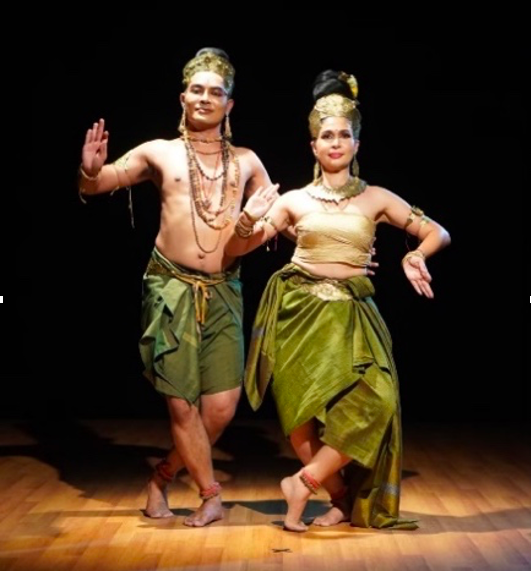
The creation of a Uma–Maheshvara dance series presents the history of Uma–Maheshvara sculpture discovered as archaeological evidence, reflecting belief and faith in Hindu gods in Shaivism. It also shows the influence of Thailand's Indian civilization through Khmer culture. Documentary data was collected by studying related documents and surveying the area to discern characteristics of Uma–Maheshvara sculptures at Prasat Hin Phanom Rung and Prasat Hin Mueang Tam in Buriram province.Data was analyzed and synthesized to choreograph dance performance elements. The created Uma–Maheshvara dance series had a format based on six performance elements: 1) performance content divided into Uma–Maheshvara sculpture showing the great god of the universe and protector of all things, with a male actor in the role of Lord Shiva and a female actor as Phra Uma2) casting according to dancing skills and physical characteristics suitable for the role.3) combining Thai and Indian dance styles. 4) original contemporary music combining Indian and Khmer musical instrument sounds with additional musical components from computer programs. 5) multicultural costume design reflecting shared Indian and Khmer cultures with indigenous materials reflecting the show’s origins. 6) dark lighting to show the power of the gods and location of the sculptures in the castle and bright lighting shone in specific areas to create shadows emphasizing the physique of the performers. This research studied and developed a creative dance work according to an academic process to reflect religious beliefs from past to present to interest young audiences in historical and archaeological work and value dance more.
References
คมกฤช อุ่ยเต็กเค่ง. (2561). “เทวนิยมอินเดีย : เส้นทางและปรากฏการณ์ในสังคมไทย Indian Theism: Development and Its Phenomenon in Thai Society”. Veridian E-Journal, Silpakorn University, 11(2), 1582-1597.
จุติกา โกศลเหมมณี. (2556). รูปแบบและแนวความคิดในการสร้างสรรค์งานนาฏยศิลป์ไทยร่วมสมัย ของ นราพงษ์ จรัสศรี [วิทยานิพนธ์ปริญญาศิลปศาสตรดุษฎีบัณฑิต, จุฬาลงกรณ์มหาวิทยาลัย].
เดลินิวส์ออนไลน์. (2566). มองลึก ๆ...เพื่อ ‘เข้าใจ’ ไม่ดราม่า ‘วัฒนธรรมร่วม’ แห่ง ‘อุษาคเนย์’.https://www.dailynews.co.th/news/2094711/
ศิริศักดิ์ ดําาเกิง. (2549). แนวคิดพหุวัฒนธรรม (Multiculturalism). ภาควิชามานุษยวิทยา คณะโบราณคดี มหาวิทยาลัยศิลปากร.
สดใส พันธุมโกมล. (2520). ศิลปะการแสดง. คณะอักษรศาสตร์ จุฬาลงกรณ์มหาวิทยาลัย.
สุจิตต์ วงษ์เทศ. (2555). "วัฒนธรรมร่วม" ในอุษาคเนย์ รากเหง้าเก่าแก่ของประชาคมอาเชียน. https://prachatai.com/journal/2012/08/42238 .
วัฒนวุฒิ ช้างชนะ. (2564). การสื่อความหมายผ่านงานประติมากรรมของศาสนาฮินดูในกรุงเทพมหานคร [วิทยานิพนธ์ปริญญาศิลปศาสตรดุษฎีบัณฑิต สาขาวิชาศิลปวัฒนธรรม, มหาวิทยาลัยศรีนครินทรวิโรฒ].
Downloads
Published
Versions
- 2024-12-31 (2)
- 2024-12-31 (1)


