
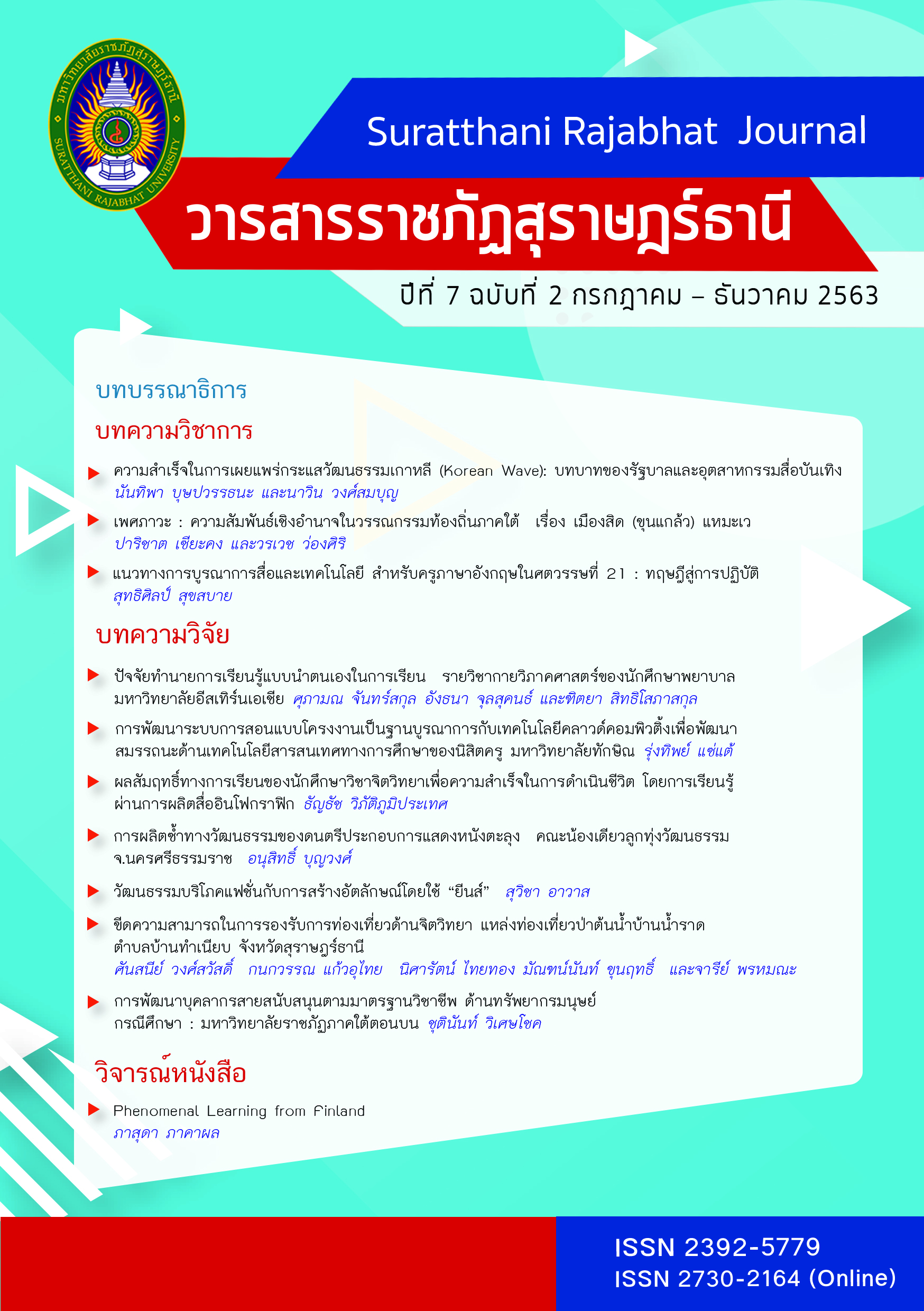
ความสำเร็จในการเผยแพร่กระแสวัฒนธรรมเกาหลี (Korean Wave): บทบาทของรัฐบาลและอุตสาหกรรมสื่อบันเทิง
Article Sidebar
เผยแพร่แล้ว:
ธ.ค. 29, 2020
คำสำคัญ:
กระแสวัฒนธรรมเกาหลี บทบาท รัฐบาล อุตสาหกรรมสื่อ การสื่อสาร
Main Article Content
บทคัดย่อ
บทความนี้มีวัตถุประสงค์เพื่อแสดงให้เห็นถึงบทบาทของรัฐบาลและภาคอุตสาหกรรมสื่อบันเทิงในประเทศเกาหลีใต้ที่มีต่อการเผยแพร่กระแสวัฒนธรรมเกาหลี ด้วยวิเคราะห์และสังเคราะห์เชิงลึกจากงานวิจัยและบทความจากหนังสือพิมพ์ของประเทศเกาหลีใต้เกี่ยวกับความสำเร็จของการเผยแพร่กระแสวัฒนธรรมเกาหลี รัฐบาลเกาหลีใต้แสดงบทบาทในฐานะผู้สนับสนุนการเผยแพร่กระแสวัฒนธรรมเกาหลี ในขณะที่ภาคอุตสาหกรรมสื่อบันเทิงมีบทบาทสำคัญในฐานะผู้ผลิตและผู้เผยแพร่ผลิตภัณฑ์ด้านความบันเทิงและวัฒนธรรม ความสัมพันธ์ระหว่างรัฐบาลและภาคอุตสาหกรรมสื่อบันเทิง เป็นไปในลักษณะที่รัฐควบคุมการทำงานของสื่อในยุคแรก หลังจากเข้าสู่รัฐบาลประชาธิปไตย ก็มีการผ่อนปรนการตรวจสอบเนื้อหาที่เข้มงวดลงและมีบทบาทในการเป็นผู้สนับสนุนอุตสากรรมสื่อบันเทิงมากกว่าเป็นผู้ควบคุม
Article Details
ประเภทบทความ
บทความวิชาการ
เอกสารอ้างอิง
Baymin, S. (2018). The Other Big Korean Drama Right Now (online). Retrieved
from https://www.bbc.com/news/business-44453310. (2019
December 2)
Cho, C. (2012). KOCIS to Draw Foreign Eyes to Korean Culture (online). Retrieved from http://www.koreaherald.com/search/?dt=&nt=0&q =Korean+wave. (2019, December 20).
Choi, D. and Kim, P. (2014). Promoting a Policy Initiative for National Branding: The Case if South Korea. Journal of Comparative Asian Development, 13(2), 346 – 368.
Chung, A. (2008). Minister Plans Long-Term Blueprint to Promote Culture (online). Retrieved from http://www.koreatimes.co.kr/www/archive/ ksearch.asp. (2020, January 10).
Entertainment Exports Surge in First Hall (online). (2012). Retrieved from http://www.koreatimes.co.kr/www/archive /ksearch.asp. [2020 January 22].
Hae, D. (2012). Park to Put Policy Priority on Culture (online). Retrieved from http://www.koreatimes.co.kr/www/archive/ksearch.asp. (2020, January 13).
Jin, H. and Jeong, S. (2010). The Impact of Korean Television Viewership on the Social Perceptions of Single Life and Having Fewer Children in Married Life. Asian Journal of Communication, 20(1), 17 – 32.
Kim, J. (2013). KOCCA, King Sejong Institute to Promote Hallyu Together (online). Retrieved from http://www.koreatimes.co.kr/www/archive /ksearch.asp. (2020, January 15).
Kim, S. and Wang, H. (2012). From Television to the film set : Korean drama Daejanggeum drive Chinese, Taiwanese, Japanese and Thai audiences to screen tourism. The International Communication Gazette, 74(5), 423 – 442.
Kim, S., Agrusa, J., Lee, H., and Chon, K. (2007). Effects of Korean Television Dramas on the Flow of Japanese Tourists. Tourism Management, 28, 1340 – 1353.
Kwon, J. (2015). Web Dramas on the Rise: Broadcaster KBS Leaps into Make-or-Break Web Drama Industry (online). Retrieved from http://www.koreatimes.co.kr/www/archive/ksearch.asp. (2020, January 24).
Kwon, S. and Kim J. (2014). The Cultural Industry Policies of the Korean Government and Korean Wave. International Journal of Cultural Policy, 20(4), 422 - 439.
Lee, M. (2007). Study on Characteristics of Korean Drama Exports to 8 Asian Countries. The Journal of the Korea Contents Association, 7, 34 - 43.
New Gov’t Cultural Policy (online). (1998). Retrieved fromhttp:// koreajoongangdaily.joins.com/search/search.aspx?sw=Korean+wave&x=0&y=0. [2020 Jebruary 13].
Oh, I. and Lee, H. (2013). Mass media technologies and popular music. Korea Journal, 53(4), 34 - 58.
Oh, K. (2011). Korean Center Aims to Be Big London Attraction (online). Retrieved from http://www.koreaherald.com/search /?dt=2&nt =0&q=Korean+wave. (2019, December 20).
Oh, Y. (2014). Korean Television Dramas and the Political Economy of City Promotion. International Journal of Urban and Regional Research, 38(6), 2411 – 2455.
Seoul to Develop Hallyu Hub (online). (2011). Retrieved from http:// koreajoongangdaily.joins.com/search/search.aspx?sw=Korean+wave&x=0&y=0. [2020 February 13].
Ser, M. (2009). Lee Seeks Strategic Vietnamese Partnership (online). Retrieved from http://koreajoongangdaily.joins.com/search/search. aspx?sw=Korean+wave&x=0&y=0. (2020 February 3)
Shin, K. (2014). Hallyu Booming Again in China, Bigger than Ever (online). Retrieved from http://koreajoongangdaily. joins.com/search/search. aspx?sw= Korean+wave&x=0&y=0. (2020 February, 14).
Sung, S. (2010). Constructing New Image. Hallyu in Taiwan. European Journal of East Asian Studies, 9(1), 25 – 45.
Tung, A. and Wan, H. J. (2010). High Tech, Law Fertility, Korea becomes a Role Model in Cultural Industry Policies. Korea and the World Economy, 11(2), 211 – 229.
Yang, J. (2007). Globalization, Nationalism, and Regionalization: The Case of Korean Popular Culture. Development and Society, 36(2), 177-199.
Yong, J. and Ryoo, W. (2014). Critical interpretation of hybrid K-pop: The global-local paradigm of English mixing in lyrics. Popular Music and Society, 37(2), 113 - 131.
Yoo, J., Jo, S., and Jung, J. (2014). The Effects of Television Viewing, Cultural Proximity, and Ethnocentrism on Country Image. Social Behavior and Personality, 42(1), 89 – 96.
from https://www.bbc.com/news/business-44453310. (2019
December 2)
Cho, C. (2012). KOCIS to Draw Foreign Eyes to Korean Culture (online). Retrieved from http://www.koreaherald.com/search/?dt=&nt=0&q =Korean+wave. (2019, December 20).
Choi, D. and Kim, P. (2014). Promoting a Policy Initiative for National Branding: The Case if South Korea. Journal of Comparative Asian Development, 13(2), 346 – 368.
Chung, A. (2008). Minister Plans Long-Term Blueprint to Promote Culture (online). Retrieved from http://www.koreatimes.co.kr/www/archive/ ksearch.asp. (2020, January 10).
Entertainment Exports Surge in First Hall (online). (2012). Retrieved from http://www.koreatimes.co.kr/www/archive /ksearch.asp. [2020 January 22].
Hae, D. (2012). Park to Put Policy Priority on Culture (online). Retrieved from http://www.koreatimes.co.kr/www/archive/ksearch.asp. (2020, January 13).
Jin, H. and Jeong, S. (2010). The Impact of Korean Television Viewership on the Social Perceptions of Single Life and Having Fewer Children in Married Life. Asian Journal of Communication, 20(1), 17 – 32.
Kim, J. (2013). KOCCA, King Sejong Institute to Promote Hallyu Together (online). Retrieved from http://www.koreatimes.co.kr/www/archive /ksearch.asp. (2020, January 15).
Kim, S. and Wang, H. (2012). From Television to the film set : Korean drama Daejanggeum drive Chinese, Taiwanese, Japanese and Thai audiences to screen tourism. The International Communication Gazette, 74(5), 423 – 442.
Kim, S., Agrusa, J., Lee, H., and Chon, K. (2007). Effects of Korean Television Dramas on the Flow of Japanese Tourists. Tourism Management, 28, 1340 – 1353.
Kwon, J. (2015). Web Dramas on the Rise: Broadcaster KBS Leaps into Make-or-Break Web Drama Industry (online). Retrieved from http://www.koreatimes.co.kr/www/archive/ksearch.asp. (2020, January 24).
Kwon, S. and Kim J. (2014). The Cultural Industry Policies of the Korean Government and Korean Wave. International Journal of Cultural Policy, 20(4), 422 - 439.
Lee, M. (2007). Study on Characteristics of Korean Drama Exports to 8 Asian Countries. The Journal of the Korea Contents Association, 7, 34 - 43.
New Gov’t Cultural Policy (online). (1998). Retrieved fromhttp:// koreajoongangdaily.joins.com/search/search.aspx?sw=Korean+wave&x=0&y=0. [2020 Jebruary 13].
Oh, I. and Lee, H. (2013). Mass media technologies and popular music. Korea Journal, 53(4), 34 - 58.
Oh, K. (2011). Korean Center Aims to Be Big London Attraction (online). Retrieved from http://www.koreaherald.com/search /?dt=2&nt =0&q=Korean+wave. (2019, December 20).
Oh, Y. (2014). Korean Television Dramas and the Political Economy of City Promotion. International Journal of Urban and Regional Research, 38(6), 2411 – 2455.
Seoul to Develop Hallyu Hub (online). (2011). Retrieved from http:// koreajoongangdaily.joins.com/search/search.aspx?sw=Korean+wave&x=0&y=0. [2020 February 13].
Ser, M. (2009). Lee Seeks Strategic Vietnamese Partnership (online). Retrieved from http://koreajoongangdaily.joins.com/search/search. aspx?sw=Korean+wave&x=0&y=0. (2020 February 3)
Shin, K. (2014). Hallyu Booming Again in China, Bigger than Ever (online). Retrieved from http://koreajoongangdaily. joins.com/search/search. aspx?sw= Korean+wave&x=0&y=0. (2020 February, 14).
Sung, S. (2010). Constructing New Image. Hallyu in Taiwan. European Journal of East Asian Studies, 9(1), 25 – 45.
Tung, A. and Wan, H. J. (2010). High Tech, Law Fertility, Korea becomes a Role Model in Cultural Industry Policies. Korea and the World Economy, 11(2), 211 – 229.
Yang, J. (2007). Globalization, Nationalism, and Regionalization: The Case of Korean Popular Culture. Development and Society, 36(2), 177-199.
Yong, J. and Ryoo, W. (2014). Critical interpretation of hybrid K-pop: The global-local paradigm of English mixing in lyrics. Popular Music and Society, 37(2), 113 - 131.
Yoo, J., Jo, S., and Jung, J. (2014). The Effects of Television Viewing, Cultural Proximity, and Ethnocentrism on Country Image. Social Behavior and Personality, 42(1), 89 – 96.
