TRADITIONAL DANCE INVENTION: WANON TIAWPETCH DANCE
Keywords:
Traditional Dance Invention, Wanon Tiawpetch, DanceAbstract
The research of the creative work of traditional dance invention: Wanon Tiawpetch Dance, or the Tiawpetch Monkey Dance aimed to study the history, the colors and the characteristics of Khon Masked Play head-gears, the roles of the Wanon Tiawpetch characters, or the Tiawpetch monkey characters appeared in the Ramayana Epic, and the art of the Khon Masked Play in order to develop the creative dance, the Tiawpetch Monkey Dance set to be used in teaching, learning and performing Thai theatrical dances. The data were collected from literature review and the interviews with Thai theatrical national artists and experts including field trips. The creative dance was later created and the national artist highly qualified experts in Thai dance and Thai music were asked to give comments. The comments were deliberated and used to improve the dance.
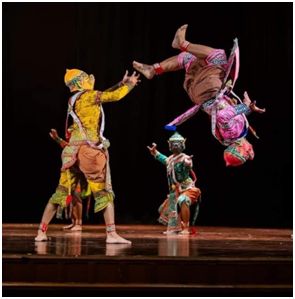
According to the study, it was found out that Tiawpetch Monkeys consisted of 9 monkeys. The shape of the monkey head-gears are bald. Their mouths were closed and they wore a gold-thread twisted fabric twine. The characters existed and had a very important role in the Ramayana Epic Khon (masked dance-drama) performed in the past. However, at present these monkey characters are not seen performed in any Khon play or in any other kind of performance. This performance was choreographed from the dance routine of Khon Ling in the second half. Wanon Tiawpetch Dance, or the Dance can be used to perform on various occasions. The dance took approximately 8:30 minutes. The dance was divided into 5 parts: Part 1 was the Tiawpetch Monkeys moving out to the Tapone rhythm. Part 2 was the Tiawpetch Monkeys dance according to the content of the song, the Krabi Lila Song. Part 3 was the Tiawpetch Monkeys dance according to the 1st level tempo of the Sarathi Song. Part 4 was the Tiawpetch Monkey dance according to the rhythm of the song, the Tiawpetch Khla Klai Song. Part 5 was the Tiawpetch Monkey dance according to the rhythm of the song called Kha Song. The dance performance showed the merriment, cuteness, talent and bravery of the Tiawpetch Monkeys.
References
กรมศิลปากร. (2556). โขน : อัจฉริยนาฏกรรมสยาม. กรุงเทพฯ: อัมรินทร์พริ้นติ้งแอนด์พับลิชชิ่ง บจก. (มหาชน).
กิฟลี วรรณจิยี. (2535). การเปรียบเทียบความคิดสร้างสรรค์และผลสัมฤทธิ์ทางการเขียนบทร้อยกรองของนักเรียนชั้นประถมศึกษาปีที่ 6 ที่เรียนโดยใช้แบบฝึกการเขียนสร้างสรรค์กับการใช้แบบฝึกแบบปกติ. ปริญญานิพนธ์การศึกษามหาบัณฑิต สาขาวิชาการประถมศึกษา บัณฑิตวิทยาลัย มหาวิทยาลัยศรีนครินทรวิโรฒ.
ฉันทนา เอี่ยมสกุล. (2554). ศิลปะการออกแบบท่ารำ (นาฏศิลป์สร้างสรรค์). กรุงเทพฯ: บพิธการพิมพ์.
ประพันธ์ สุคนธชาติ. (2534). หัวโขนพงศ์ในเรื่องรามเกียรติ์. กรุงเทพฯ: อัมรินทร์พริ้นติ้ง กรุ๊พ.
ศรีวิไล ดอกจันทร์. (2529). ภาษาและการสอน. กรุงเทพฯ: สุกัญญา.
สุรพล วิรุฬห์รักษ์. (2547). หลักการแสดงนาฏยศิลป์ปริทรรศน์. กรุงเทพฯ: จุฬาลงกรณ์มหาวิทยาลัย.
นิวัฒน์ สุขประเสริฐ. ผู้เชี่ยวชาญนาฏศิลป์ไทย (โขนลิง). สัมภาษณ์, 20 กันยายน 2562.
ประเมษฐ์ บุณยะชัย. ผู้เชี่ยวชาญนาฏศิลป์ไทย (โขนยักษ์). สัมภาษณ์, 20 กันยายน 2562.
ประสิทธิ์ ปิ่นแก้ว. ศิลปินแห่งชาติ สาขาศิลปะการแสดง (นาฏศิลป์ไทย). สัมภาษณ์, 11 กรกฎาคม 2561 และ 18 ตุลาคม 2561.
วิโรจน์ อยู่สวัสดิ์. ผู้เชี่ยวชาญนาฏศิลป์ไทย (โขนลิง). สัมภาษณ์, 11 กรกฎาคม 2561.
สราชัย ทรัพย์แสนดี. ผู้เชี่ยวชาญนาฏศิลป์ไทย (โขนลิง). สัมภาษณ์, 20 กันยายน 2562.
สุรัตน์ เอี่ยมสอาด. ผู้เชี่ยวชาญนาฏศิลป์ไทย (โขนลิง) กรมศิลปากร. สัมภาษณ์, 20 กันยายน 2562.
Downloads
Published
Issue
Section
License
บทความที่ได้รับการตีพิมพ์เป็นลิขสิทธิ์ของ สบศ.



