LANGUAGE FOR COMMUNICATION IN LIKAY PERFORMANCE
Keywords:
Language for Communication, Likay performanceAbstract
This research aim: to identify the communication style, communication elements and purposes of communication in Likay performance; to study the verbal and nonverbal language, and to analyze the language used to communicate in Likay performance. Use case study data from Pronthep Pronthawee Likay Troupe that has been well-known so far. The data were collected from documents, electronic media and field study by observing and interviewing. Describe the results by descriptive analysis. The study indicate that:
1. Likay performance has the different communication styles. Consist of Waikru (pay respect), Homrong (prelude), Ram Thawaymua (sacred offering), Ookkhaek (prelude), Playing (start the story, the continuity, the end) and Larong (bid farewell). Composition of communication is complete. The purpose of the communication is clear. It reflects the successful interaction between the messengers and the receivers.
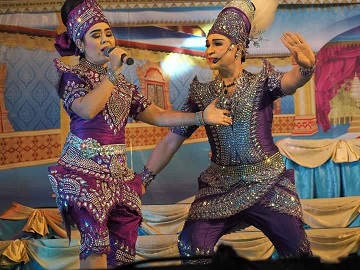
2. Communication languages are divided into 2 types: 1) Verbal, consisting of speech, story and lyrics. 2) Nonverbal, music, dance, action, face, eye, tone, emotion, costume, make up, stage, scene, effect and accessories.
3. The use of language in communication: The meaning of the message is clearly straight, sweet words rhyme, stacked words, pronoun, royal word, foreign language, slang, idioms, feeling words, Likay' s vocabulary. Imagery includes simile, metaphor, symbol.
References
กรองแก้ว แรงเพ็ชร์. (2549). องค์ประกอบการแสดงลิเกคณะพรเทพ พรทวี. วิทยานิพนธ์ ศิลปศาสตรมหาบัณฑิต จุฬาลงกรณ์มหาวิทยาลัย.
คณะกรรมการวิชาภาษาไทยเพื่อการสื่อสาร. (2557). ภาษาไทยเพื่อการสื่อสาร (พิมพ์ครั้งที่ 8). กรุงเทพฯ: มหาวิทยาลัยเกษตรศาสตร์.
จิรวัฒน์ เพชรรัตน์ และอัมพร ทองใบ. (2555). ภาษาไทยเพื่อการสื่อสาร. กรุงเทพฯ: โอเดียนสโตร์.
จุไรรัตน์ ลักษณะศิริ และ วีรวัฒน์ อินทรพร. (2558). ภาษาไทยเพื่อการสื่อสาร (พิมพ์ครั้ง ที่ 2). กรุงเทพฯ: มหาวิทยาลัยศิลปากร.
เฉิดฉันท์ ดอกแก้ว. (2543). การวิเคราะห์เนื้อหาของลิเกลูกบท. วิทยานิพนธ์ศิลปศาสตรมหาบัณฑิต มหาวิทยาลัยรามคำแหง.
ธนู ทดแทนคุณ และ กานต์รวี แพทย์พิทักษ์. (2557). ภาษาไทยเพื่อการสื่อสาร (พิมพ์ครั้ง ที่ 5). กรุงเทพฯ: โอเดียนสโตร์.
พรเทพ พรทวี. กาหลงกรุง. การแสดงลิเก, 22 มีนาคม 2561.
_________. จอมทัพสุโขทัย. การแสดงลิเก, 17 ธันวาคม 2560.
_________. ปาฏิหาริย์แห่งรัก. การแสดงลิเก, 31 ธันวาคม 2560.
_________. ลูกผู้ชายกู้ชาติ. การแสดงลิเก, 8 ธันวาคม 2560.
_________. อานุภาพแห่งความรัก. การแสดงลิเก, 2 พฤศจิกายน 2560.
พิเชฐ สายพันธ์ และ นฤพนธ์ ด้วงวิเศษ. (2541). ฟ้อนภูไท: พิธีกรรมการแสดงกับการเปลี่ยนแปลงทางสังคม. กรุงเทพฯ: สำนักงานคณะกรรมการวัฒนธรรมแห่งชาติ.
รัตนะ บัวสนธ์ และคณะ. (2554). ฉากแห่งชีวิตจ้าวและไพร่ของชาวลิเก. พิษณุโลก: คณะศึกษาศาสตร์ มหาวิทยาลับนเรศวร.
ราชบัณฑิตยสถาน. (2556). พจนานุกรมฉบับราชบัณฑิตยสถาน พ.ศ. 2554. กรุงเทพฯ: ผู้แต่ง.
________. (2552). พจนานุกรมศัพท์วรรณกรรมไทย. กรุงเทพฯ: ยูเนียน อุลตร้าไวโอเร็ต.
ศุภมน อาภานันท์. (2554). การแสดงลิเกคณะทวีป-ชัยณรงค์ วงษ์เทวัญ: การศึกษาตามแนวชาติพันธุ์วรรณนาแห่งการสื่อสาร. วิทยานิพนธ์อักษรศาสตรมหาบัณฑิต มหาวิทยาลัยศิลปากร.
สัญรญา นวลศิริ. (2560). ท่วงทำนองภาษาและกลวิธีการถ่ายทอดธรรมะในงานเขียน ของพระมหาสมปอง ตาลปุตฺโต. วิทยานิพนธ์ศิลปศาสตรมหาบัณฑิต มหาวิทยาลัยเชียงใหม่.
สุจริต เพียรชอบ. (2539). ศิลปะการใช้ภาษา. กรุงเทพฯ: คุรุสภาลาดพร้าว.
Downloads
Published
Issue
Section
License
บทความที่ได้รับการตีพิมพ์เป็นลิขสิทธิ์ของ สบศ.



