THE EVOLUTION OF NGO PA DANCE DRAMA
Keywords:
Evolution, Dance Drama, Ngo PaAbstract
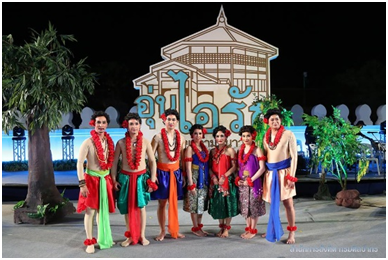
This article aimed to present the evolution of Ngo Pa dance performance which has been evolved continuously. King Rama V was the author of this royal writing. The performance was first done in 1907 at Saisavali Bhiromya’s palace. It was assumed that most performers who were main characters were female because the performance was done in the inner court. However, some supporting characters were young males whose age was not old enough to stay in the outer court. Then, in the reign of King Rama VI, Chudadhuj Dharadilok (King Rama VI’s brother) had a purpose to organize Ngo Pa performance at his palace using performers from the group of Wang Suankularb Theater who were female. They developed the makeup using European cosmetics instead of traditional Chinese cosmetics. They coated their skin with black dust and curled hair according to the role and characteristic of “Ngo Pa”. The costumes for male characters were t-shirt tucked in loincloths, and female characters wore two-ended breast cloth. Ngo Pa was performed again in the reign of King Rama VII; however, it was not performed in the reign of King Rama VIII. In the reign of King Rama IX, the Fine Arts Department organized Ngo Pa dance performance many times. For example, before 1968 all characters were still female, and the costumes used in the performance was the same as those in the reign of King Rama VI. Since 1968, the Fine Arts Department organized the new type of performance by using performers with the same gender to those characters and changing the costumes. This kind of performance was organized again in the reign of King Rama X.
Up to now, Ngo Pa dance performance has appeared in every era. Initially, the performance was done by females according to the traditional way. Then, the Fine Arts Department changed to use performers with the real gender due to its popularity among audience while the plot was still the same. What have been evolved are performers’ gender and costumes in order to be suitable for this period, have more reality, and increase enjoyment in viewing.
References
กรมศิลปากร. (2541). สรุปผลการสัมมนาทางวิชาการระดับชาติ เรื่องเงาะป่า. กรุงเทพฯ: กองวรรณกรรมและประวัติศาสตร์ กรมศิลปากร.
กฤษณะ สายสุนีย์. (2562). กลวิธีและกระบวนท่ารำอาบน้ำแต่งตัวของตัวละครเอกฝ่ายชายในการแสดงละครเรื่องเงาะป่า. วิทยานิพนธ์ปริญญามหาบัณฑิต สาขาวิชานาฏศิลป์ไทย สถาบันบัณฑิตพัฒนศิลป์.
คมสัน มหิงษ์. (2547). เพลงในบทละครเรื่องเงาะป่า ตอนแต่งงาน. วิทยานิพนธ์ปริญญามหาบัณฑิต สาขาวิชาวัฒนธรรมศึกษา มหาวิทยาลัยมหิดล.
จุลจอมเกล้าเจ้าอยู่หัว, พระบาทสมเด็จพระ. (2559). บทละครเรื่อง เงาะป่า ฉบับสอบชำระพร้อมต้นฉบับลายพระหัตถ์สมเด็จเจ้าฟ้านิภานภดล / พระราชนิพนธ์ในพระบาทสมเด็จพระจุลจอมเกล้าเจ้าอยู่หัว (พิมพ์ครั้งที่ 2). กรุงเทพฯ: แสงดาว.
ฉันทนา เอี่ยมสกุล. (2540). พิพิธทัศนตัวละครรำ “เงาะป่า” สูจิบัตรการแสดงเงาะป่า บทพระราชนิพนธ์ ในพระบาทสมเด็จพระจุลจอมเกล้าเจ้าอยู่หัว ณ อุทยานละครกลางแจ้ง ภัทราวดี เธียร์เตอร์. กรุงเทพฯ: เรือนแก้วการพิมพ์.
ถาวร สิกขโกศล. (2559). บทละครเรื่องเงาะป่า (พิมพ์ครั้งที่ 2). กรุงเทพฯ: แสงดาว.
ประเมษฐ์ บุณยะชัย และคณะ. (2555). 101 ปีละครวังสวนกุหลาบ (พิมพ์ครั้งที่ 2). กรุงเทพฯ: พงษ์วริน.
พนิดา สิทธิวรรณ. (2540). “ละครรำเรื่องเงาะป่า” สูจิบัตรการแสดงเงาะป่า ณ อุทธยานละครกลางแจ้งภัทราวดีเธียร์เตอร์. กรุงเทพฯ: เรือนแก้วการพิมพ์.
สถาบันราชภัฏบ้านสมเด็จเจ้าพระยา. (2539). การแสดงละครรำเรื่องเงาะป่า ตอนแต่งงาน. ณ ศูนย์สังคีตศิลป์ ธนาคารกรุงเทพ, วันที่ 23 กุมภาพันธ์ 2539.
สมหมาย เทียบเทียม. (2520). บทละครเรื่องเงาะป่าพระราชนิพนธ์ในรัชกาลที่ 5 : การศึกษาวิเคราะห์ทางสังคมและวัฒนธรรม. วิทยานิพนธ์ปริญญามหาบัณฑิต สาขาวิชาภาษาไทย จุฬาลงกรณ์มหาวิทยาลัย.
สำนักการสังคีต กรมศิลปากร. (2561). การแสดงละครรำเรื่องเงาะป่า งานอุ่นไอรักคลายความหนาว. ณ สนามเสือป่า พระราชวังดุสิต, วันที่ 16 กุมภาพันธ์ 2561.
Chaiyampawan. (2010). ฉุยฉายฮเนา. [online]. Retrieved 11 September 2010. from https://www.youtube.com/watch?v=Qc-ctb8b53Y
รายนามผู้ให้สัมภาษณ์
ศุภชัย จันทร์สุวรรณ์. ศิลปินแห่งชาติ สาขาศิลปะการแสดง (นาฏศิลป์ไทย) พ.ศ. 2548. สัมภาษณ์, 10 พฤศจิกายน 2563.
Downloads
Published
Issue
Section
License
บทความที่ได้รับการตีพิมพ์เป็นลิขสิทธิ์ของ สบศ.



