THE ROLES OF PHRA AURAJUNA AND STRATEGIES IN RAMASURA SHING KAEW PRELUDE DANCE
-
Keywords:
Phra Aurajuna, Prelude dance, Ramasura Shing Kaew, StrategiesAbstract
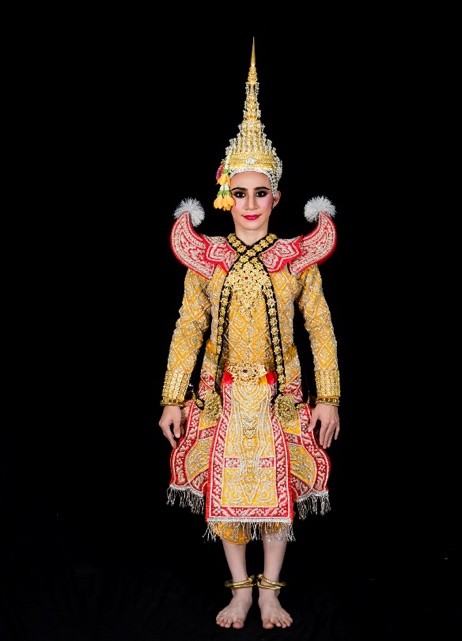
The research article aims to study the history role significance composition analyze the dance postures and dance strategies of Aurajuna in Ramasura Shing Kaew prelude dance.by studying from documents, observation and interviews. The results of the research showed that the story of Mekhala and Ramasun was first found in an illustrated Traiphum manuscript from the Ayutthaya period. It was later composed as a prologue for the royal court theatre, but the script was lost and rediscovered during the Rattanakosin period. performances at Ramasura Shing Kaew is a prelude to the story about the rainy season (Vasant Season). There are 7 parts to the performance 1) The characters are a Phra Aurajuna, Nang Mekhala, and Ramasura. 2) The selection of performers is a Khon Phra. 3) The costume is a standing amulet
with long arms, yellow and red trim. 4) The props are used the Phra Khan. 5) The setting is a sky scene. 6) The lyrics and melody are used the series of Teacher Panya Nittayasuwan. 7) Band is used the Piphat instruments. There are 3 important principles practicing: Pleng-Cha Pleng-Reo, Dance vocabulary and Posture language. and Khuen Loy. The dance procession is divided into 2 parts: Part 1 Chabrabam posture, there are a total of 21 dance postures. and Part 2 Phra Aurajuna fighting Ramasura. There are a total of 86 dance poses. There are 3 performing techniques, including the use of facial expressions and gestures, the use of the Phra Khan. and Khuen Loy.
References
ดุษฎี มีป้อม. ผู้ช่วยศาสตราจารย์ ดร. ผู้เชี่ยวชาญด้านดุริยางค์ไทย สถาบันบัณฑิตพัฒนศิลป์. (ผู้ให้สัมภาษณ์). ณัฐพงษ์ ยลประเวส. (ผู้สัมภาษณ์). เมื่อวันที่ 18 กันยายน 2556.
นพคุณ สุดประเสริฐ. ผู้ช่วยศาสตราจารย์ ดร. ผู้เชี่ยวชาญด้านคีตศิลป์ไทย คณะศิลปนาฏดุริยางค์ สถาบันบัณฑิตพัฒนศิลป์. (ผู้ให้สัมภาษณ์). ณัฐพงษ์ ยล ประเวส. (ผู้สัมภาษณ์) เมื่อวันที่ 27 มกราคม 2565.
ประเมษฐ์ บุณยะชัย. ศิลปินแห่งชาติ สาขาศิลปะการแสดง (นาฏศิลป์) พุทธศักราช 2563. (ผู้ให้สัมภาษณ์). ณัฐพงษ์ ยลประเวส. (ผู้สัมภาษณ์). เมื่อวันที่ 24 มกราคม 2565.
ประเสริฐ สันติพงษ์. (2543). กระบวนท่ารำของรามสูรในการแสดงเบิกโรงละครใน. วิทยานิพนธ์ศิลปศาสตรมหาบัณฑิต จุฬาลงกรณ์มหาวิทยาลัย.
พระมหานาค วัดท่าทราย. (2503). บุณโณวาทคำฉันท์. พระนคร : โรงพิมพ์มหามกุฎราชวิทยาลัย.
พระมหาราชครู. (2528). สมุทรโฆษคำฉันท์. กรุงเทพฯ : กรมศิลปากร.
ไพฑูรย์ เข้มแข็ง. (2537). จารีตการฝึกหัด และการแสดงโขนของตัวพระราม. วิทยานิพนธ์ศิลปศาสตรมหาบัณฑิต บัณฑิตวิทยาลัย จุฬาลงกรณ์มหาวิทยาลัย.
ไพฑูรย์ เข้มแข็ง. ผู้เชี่ยวชาญด้านนาฏศิลป์ไทย วิทยาลัยนาฏศิลป สถาบันบัณฑิตพัฒนศิลป์. (ผู้ให้สัมภาษณ์). ณัฐพงษ์ ยลประเวส. (ผู้สัมภาษณ์). เมื่อวันที่ 14 มกราคม 2565.
ไพโรจน์ ทองคำสุก. (2563). พระขรรค์ในนาฏกรรมไทย. [ออนไลน์].สืบค้นเมื่อ 18 กันยายน 2566. เข้าถึงจาก https://arts.royalsociety.go.th/พระขรรค์ ในนาฏกรรมไทย/
ศุภชัย จันทร์สุวรรณ์. รองศาสตราจารย์ ดร. ศิลปินแห่งชาติ สาขาศิลปะการแสดง (นาฏศิลป์) พุทธศักราช 2548. (ผู้ให้สัมภาษณ์) ณัฐพงษ์ ยลประเวส. (ผู้สัมภาษณ์). เมื่อวันที่ 26 มกราคม 2565.
สมรัตน์ ทองแท้. ข้าราชการบำนาญ สำนักการสังคีต กรมศิลปากร. (ผู้ให้สัมภาษณ์). ณัฐพงษ์ ยลประเวส. (ผู้สัมภาษณ์). เมื่อวันที่ 26 มกราคม 2565.
สุภาวดี โพธิเวชกุล. (2548). รูปแบบการแสดงเบิกโรงละครรำในยุครัตนโกสินทร์ รัชกาลที่ 9. (รายงานผลการวิจัย). กรุงเทพฯ : มหาวิทยาลัยราชภัฏ สวนสุนันทา.
สุรพล วิรุฬห์รักษ์. (2547). หลักการแสดงนาฏยศิลป์ปริทรรศน์. กรุงเทพฯ : สำนักพิมพ์แห่งจุฬาลงกรณ์มหาวิทยาลัย.
เสาวณิต วิงวอน. รองศาสตราจารย์ ดร. ผู้เชี่ยวชาญด้านวรรณคดีการละคร มหาวิทยาลัยเกษตรศาสตร์. (ผู้ให้สัมภาษณ์). ณัฐพงษ์ ยลประเวส. (ผู้สัมภาษณ์). เมื่อวันที่ 4 กันยายน 2566.
Downloads
Published
Issue
Section
License
Copyright (c) 2025 ฝ่ายผลิตสื่อสิ่งพิมพ์และตำราวิชาการ กองส่งเสริมวิชาการและงานวิจัย สถาบันบัณฑิตพัฒนศิลป์ กระทรวงวัฒนธรรม

This work is licensed under a Creative Commons Attribution-NonCommercial-NoDerivatives 4.0 International License.
บทความที่ได้รับการตีพิมพ์เป็นลิขสิทธิ์ของ สบศ.



