“BERK NA PHRA” (WAI KRU) IN NANG YAI: FROM CULTURAL HERITAGE TO THE CREATIVE OPENING PERFORMANCE “NANGYAI DANCE DRAMA AMNUAYPHON”
Keywords:
Nang Yai, Berk Na Phra, Creative Opening PerformanceAbstract
This study, entitled“Berk Na Phra” (Wai Kru) in Nang Yai: From Cultural Heritage To The Creative Opening Performance “Nangyai Dance Drama Amnuayphon” aimed to examine the historical background, form, procedures, and components of the Boek Na Phra (Invoking the Deities/Wai Khru) ritual in Nang Yai performance ( Thailand’s traditional shadow-puppet theatre). The findings were used as foundational knowledge for the creation of the Nang Yai opening performance entitled “Nangyai Dance Drama Amnuayphon”
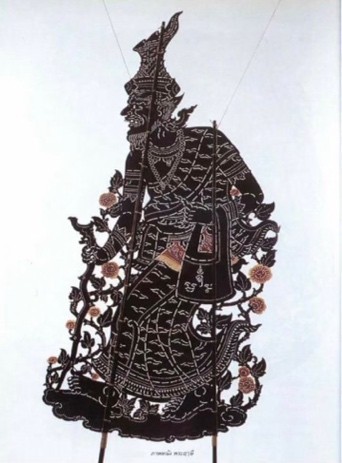
Nang Yai was originated during the Ayutthaya period. The performance employs large leather puppets representing dramatic characters, manipulated by puppeteers to cast shadows on a screen, while narrators and performers provide dialogue and narration to advance the story. Nang Yai performances can be classified into two types: daytime performances and nighttime performances. The art form integrates five artistic disciplines: craftsmanship, dance, literature, verbal arts, and music.
Boek Na Phra refers to the Wai Khru ritual performed prior to a Nang Yai performance. Badphali (Canang Sari), which are offerings, are prepared according to traditional practices to invoke auspiciousness and protection for the performers. The ritual begins with the placement of three sacred master puppets (Nang Khru) consisting of the Hermit, Narayana, and Shiva before the screen: a hermit figure positioned between representations of the deities Narayana and Shiva. After the puppets and ritual offerings have been arranged, the puppeteers gather in the ceremonial area in front of the screen. The troupe leader initiates the ceremony by lighting three candles and placing them before the three master puppets. One candle is then handed to the leader of the Piphat ensemble to be placed at the Taphon drum. The troupe leader proceeds to invite celestial beings and their attendants from the ten directions to preside over the performance space. Upon completion of the invocation, three ritual chants are performed. The narrator then recites the Wai Khru verses, which are divided into three sections, known as the “Three Hosts” (Sam Thuai). During this stage, the puppeteers manipulate the two deity puppets while the hermit puppet is respectfully returned to its designated place before the screen. At the conclusion of each section of the recitation, the Piphat ensemble performs a Cherd musical piece. After all three sections have been completed, the troupe leader anoints the sacred puppets and returns them to storage, thereby concluding the Wai Khru ceremony. The performance then proceeds to the traditional opening entertainment known as Chap Ling Hua Kham.
The creative opening performance “Nang Yai Dance Drama Amnuayphon” was choreographed according to the principles of Nang Yai puppet manipulation and movement vocabulary. The choreographic design consisted of three stages. The first stage involved creating dance movements for performers entering the front of the stage accompanied by the Na Phat Hao musical composition, symbolizing the gathering of celestial beings and heavenly maidens. The second stage involved choreographing dance movements to accompany sung and narrated texts, divided into two sections: the first employed chariot narration composed in the poetic form Kap Chabang 16, while the second accompanied the musical piece Wetsuwan Kam and utilized the poetic form Kap Yani 11. The third stage focused on choreographic design and formation changes performed to the melody of Pleng Reo (Fast Tempo Music), depicting celestial beings and heavenly maidens engaged in a dance procession. Furthermore, traditional Thai dance terminology and movement vocabulary were incorporated as fundamental principles in the creation and development of the choreography.
References
คมสันต์ สุทนต์ (2557). หนังใหญ่. [รายงานการวิจัย]. กรมส่งเสริมวัฒนธรรม.
_____ (2558). ตามรอยหนังใหญ่ 9 แผ่นดิน. [รายงานการวิจัย]. กรมส่งเสริมวัฒนธรรม.
ชีวสิทธิ์ บุณยเกียรติ (2549). หนังใหญ่วัดบ้านดอน. ศูนย์มานุษยวิทยาสิรินธร.
ดารารัตน์ จุฬาพันธุ์ (2557). หนังใหญ่วัดขนอน. อัมรินทร์พริ้นติ้งแอนด์พับลิชชิ่ง.
อนุกูล โรจนสุขสมบูรณ์ (2543). การเชิดหนังใหญ่วัดสว่างอารมณ์ จังหวัดสิงห์บุรี. [วิทยานิพนธ์ปริญญามหาบัณฑิต, จุฬาลงกรณ์มหาวิทยาลัย].
Downloads
Published
Issue
Section
License
Copyright (c) 2026 ฝ่ายผลิตสื่อสิ่งพิมพ์และตำราวิชาการ กองส่งเสริมวิชาการและงานวิจัย สถาบันบัณฑิตพัฒนศิลป์ กระทรวงวัฒนธรรม

This work is licensed under a Creative Commons Attribution-NonCommercial-NoDerivatives 4.0 International License.
บทความที่ได้รับการตีพิมพ์เป็นลิขสิทธิ์ของ สบศ.



