THE PLAYING STYLE OF KLONG PUJA (PUJA DRUM) IN THE UPPER NORTHERN REGION
Keywords:
Klong Puja, Drum in the Upper Northern Region, Lanna WisdomAbstract
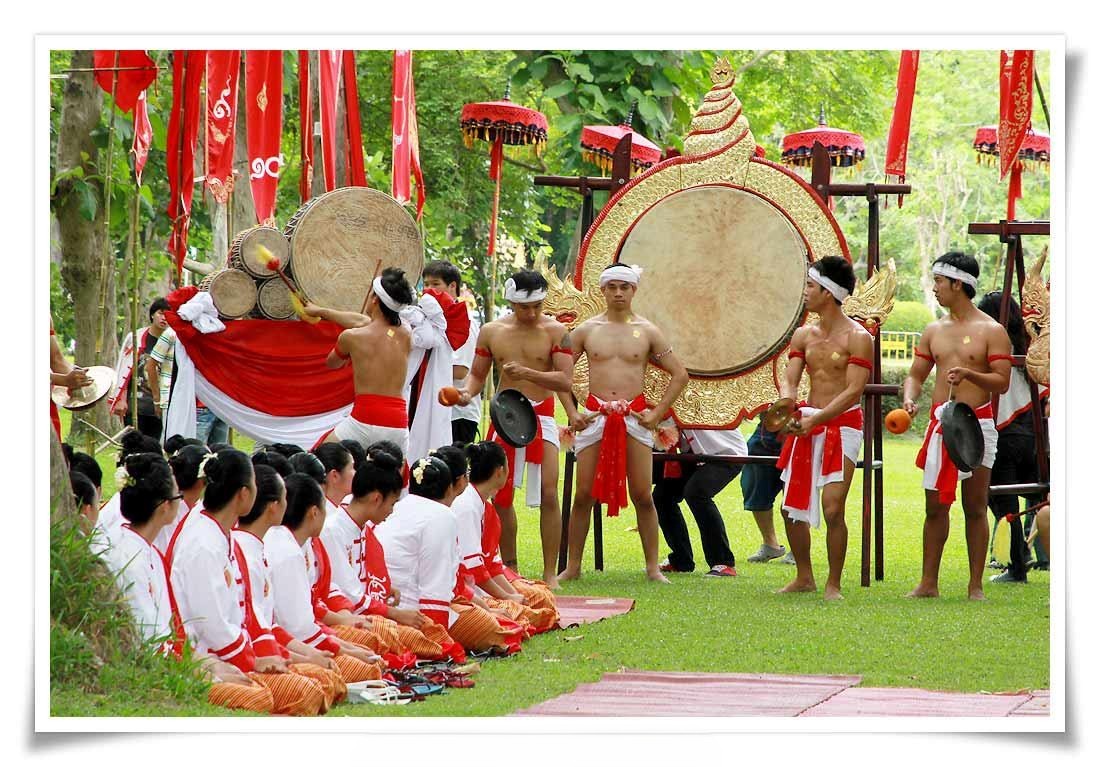
The research titled "The Playing Styles of Klong Puja (Puja Drum) in the Upper Northern Region" is ethnomusicological research conducted using qualitative methods. The objective is to examine the cultural context and rhythmic patterns of Puja drum performance in the upper northern region comprising five provinces: Chiang Mai, Chiang Rai, Lamphun, Lampang, and Mae Hong Son. Data were collected through observation, field recordings, and in-depth interviews with experts, master craftsmen, community sages, and inheritors of the Puja drum tradition. Content analysis was employed to interpret the findings. The results indicate that the Puja drum is an ancient Lanna drum set consisting of 1) a large double-headed drum called “Klong Thung”, covered with animal hide, measuring about 2–2.5 meters, made of hardwoods such as teak or padauk, and 2) three smaller drums called “Klong Look Tub”, used to interrupt the rhythms of large drum, placed according to the drummer’s expertise. Previously, the Puja drum served as a war signal and a celebratory instrument for victory, later becoming a sacred temple instrument for Buddhist worship. It has been played on observance days, holy days, and as a means of community communication, including gatherings, emergencies, and warnings. The main rhythmic patterns include 1) Buddhabucha, a slow, solemn style emphasizing resonance, 2) Sabat Chai, a fast, forceful rhythm played with whips, 3) Long Nan, a lively and playful beat, and 4) Emergency Call, a rapid rhythm used to convey urgent messages. In the present day, the Puja drum is played in two main forms: ritual playing for Buddhist worship and staged performance or competition. Popular choreographies, including Suea Kob Tu, Sao Lab Teu, Long Nan, and Fad Sae, are called differently in each province due to the people’s accents and ease in memorability. This study reflects a vital cultural, ritual, and social role that the Puja drum remains in Lanna communities and the Buddhist way of life of Lanna people, resulting in a cultural heritage which is worth preservation and transmission for future generations.
References
เฉลิมพล ทองพา. (2567, พฤษภาคม 22). องค์ความรู้เรื่องกลองปู่จา โครงการส่งเสริมการอนุรักษ์เสน่ห์เสียงกลองปู่จา อำเภอท่าปลา จังหวัดอุตรดิตถ์. https://www.facebook.com/UTTARADITPRD/posts/ยาวชนอำเภอท่าปลาสืบสานวัฒนธรรมพื้นบ้านเสน่ห์เสียงกลองปู่จา.
ณรงค์ สมิทธิธรรม. (ม.ป.ป). บทความเรื่องการตีกลองล้านนา. [ต้นฉบับอัดสำเนาที่ไม่ได้ตีพิมพ์].
ณัฐพงศ์ ปันดอนตอง. (2564). กฎหมายโบราณล้านนา. สถาบันวิจัยล้านนา.
ณัฐวุฒิ ใจคำ. (2561). การศึกษารูปแบบการตีกลองสะบัดชัยในล้านนา. [สารนิพนธ์ปริญญามหาบัณฑิตไม่ได้ตีพิมพ์]. มหาวิทยาลัยเชียงใหม่.
ทองทวี ยศพิมสาร.(2559). ฮีตฅนเมือง ฉบับคู่มือเข้าวัด–คู่มือประจำบ้าน. (พิมพ์ครั่งที่ 6).ณัฐพล การพิมพ์.
ทัศนีย์ ดอนเนตร์. (2564). การพัฒนาและสร้างสรรค์การตีกลองปูจาในจังหวัดลำปาง. วารสารวิชาการวัฒนธรรม, 12(2), 33–47.
ทิวาลักษณ์ กาญจนมยูร และคณะ. (2546). ศิลปวัฒนธรรมล้านนา. มติชน.
ธนพงศ์ เด็ดแก้ว. (2557). การศึกษากลองปูจาเพื่อการอนุรักษ์และฟื้นฟูภูมิปัญญาท้องถิ่น. มหาวิทยาลัยเชียงใหม่.
ธนาเทพ สกฺกว โส (ศักดิ์วงค์). (2560) ศึกษาการอนุรักษ์ก๋องปู่จาของชาวพุทธ ในเขตอำเภอเมือง จังหวัดลำปาง. [วิทยานิพนธ์ปริญญาพุทธศาสตรมหาบัณฑิตไม่ได้ตีพิมพ์]. มหาวิทยาลัยมหาจุฬาลงกรณราชวิทยาลัย.
ธิติพล กันตีวงศ์ และ ต่อพงษ์ เสมอใจ (2557).รายงานผลการสำรวจ โครงการสำรวจพื้นที่วัฒนธรรมด้านศิลปกรรมหัตถกรรม ดนตรี และนาฏยกรรม. สำนักส่งเสริมศิลปวัฒนธรรม มหาวิทยาลัยเชียงใหม่.
พระนคร ปรังฤทธิ์. (2553). พุทธปรัชญาเบื้องต้น. มหาวิทยาลัยมหามกุฏราชวิทยาลัย.
พระมหาอนุสรณ์ อภิวฑฺฒโน. (2566). ศึกษาความเชื่อเรื่องการตีกลองปูจาของประชาชนในจังหวัดแพร่. [วิทยานิพนธ์ปริญญาพุทธศาสตรมหาบัณฑิตไม่ได้ตีพิมพ์]. มหาวิทยาลัยมหาจุฬาลงกรณราชวิทยาลัย. http://e-thesis.mcu.ac.th
ภัทระ คมขำ. (2556). การประพันธ์เพลงช้าเรื่องปูจานครน่าน. [สารนิพนธ์ปริญญามหาบัณฑิตไม่ได้ตีพิมพ์]. จุฬาลงกรณ์มหาวิทยาลัย. http://cuir.car.chula.ac.th
สถาบันวิจัยพะเยา. (2563). การส่งเสริมศิลปะการแสดงกลองปูจาของชุมชนรอบกว๊านพะเยา. วารสารวิจัยเพื่อการพัฒนาเชิงพื้นที่, 12(1), 77-86.
สนั่น ธรรมธิ. (2542). ตำนานเมืองล้านนา. โรงพิมพ์ศรีธรรม.
Poupeau, F., & Boissevain, K. (2012). Cultural heritage and local communities. Journal of Cultural Studies, 14(2), 101–118.
UNESCO. (2003). Convention for the safeguarding of the intangible cultural heritage.
Downloads
Published
Issue
Section
License
Copyright (c) 2025 ฝ่ายผลิตสื่อสิ่งพิมพ์และตำราวิชาการ กองส่งเสริมวิชาการและงานวิจัย สถาบันบัณฑิตพัฒนศิลป์ กระทรวงวัฒนธรรม

This work is licensed under a Creative Commons Attribution-NonCommercial-NoDerivatives 4.0 International License.
บทความที่ได้รับการตีพิมพ์เป็นลิขสิทธิ์ของ สบศ.



