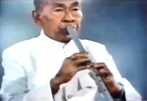
วิธีการเป่าขลุ่ยเพียงออตามแนวทางของครูเทียบ คงลายทอง
คำสำคัญ:
วิธีการเป่าขลุ่ยเพียงออ, ครูเทียบ คงลายทองบทคัดย่อ
การวิจัยเรื่องวิธีการเป่าขลุ่ยเพียงออตามแนวทางของครูเทียบ คงลายทอง มีวัตถุประสงค์ในการวิจัย 1. เพื่อศึกษากายภาพของขลุ่ยเพียงออ ระบบเสียง และข้อจำกัดในการใช้เสียงของขลุ่ยเพียงออ 2. เพื่อศึกษาวิธีการเป่าขลุ่ยเพียงออตามแนวทางของ ครูเทียบ คงลายทอง เพลงประเภทดำเนินทำนอง 3. เพื่อศึกษาวิธีการดำเนินทำนองของขลุ่ยเพียงออเพลงประเภทดำเนินทำนอง โดยดำเนินการวิจัยเชิงคุณภาพ ศึกษาข้อมูลจากเอกสาร การสัมภาษณ์ และจากการปฏิบัติ แล้ววิเคราะห์เพื่อนำมาสรุปผลการวิจัย ผลจากการวิจัยพบว่า วิธีการเป่าขลุ่ยเพียงออของครูเทียบ คงลายทอง ใช้หลักวิธีการในการถ่ายทอดความรู้ด้วย “วิธีมุขปาฐะ” โดยท่านได้ถ่ายทอดความรู้ให้กับครูบุญช่วย โสวัตร และครูปี๊บ คงลายทอง โดยให้ผู้เรียนฝึกฝนทักษะการเป่าขลุ่ยตั้งแต่ท่านั่ง ท่าจับเครื่องดนตรี ลักษณะของการวางนิ้ว ซึ่งเป็นพื้นฐานสำคัญของบุคลิกภาพในการเป่าขลุ่ยเพียงออ ช่วงเสียงของขลุ่ยเพียงออ มี 2 ช่วงเสียง คือช่วงเสียงกลาง 7 เสียง และช่วงเสียงแหบ 5 เสียง รวม 12 เสียง เสียงที่ต่ำที่สุดคือเสียง โด และเสียงสูงที่สุดคือเสียง ซอล เสียงที่เหมาะสมกับการสร้างสำนวนกลอนในการบรรเลงเพลงประเภทดำเนินทำนองทางพื้นมี 10 เสียง โดยไม่ควรเกินเสียง มี ในช่วงเสียงแหบ วิธีการสร้างสำนวนกลอนของขลุ่ยเพียงออ 1) ใช้ทำนองหลักเป็นเกณฑ์ 2) ใช้วิธีการผูกสำนวนเพื่อหลีกเลี่ยงข้อจำกัด 3) การสร้างสำนวนกลอนให้สัมพันธ์กันในแต่ละวรรค ด้านวิธีการเป่าขลุ่ยเพียงออ เพลงลมพัดชายเขา 3 ชั้น ที่พบมี 14 วิธีดังนี้ 1) เป่าประคองลม 2) เป่าประคบเสียง 3) สะบัดลมรวบเดียว 4) เป่าพยางค์ห่าง ๆ 5) ระบายลม 6) เป่าครั่น 7) เป่าเก็บ 8) เป่าครวญ 9) เป่าตอด 10) พรมนิ้ว 11) ตีนิ้ว 12) เสียงควง 13) ยักเยื้องจังหวะ 14) เป่าสะบัด การเป่าเสียงขลุ่ยจะต้องเรียบสม่ำเสมอ ไม่โขยก ลักษณะการเคลื่อนที่ของทำนองของขลุ่ยเพียงออเพลงลมพัดชายเขา 3 ชั้น มีลักษณะดังนี้ 1) เป่าเรียงเสียงขึ้น 2) เรียงเสียงลง 3) เป่าข้ามเสียง 4) เป่าสลับเสียงสูงต่ำ 5) การผันทำนอง 6) การยักเยื้องจังหวะ 7) การเป่าพัน โดยพบทำนองที่เคลื่อนที่ในบทเพลง ได้แก่ ทางเพียงออ ซึ่งเป็นทางบรรเลงที่สะดวกสำหรับกับการดำเนินทำนองของขลุ่ยเพียงออ
เอกสารอ้างอิง
คณะอนุกรรมการโครงการส่งเสริมการดนตรีไทยสำนักมาตรฐานอุดมศึกษา สำนักงานปลัดทบวงมหาวิทยาลัย. (2538). เกณฑ์มาตรฐานดนตรีไทย. กรุงเทพฯ: ภาพพิมพ์.
จรัญ กาญจนประดิษฐ์. (2553). ขลุ่ยเพียงออ (พิมพ์ครั้งที่ 1). ขอนแก่น : มหาวิทยาลัยขอนแก่น.
ทัศนีย์ ขุนทอง, ศิลปินแห่งชาติสาขาศิลปะการแสดง (ดนตรีไทย - คีตศิลป์ไทย). สัมภาษณ์, 20 กันยายน 2558.
บุญช่วย โสวัตร, ผู้เชี่ยวชาญดนตรีไทยจุฬาลงกรณ์มหาวิทยาลัย. สัมภาษณ์, 18 พฤษภาคม 2558.
ปี๊บ คงลายทอง, ผู้เชี่ยวชาญดนตรีไทยสำนักการสังคีตกรมศิลปากร. สัมภาษณ์, 10 พฤษภาคม 2558.
________. (10 มิถุนายน 2559). พญาครวญ ครูเทียบ. [ออนไลน์]. เข้าถึงจาก https://www.youtube.com/watch?v=tc8VQYAMeWc
“เสียงในภาษาไทย”. (10 มิถุนายน 2559). [ออนไลน์]. เข้าถึงจาก http://z6.invisionfree.com/seniorthai/ar/t4.htm
หนังสืออนุสรณ์ในการเสด็จพระราชดำเนินพระราชทานเพลิงศพ นายเทียบ คงลายทอง. (2525). กรุงเทพฯ: เลี่ยงเชียง.
ดาวน์โหลด
เผยแพร่แล้ว
ฉบับ
ประเภทบทความ
สัญญาอนุญาต
บทความที่ได้รับการตีพิมพ์เป็นลิขสิทธิ์ของ สบศ.



